Cost of Living in Daegu
Real market data
Source: Numbeo · August 2026
$1,210/moSolo nomad1-bed centre + living costs
$1,870/moCoupleshared 1-bed + costs
$1,070/moLean / localcheaper area + costs
- 1-bed rent, city centre$390₩559,089
- 1-bed rent, outside centre$250₩363,024
- Monthly costs excl. rent (1 person)$820₩1,183,530
- Meal, inexpensive restaurant$9₩12,789
- Monthly transit pass$69₩100,000
- Buy price, per m² (centre)$7,280₩10,483,138
Prices are from Numbeo (August 2026), converted to USD at $1 = ₩1439.43 (01 Aug 2026). The monthly living-costs figure is our transparent one-person basket, groceries, a few meals out, utilities, phone, internet, transport and essentials, priced from those figures. Solo adds central rent; couple and lean are estimates from the same numbers. The guide below quotes its own monthly range, which is a different measurement rather than a competing one: this table prices a defined basket at the figures above, while that range is a judgement about how somebody actually lives here.
Daegu is the most affordable of South Korea's major cities. Rents run significantly lower than Seoul, and you can stretch a modest budget a long way without leaving the comforts of a fully connected urban environment.
A furnished studio or one-bedroom apartment in central neighborhoods like Dongseongno or Beomeo-dong costs roughly $345-450 per month. In outer districts such as Dalseo-gu or Dalseong-gu, the same quality drops to $210-300. Note that Korean landlords often require a large refundable deposit (jeonse or wolse system) rather than simple monthly rent; short-term furnished rentals and goshiwon rooms exist for stays under three months.
- Rent (central, furnished studio): $345-450
- Rent (outer district): $210-300
- Groceries (home cooking): $140-210
- Eating out (local meals and occasional restaurants): $140-245
- Coworking hot desk: $90-140
- Metro and bus transport: $35-56
- Mobile data (10 GB SIM): $7.50
Realistic monthly total: $905-1,250 living comfortably, or up to $1,800 with a dedicated coworking space and a more international lifestyle.
Where to Work
Daegu has a small but functional coworking scene anchored by Regus, which operates a center at the Dongdaegu Trade Centre on the 8th floor of 489 Dongdaegu-ro in Dong-gu, a 10-minute walk from Dongdaegu Station. Hot desks run from around $8 per day or roughly $90-115 per month on a plan. Day passes cost about $28. The city also lists numerous smaller shared-office providers, though many are oriented toward Korean startups rather than drop-in visitors.
Cafe work culture is deeply embedded here. Daegu's cafes are generally large, well-lit, and equipped with power outlets. The Dongseongno Cafe Alley in Jung-gu is the most concentrated strip, with places like Ryu Coffee Roasters and T Class Coffee popular among locals who spend hours over a single order. Slow Life near Beomeo Station is a multi-story cafe with natural light and generous seating that suits a long work session.
WiFi is fast and reliable across the city. Most cafes provide a password on your receipt. There is no culture of being rushed out, though during weekend peak hours popular spots fill quickly. For reliable, uninterrupted connectivity, a dedicated coworking plan is worth the modest extra cost.
Getting Around
Daegu's subway system covers the city well with three lines. Line 1 (red) and Line 2 (green) form the core network. Line 3 (yellow) is an elevated monorail and the most scenic way to cross the northern parts of the city. A single fare costs $1 with a T-money transit card, which you load at any station. Monthly transport rarely exceeds $56 if you live near a station.
Buses run frequently and complement the metro, with the same card usable across both. Taxis are cheap by Western standards: a 3 km trip averages around $2. Kakao Taxi (the Korean equivalent of Uber) works seamlessly in Daegu.
Daegu International Airport (TAE) sits about 8 km northeast of the city center. Bus routes 401 and 718 connect it to the city for $1 and run every 6-12 minutes. A taxi to the center costs around $5-7. Most international visitors arrive via Incheon Airport in Seoul and connect via KTX high-speed rail: trains depart Seoul roughly every 20 minutes from Suseo or Seoul Station and reach Dongdaegu Station in about 1 hour 40 minutes, with fares around $31-39 one way.
Walkability is good in central neighborhoods. Dongseongno and the areas around Banwoldang Station are dense, flat, and easy to navigate on foot. Outer districts require the subway or a bus.
Sorting transport? Book an airport transfer, or compare car rental on Auto Europe and QEEQ.
Visas and Staying Long-Term
South Korea offers visa-free entry to citizens of most Western countries for up to 90 days. US, UK, EU, Canadian, and Australian passport holders all qualify. You cannot work for Korean employers on a tourist entry, but remote work for foreign clients is not explicitly prohibited under tourist status, though the legal grey area is worth understanding before you stay long-term.
South Korea's F-1-D digital nomad visa, piloted from January 2024, became a permanent category on 30 June 2026. It is for people employed by a company outside Korea who have at least a year in the same field. The income floor is a multiple of Korea's gross national income per head, set by age and region. Outside Seoul, Incheon and Gyeonggi, which includes Daegu, applicants aged 18 to 34 need one times GNI, about $36,400 a year, and applicants 35 and over, or anyone bringing a spouse or children, need one and a half times, about $54,600; the lower tier asks for proof you will live outside the capital region, such as a lease of a month or more. In the capital region the same tiers are about $54,600 and $72,800. Permits are issued a year at a time up to three years, private health insurance must cover at least about $69,500 for treatment and repatriation, and visitors already in Korea on a B-1, B-2 or C-3 entry who meet the rules can switch to the visa without leaving. Working for a Korean employer or earning locally is not allowed.
Those yearly F-1-D renewals are the extension that happens inside Korea; they are not a way to lengthen a 90-day visa-free entry.
Best Time to Visit
Spring and autumn are the clear best windows. Late April through late May brings mild temperatures (15-22°C), low humidity, and cherry blossoms. Mid-September through early November is equally pleasant, with clear skies, cool air, and autumn foliage in parks and around Apsan Mountain.
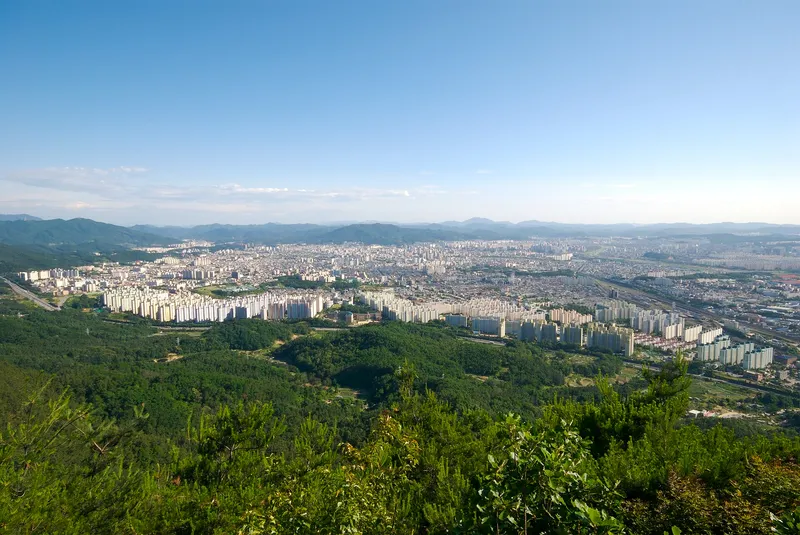
Avoid mid-June through August if possible. Daegu sits in a mountain basin and is famously the hottest major city in South Korea, locally nicknamed "Daefrica." Average summer highs sit around 30-31°C, heatwaves regularly push the peaks to 35-38°C, and the humidity is high, with a concentrated monsoon season in July and August. Working is fine indoors, but the heat makes exploring exhausting and the air quality can dip with yellow dust and pollution from China in spring.
Winter (December-February) is cold but dry and sunny, averaging 0-5°C. It is workable for remote setups but not the ideal introduction to the city.
Pros and Cons
Pros
- Significantly cheaper rent and food than Seoul or Busan
- Fast, reliable internet citywide
- Efficient subway and cheap taxis
- Large, comfortable cafes with power outlets and no time pressure
- Excellent local food scene, especially street food and Korean BBQ
- Less touristy and more authentically Korean than Seoul
- Direct KTX access to Seoul and Busan in under 2 hours
Cons
- English proficiency is lower than Seoul; navigating daily life takes more effort
- Extremely hot and humid summers make outdoor time uncomfortable
- Nomad community is small; most foreigners here are English teachers
- Limited international flights from Daegu Airport; most arrivals are via Seoul
- Nightlife and international social scene are modest by capital-city standards
- The jeonse deposit system complicates short-term apartment rentals
Who Daegu Is Best For
Daegu suits nomads who want a genuine South Korean city experience without the costs, crowds, and pace of Seoul. If you are on a tight budget, focused on deep work, and genuinely curious about Korean culture beyond the tourist circuit, Daegu rewards the effort. The city is a good fit for solo workers who are self-sufficient and do not need a large English-speaking social scene to stay motivated.
It also works well for people already living in Korea, particularly those on the F-1-D visa who qualify for lower income thresholds by residing outside the Seoul metro area. Daegu provides real urban infrastructure without the capital-city premium.
Skip Daegu if you need a large international nomad community, rely on spontaneous English-language networking, or plan to visit during summer. Those seeking beach access, a buzzing nightlife, or frequent direct international flights will find Busan or Seoul a better match.