Cost of Living in Maribor
Real market data
Source: Numbeo · July 2026
$1,360/moSolo nomad1-bed centre + living costs
$1,980/moCoupleshared 1-bed + costs
$1,260/moLean / localcheaper area + costs
- 1-bed rent, city centre$580€501
- 1-bed rent, outside centre$490€422
- Monthly costs excl. rent (1 person)$780€676
- Meal, inexpensive restaurant$12€10
- Monthly transit pass$41€36
- Buy price, per m² (centre)$3,270€2,838
Prices are from Numbeo (July 2026), converted to USD at $1 = €0.87 (01 Aug 2026). The monthly living-costs figure is our transparent one-person basket, groceries, a few meals out, utilities, phone, internet, transport and essentials, priced from those figures. Solo adds central rent; couple and lean are estimates from the same numbers.
Budget around $1,360 a month as a solo remote worker in Maribor, which is meaningfully cheaper than Ljubljana and among the better value cities in the eurozone. A one-bedroom apartment runs roughly $450 to $650, kept reasonable by a large student population. Groceries are ordinary central European prices and eating out is good value, with the local wine particularly cheap given the region produces it. Utilities include real winter heating. Ski passes at Pohorje and the transport to reach the surrounding hills are the discretionary costs that add up. Prices also rise noticeably during the ski season for anything close to the Pohorje cable car. Fibre runs about $30 to $45 a month and a coworking desk $90 to $160. District heating in the older blocks is billed by building rather than by use, which can be cheap or expensive depending on how well insulated the block is, and it is worth asking before signing. Student demand shapes the rental market hard: a flat found in September costs more and goes faster than the same one in February, so the timing of a lease matters as much as the neighbourhood. Ljubljana rents run roughly half again higher for the same space, which is the comparison most Slovenes make and the reason Maribor holds the students it does.
Where to Work in Maribor
Slovenia has good digital infrastructure and Maribor is fully covered, with fast fibre at reasonable prices and reliable mobile data. The University of Maribor is the city's largest institution and supports a small coworking scene and a technology sector that has grown steadily. English is widely spoken among younger Slovenes and in the professional world, which removes most of the administrative friction. Power is reliable. For remote work this is a straightforward, well-connected European city at a price well below the western half of the continent. Graz, an hour and a half away by train, is the nearest city with a larger professional network if that becomes necessary. Slovenia sits one hour ahead of GMT, which gives a full European working day and a late-afternoon overlap with the American east coast, and is among the more convenient time zones on this site for anyone working across the Atlantic. Slovene is the working language of administration, though English handles most of it in practice.
Getting Around Maribor
Maribor is compact and the old town, the main square and the Lent riverside are all walkable, with the Drava running through the middle. Local buses cover the city cheaply and cycling is practical on the flat riverside. The Pohorje cable car leaves from the edge of town and reaches the ski and hiking area in a few minutes, which is the single most useful transport link here. Trains connect to Ljubljana in about two hours and to Graz in Austria in under an hour and a half. Vienna and Zagreb are both close. Ljubljana Airport is about two hours away but Graz, Zagreb and Vienna are all closer or comparable and usually better connected, so the practical air link depends on where you are going rather than which country you are in. Pohorje's cable car runs year-round and the bike park on the mountain operates through the summer, so the lift is as useful in July as in January.
Sorting transport? Book an airport transfer, or compare car rental on Auto Europe and QEEQ.
Visas for Maribor
Slovenia is in the Schengen area and the eurozone, so most non-EU nationals get ninety days within any 180-day period and EU citizens face no restriction. Slovenia introduced a digital nomad permit in 2025 allowing up to a year for remote workers employed outside the country, without the right to renew immediately, which is a genuine new option. Longer stays otherwise run through employment or business registration. Croatia and Austria are both Schengen, so neither offers a reset. Since its southern neighbour joined Schengen in 2023, Slovenia has no external land border left, so a non-EU visitor's Entry/Exit System record is opened at an airport, usually Vienna, Graz or Ljubljana, and the trains into Maribor pass no checkpoint. Slovenia's new permit is issued for a year without immediate renewal, so it functions as a defined stay rather than a base, and it does not exempt the holder from the Schengen clock once it expires. Croatia, Hungary and Austria are all Schengen members, so none of the neighbouring borders offers a way to reset the clock.
Best Time to Visit Maribor
May, June, September and early October are the most comfortable months, with warm days, long evenings and the wine country at its best around the September and October harvest. Summer from July to August is warm, into the high twenties, and the Lent Festival fills the riverside in late June and early July. Winter from December to February is cold, grey and often damp in the city, with proper snow up on Pohorje, which is the point for anyone here to ski. Rain is spread through the year with an early summer peak. The old vine on the Lent embankment is over four hundred years old and is recognised as the oldest producing grapevine in the world, and the small quantity of wine it yields is bottled ceremonially each year. Winter inversions settle in the Drava valley and hold woodsmoke at street level on still days, which is when the city's air is at its worst.
Pros and Cons of Maribor
Maribor puts a ski area at the end of a cable car from the city, the world's oldest producing vine on a house by the river, a university that keeps the place young, and Austria, Croatia and Hungary all within a couple of hours, at a cost well below Ljubljana. Slovenia is safe, clean and well organised. This is a small, quiet city with a grey winter and nothing resembling a remote-working scene, and its air quality scores a 6, the result of winter inversions and domestic heating in the Drava valley. Maribor hosted the alpine skiing World Cup at Pohorje for decades and the Zlata Lisica races are still held there, which is why a city of ninety thousand has a lift system a short bus ride from its main square.
Who Maribor Is For
A Schengen base at a price that makes a longer stay affordable, particularly for skiers and cyclists who will use Pohorje and the wine roads. Central Europe with Austria and Croatia both quickly reachable is the case, and either border is closer than the next Slovenian city. A large city, an international community and a nightlife beyond the student circuit are all elsewhere, mostly in Ljubljana. The Schengen clock is the harder constraint: Slovenia offers no relief from it, so anybody who has already spent their days on the rest of Europe has nothing left to spend here. Being inside the eurozone removes a layer of friction. Banking and currency here work as they do in Germany, which the neighbouring non-euro countries cannot offer however cheap they look on paper. Cyclists get more from this city than its size suggests. The Drava route runs through it on its way from the Austrian Alps to Croatia, and the wine roads east are among the quietest riding anywhere in central Europe. Next to Ljubljana the trade is two thirds the price, a fraction of the international scene, and a ski lift within reach of the edge of town.
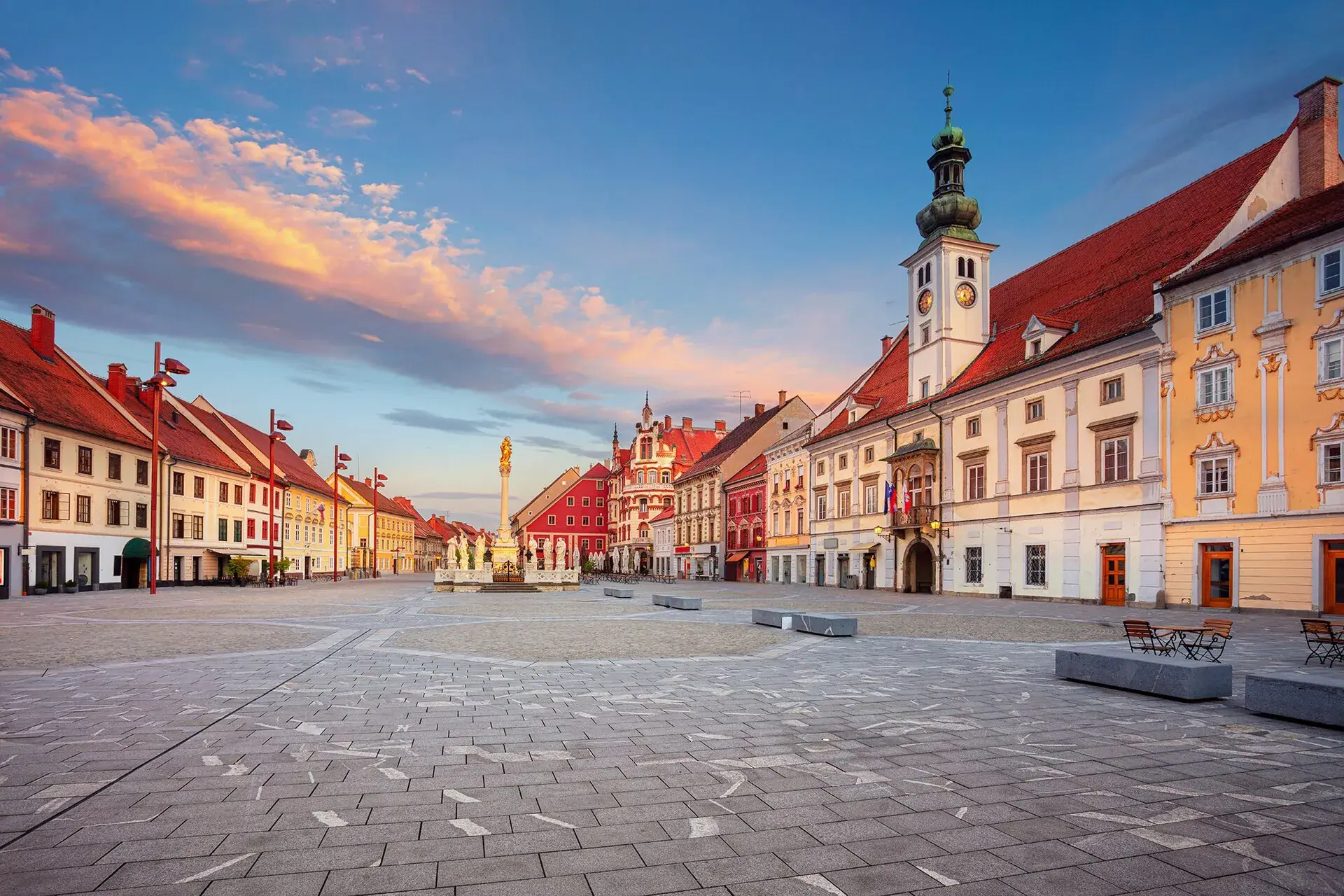 Photo: Vlada Republike Slovenije / Wikimedia Commons (Public domain)