Cost of Living in Daejeon
Where this figure comes from. No cost survey covers Daejeon, so the $1,350 a month above is our own estimate rather than a measurement. On 416 of our 999 city guides the figure is built from a published Numbeo basket, a one-bedroom rent in the centre plus one person's monthly costs without rent, converted to USD; this city is not one of them. How we source everything.
Budget roughly $1,350 a month as a solo remote worker in Daejeon, which is around two-thirds of what Seoul costs. A one-bedroom apartment or officetel near the centre or in Yuseong runs about $420 to $620, and Korean leases work on the jeonse or wolse deposit system, so foreigners generally pay a premium through agencies for shorter, lower-deposit arrangements. Groceries land around $340 to $440; Korean supermarket prices for fruit and imported goods are high. A gimbap or kalguksu lunch is $5 to $8, a Korean barbecue dinner for two $28 to $42, and Daejeon's bakeries, particularly Sungsimdang, are a local institution. A monthly transit pass is roughly $45. An officetel rent is quoted without the monthly maintenance charge, which covers the building's heating, security and common areas and adds a meaningful amount to a small unit. National health insurance is compulsory for foreign residents staying six months or more, charged against income with a floor, and it is a real monthly cost rather than an option. Almost nothing administrative happens without a residence card, which covers opening an account at a bank, signing for a mobile number and using the payment apps everybody else relies on, and the card itself takes a few weeks to arrive.
Where to Work in Daejeon
Daejeon is Korea's research capital, home to KAIST, Daedeok Innopolis and a large cluster of government institutes, so the coworking and startup infrastructure is real at roughly $130 to $220 a month and the surrounding population is scientists and engineers. Korean internet is among the fastest and most reliable in the world, fixed-line and mobile, and public wifi is ubiquitous. Cafe density is extraordinary even by Korean standards and long laptop sessions are entirely normal. English is more common here than in most Korean cities outside Seoul because of KAIST and the international research community, though daily administration still runs in Korean. The research cluster is not a business park with a science label attached. The national fusion programme is run from here, the patent office moved out with the rest of the second government complex, and a large share of the country's public research institutes sit in the same district north of the centre. What that means day to day is a population keeping regular hours and finding nothing remarkable about a stranger working alone in a cafe all afternoon. The site of the 1993 world exposition still anchors that district and its tower is the landmark everyone navigates by.
Getting Around Daejeon
Daejeon has a single metro line running east to west through the city, plus an extensive bus network, all covered by a T-money card that works nationwide; a monthly pass is around $45. The city is flat and spread out, and while individual districts are walkable, moving between them means transit. Cycling is easy along the Gap and Yudeung river paths. The real advantage is position: Daejeon sits at the centre of South Korea and its KTX station puts Seoul at 50 minutes, Busan at under two hours and Gwangju at an hour, which makes it arguably the best-connected base in the country. Incheon airport is about two and a half hours by bus or rail. A second metro line has been argued over for the better part of twenty years and is now planned as a surface tram, which says something about how the city reaches a decision. Until it exists the buses carry everything the single line cannot. Two high-speed operators call at the main station and the cheaper of the two is worth checking, because the fare difference on a long run adds up over a month. Seodaejeon on the older line is the useful station for the western districts, and it is missed by anyone booking on the city name alone.
Sorting transport? Book an airport transfer, or compare car rental on Auto Europe and QEEQ.
Visas for Daejeon
South Korea grants most Western passports 90 days visa-free and requires many of them to obtain a K-ETA authorisation before departure, though this requirement has been temporarily waived for a rotating list of countries. Korea's F-1-D workation visa, piloted from 2024 and made a permanent category on 30 June 2026, is for remote workers employed by foreign companies with at least a year of experience in the field. Its income floor is a multiple of Korea's gross national income per head: Daejeon is outside the capital region, so applicants aged 18 to 34 need one times GNI, about $36,400 a year, and applicants 35 and over, or anyone bringing family, one and a half times, about $54,600. It is granted a year at a time up to three years and allows accompanying family, and was a significant addition given that Korea previously had no route for remote workers at all.
Best Time to Visit Daejeon
Spring and autumn are the seasons in Daejeon, as across Korea. April and May bring cherry blossom along the rivers and mild, clear weather; late September to November is warm, dry and the best stretch of the year, with the foliage in the surrounding mountains turning through October. Summer is hot and humid, into the low thirties, and the monsoon rains fall in July. Winter is cold and dry, regularly below freezing from December to February, with less snow than the east coast. Daejeon sits inland in a basin, which makes summers hotter and winters colder than the coasts, and fine dust from the west is a recurring spring problem. The red clay path around Gyejoksan on the northern edge of the city is walked barefoot, which sounds like a gimmick until a May morning when several hundred people are doing it, and the city holds a festival around it. The summer rains arrive in a concentrated few weeks rather than spreading across the season, and the basin holds the heat afterwards in a way the coastal cities do not. Foliage on Gyeryongsan peaks around the third week of October and the trails are busy every weekend until the leaves go.
Pros and Cons of Daejeon
Daejeon gives you Korean infrastructure, which is to say some of the best internet, transport and healthcare anywhere, at two-thirds of Seoul's cost, with a KTX station that reaches most of the country in under two hours. The research and startup community around KAIST means more English and more international company than a Korean city of this size would normally have. Hot springs at Yuseong, mountains at Gyeryongsan, and Korea's most famous bakery are all here. The city works rather than charms, and there is very little here that a tourist would cross the country for. English is still limited outside the research world, Korean administration is demanding for foreigners, and air quality suffers in spring.
Who Daejeon Is For
Seoul money and Seoul pace are what you are escaping, and a scientific or technical background is what makes this particular escape worthwhile, given KAIST and the research institutes. The new workation visa applies here as anywhere, and what Daejeon adds is position: fast rail runs from the middle of the country to all of it. Infrastructure and safety are what the people who choose it rate highest. Neither solo workers nor couples are at any disadvantage, though neither will find much of a scene either. Beauty was not the organising principle of a planned research city, there is no coast, the foreign population is researchers rather than a community, and the nightlife will disappoint anybody measuring it against Seoul. Seoul is 50 minutes away by KTX and Busan is the coastal alternative with far more atmosphere.
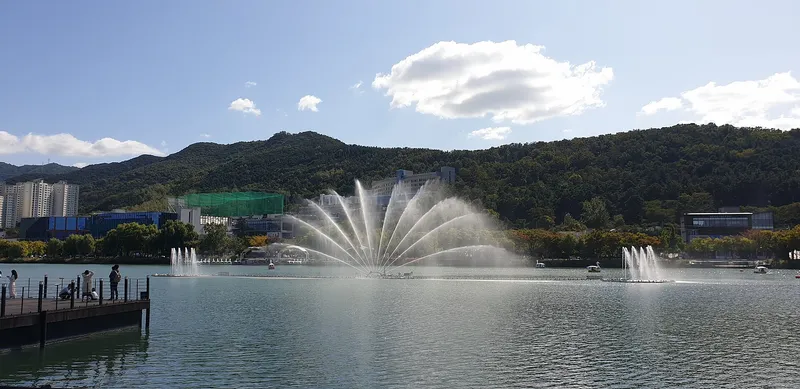
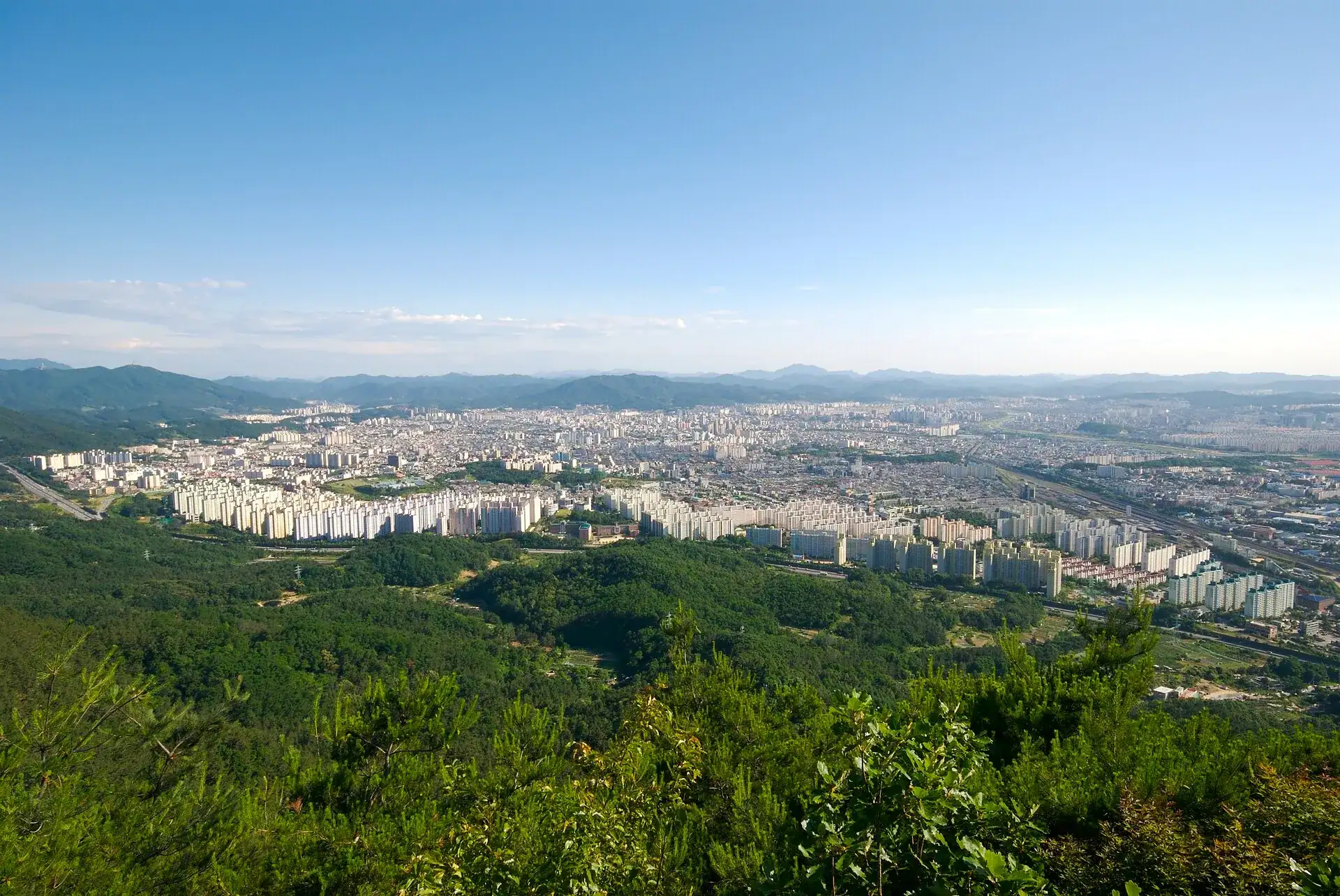 Photo: Yoo Chung / Wikimedia Commons (CC BY-SA 2.5)