Cost of Living in Siena
Real market data
Source: Numbeo · August 2026
$1,880/moSolo nomad1-bed centre + living costs
$2,450/moCoupleshared 1-bed + costs
$1,480/moLean / localcheaper area + costs
- 1-bed rent, city centre$1,170€1,017
- 1-bed rent, outside centre$760€663
- Monthly costs excl. rent (1 person)$710€619
- Meal, inexpensive restaurant$16€14
- Monthly transit pass$42€37
- Buy price, per m² (centre)$4,600€4,000
Prices are from Numbeo (August 2026), converted to USD at $1 = €0.87 (01 Aug 2026). The monthly living-costs figure is our transparent one-person basket, groceries, a few meals out, utilities, phone, internet, transport and essentials, priced from those figures. Solo adds central rent; couple and lean are estimates from the same numbers.
Siena is not a budget destination. Tuscany carries a premium, and the compact historic centre attracts steady tourism that lifts prices for rent, dining, and daily errands. A single nomad should plan on roughly $1,500 to $2,000 a month, with housing the biggest variable: short lets inside the medieval walls cost more than flats in the newer neighbourhoods just outside. Groceries at local markets are reasonable, and a simple trattoria lunch remains fair value, yet cafes and restaurants on the main squares charge for the view. The figures below are editorial estimates rather than fixed quotes, and they shift with season and how central you choose to live. In a city with this many students, much of the flat stock is let on Italy's student lease, which runs six months to three years and is reserved for enrolled students; a remote worker on a three-month stay needs the transitorio lease of one to eighteen months, which must state the reason for the short term, or else pays holiday-let prices.
- Rent, one-bedroom flat: roughly $900 to $1,300 a month, higher inside the walls
- Groceries for one: roughly $250 to $350 a month from local shops and markets
- Casual meal out: roughly $15 to $30 per person at a trattoria
- Monthly transport and extras: roughly $80 to $150, buses and occasional trips
Where to Work in Siena
Siena is a small, studious city rather than a coworking hub, so set expectations accordingly. Home and short-let internet is generally fine for calls, video, and everyday remote work. Dedicated coworking spaces are few, reflecting the modest nomad scene, so many remote workers lean on quiet cafes, the calm of a rented flat, or the studious atmosphere that a historic university town naturally provides. The University of Siena keeps the place full of students, libraries, and unhurried cafes suited to focused sessions. If you need a buzzing coworking community, you will find more of it in Florence, an easy trip away by bus. The best free desk in town is the Biblioteca comunale degli Intronati on Via della Sapienza, the city library, open to anyone without registration, with free wifi and reading rooms that keep weekday hours into the early evening and open on Saturday mornings. Calls are out in a reading room, so treat it as the place for deep work and keep meetings for the flat.
Getting Around Siena
The historic core is compact, walled, and largely pedestrian, so you will cover most of daily life on foot. Be ready for limestone hills and stepped lanes: the centre rises and falls, and comfortable shoes matter more than any transport pass. Local and regional buses connect the centre with outlying neighbourhoods and nearby Tuscan towns, and buses are generally the most reliable way to reach Florence. Direct train links are more limited, so many travellers prefer the coach. The nearest airports are Florence and Pisa, each reachable by bus or connecting transport within a couple of hours. A car helps for exploring the Chianti and Crete Senesi countryside, but it is unnecessary inside the town. The railway station sits below the city, and a chain of escalators climbs from it to the Antiporto at Porta Camollia, though the system has had long closures, so check whether it is running before arriving with heavy luggage.
Sorting transport? Book an airport transfer, or compare car rental on Auto Europe and QEEQ.
Visas for Siena
Siena sits in Italy, inside the Schengen area, so the usual rules apply. Many visitors arrive on the standard Schengen allowance of 90 days within any 180-day period, which permits tourism but not local employment. Italy launched a digital nomad visa in 2024 aimed at remote workers and highly skilled professionals employed or contracted outside the country, and this is the route for longer, legitimate stays while working online. Requirements typically cover minimum income, health insurance, and proof of remote work. Working locally on a tourist entry is not allowed. Florence's small airport, the closer of Siena's two gateways, takes few flights from outside Schengen beyond British Airways from London and Air Serbia from Belgrade, and passengers off those are registered by the Entry/Exit System in its arrivals hall, about an hour and a quarter from Siena by road.
Best Time to Visit Siena
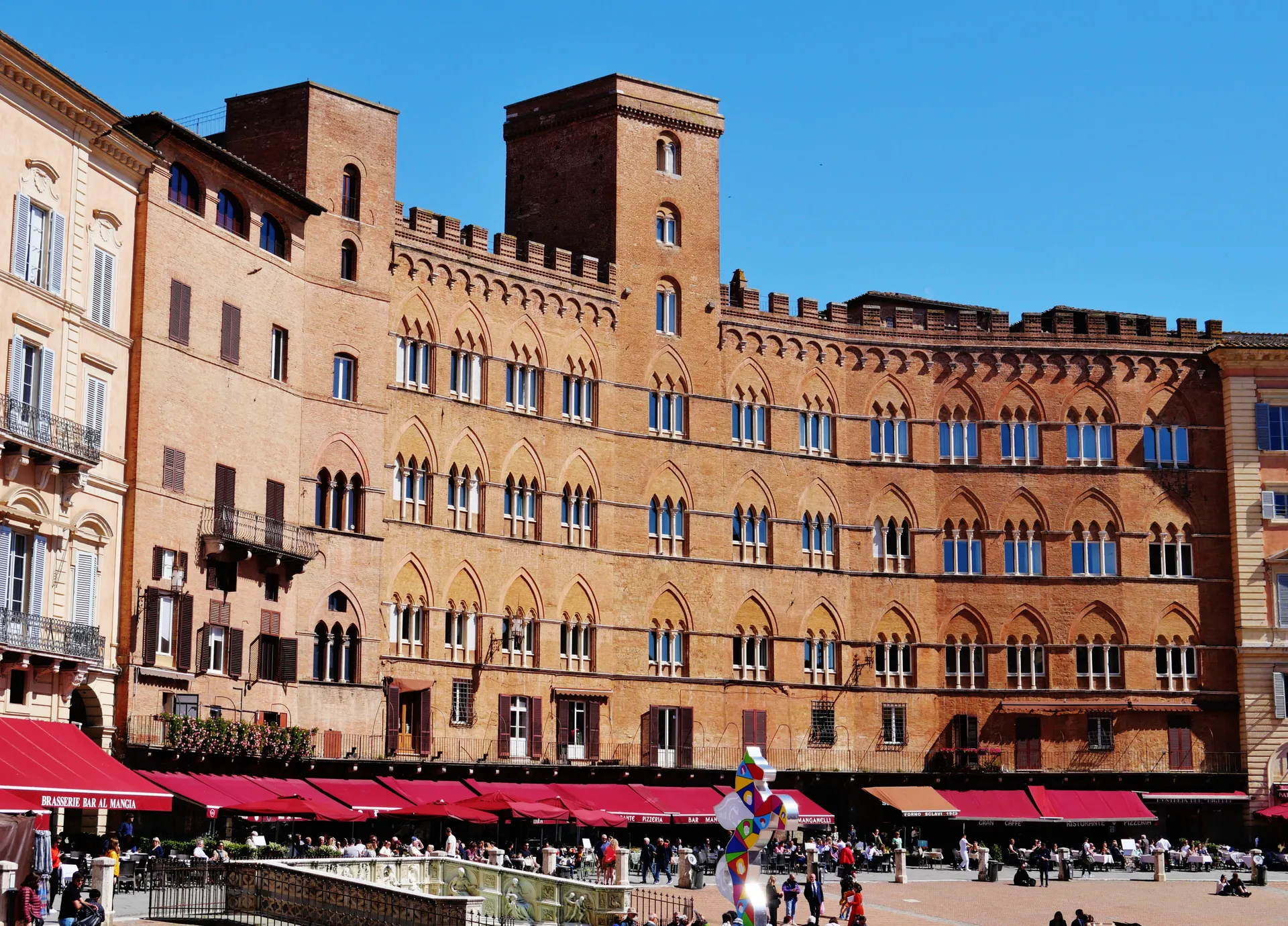
Spring and autumn are the sweet spots. From April to June and again in September and October, the weather is mild, the surrounding hills are green or golden, and the crowds are thinner than at peak. Summer brings heat and the busiest tourist flows, sharpened around the Palio horse race run in the Piazza del Campo on 2 July and 16 August, when the contrade fill the city and accommodation is scarce and dear. Those dates are thrilling to witness but chaotic for settling in to work. Winter is quiet and atmospheric, with cool days, short daylight, and far fewer visitors, ideal if you value calm over lively streets. The race itself lasts little more than a minute, but the build-up runs for days: the horses are drawn by lot on the morning three days before, six trial races follow in the square, and the trials are free to watch if you take a place before the track is cleared.
Pros and Cons of Siena
Siena rewards a particular kind of nomad and frustrates others, so weigh it honestly. The upsides are the setting, the food, the safety, and the unhurried rhythm of a beautifully preserved Tuscan hill town. The downsides are cost, a very small remote-work community, limited nightlife, and transport that favours buses over fast trains. Daily life here runs through the contrade, the seventeen wards behind the Palio, each with its own church, museum and fountain, and their clubs stay busy all year rather than only in summer. On the eve of each Palio, the ten wards that run open their streets for the dinner of the prova generale, where guests can book a seat at long tables beside the members. On the other side of the ledger, the hills are steeper than photographs suggest: the Campo sits in a bowl, so every errand ends with a climb.
- Pro: stunning UNESCO medieval centre, the Piazza del Campo, the Duomo, and the Torre del Mangia
- Pro: outstanding Tuscan food and wine, from pici pasta to Chianti in the surrounding hills
- Pro: safe, walkable, and calm, with a studious university-town atmosphere
- Con: not cheap, with tourist pricing on central squares and premium rents inside the walls
- Con: tiny nomad scene, few coworking spaces, and quiet nightlife
- Con: no direct airport and limited fast trains, so you rely on buses to Florence and Pisa
Who Siena Is For
Siena suits the nomad who wants art, history, and Tuscan slow living rather than a party scene or a big community of fellow remote workers. If you dream of morning coffee on a medieval square, long lunches, weekend drives through the Crete Senesi and Chianti, and evenings spent reading rather than bar-hopping, this city delivers deeply. It rewards independent travellers who are comfortable making their own routine and do not need beaches, nightlife, or a ready-made nomad crowd. If you crave a large scene, cheap living, or coastal energy, look elsewhere, perhaps a bigger Italian city or a coastal base. For culture, calm, and food, Siena is hard to beat. Riders who like gravel get the white roads of the Strade Bianche, the professional race that finishes in the Campo each March, starting almost at the city's edge.