Cost of Living in Aix-en-Provence
Real market data
Source: Numbeo · September 2026
$2,010/moSolo nomad1-bed centre + living costs
$2,670/moCoupleshared 1-bed + costs
$1,700/moLean / localcheaper area + costs
- 1-bed rent, city centre$1,190€1,031
- 1-bed rent, outside centre$880€765
- Monthly costs excl. rent (1 person)$820€716
- Meal, inexpensive restaurant$21€18
- Monthly transit pass$35€30
- Buy price, per m² (centre)$7,730€6,717
Prices are from Numbeo (September 2026), converted to USD at $1 = €0.87 (01 Aug 2026). The monthly living-costs figure is our transparent one-person basket, groceries, a few meals out, utilities, phone, internet, transport and essentials, priced from those figures. Solo adds central rent; couple and lean are estimates from the same numbers.
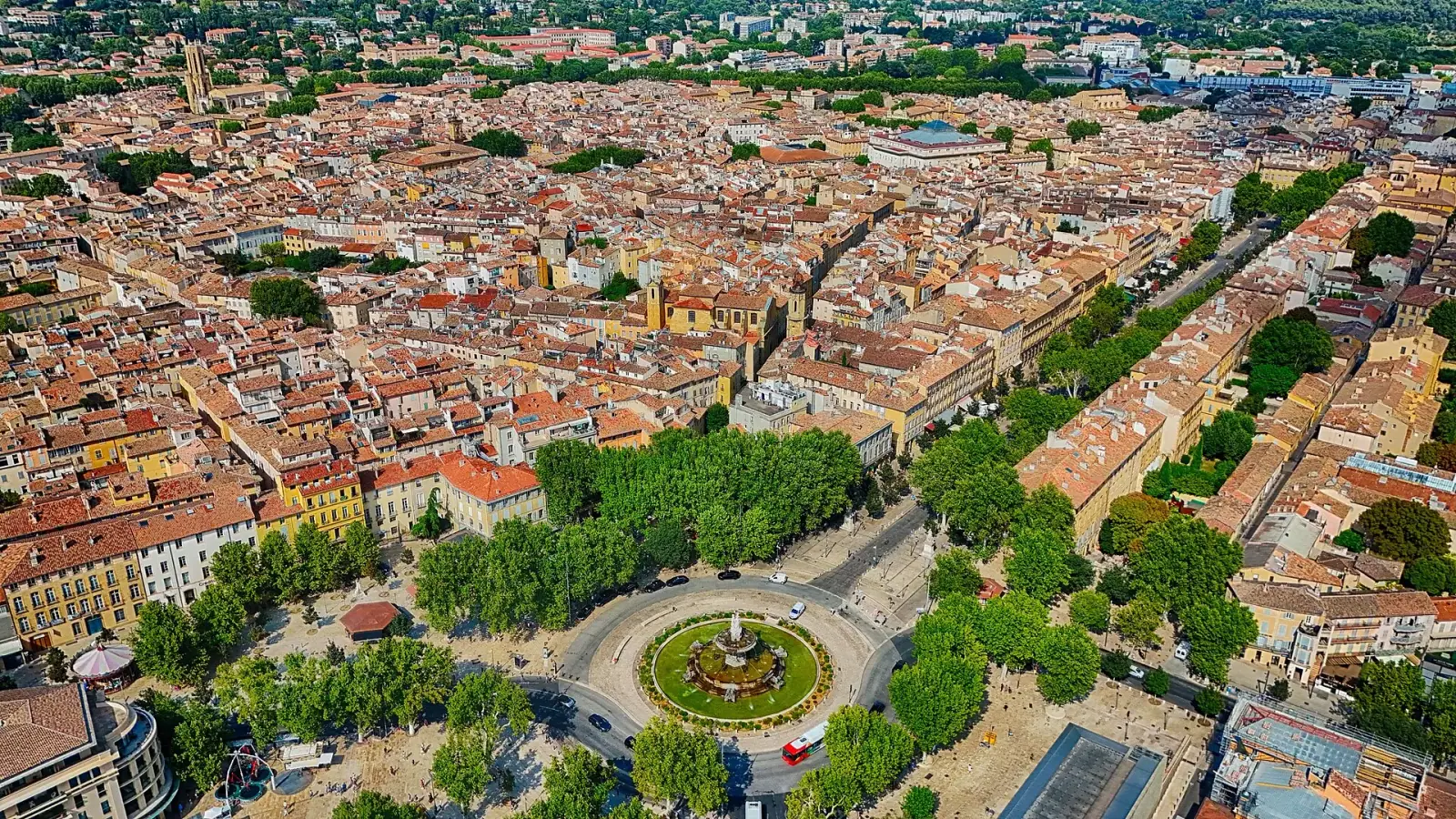
Aix is small, pretty, and expensive by French standards, running roughly 10 percent above the national average and well below Paris. A single person working remotely should budget somewhere in the range of $2,530 to $3,680 per month, with rent doing most of the damage.
- Rent, central one-bedroom: $920 to $1,380. A furnished flat inside the ring of boulevards, walkable to Cours Mirabeau, sits at the top of that band.
- Rent, cheaper area: $690 to $1,040 if you look outside the historic center, toward Les Milles, Jas de Bouffan, or the outer neighborhoods.
- Utilities: $115 to $230 for electricity, water, and gas, more in a cold snap when heating runs.
- Groceries: $290 to $460 for one person cooking most meals, cheaper if you shop the markets and discount chains.
- Eating out: a mid-range restaurant meal runs $17 to $29; a coffee is around $2.50 to $3.50.
- Coworking hot desk: from about $18 for a day pass, or roughly $135 to $230 per month for a flexible or dedicated desk.
- Local transport: a single bus ticket is a dollar or two, and the old-town minibus is $0.50 per ride, so a monthly pass or pay-as-you-go stays cheap.
The center commands a premium for its beauty and compactness. Moving a tram-free bus ride out from the core is the single biggest lever on your budget.
Where to Work
Aix has a real coworking scene for a town this size, though most of it clusters around the business parks rather than the tourist center. Cowork'in Aix sits in the Les Milles activity zone near the TGV station and offers hot desks, dedicated desks, and private offices by the day or month. Aix Coworking markets itself as a centre-ville option, handier if you want to stay inside the old town. Beyond these, chains like Regus and Spaces run flexible space in the outer office districts, and independent spots come and go.
Cafe-work culture is lighter here than in a big metro. Aix cafes lean toward the leisurely Provencal pace, and lingering for hours with a laptop is tolerated more in the modern chains and larger places than in a tiny traditional bar. WiFi is generally solid in coworking spaces and newer cafes, and home fiber is widely available, so a reliable connection is easy to secure once you have a base. For calls and heads-down work, a coworking membership is the safer bet than relying on cafes alone.
Getting Around
The historic center is genuinely walkable, one of Aix's great advantages. The old town is compact and largely pedestrian, built around Cours Mirabeau and a tangle of squares, fountains, and market streets you can cross on foot in minutes. Electric minibuses loop through the center for a token fare, useful for the hilly bits.
For longer trips, the Aixpress bus rapid transit line and the wider city bus network connect the neighborhoods, and cycling works well on the flatter routes. There is no metro or tram; buses and your own two feet cover the city. Regional and TGV trains link Aix to Marseille, Paris, and beyond, though note the high-speed Aix-en-Provence TGV station sits several kilometers outside town and is reached by shuttle.
The nearest airport is Marseille Provence (MRS). A direct shuttle bus runs between Aix bus station and the airport (via the Aix TGV station) roughly every 30 minutes, taking about 30 minutes, with service from before 5 a.m. until after midnight. From the Aix TGV station itself, a frequent navette reaches the airport in around 15 minutes. Marseille's city center is a short train or bus ride away, which makes Aix feel less isolated than its size suggests.
Sorting transport? Book an airport transfer, or compare car rental on Auto Europe and QEEQ.
Visas and Staying Long-Term
France has no dedicated digital nomad visa. If you hold a passport with visa-free access (such as US, UK, Canadian, or Australian), you can stay in the Schengen Area, and therefore France, for up to 90 days in any 180-day period without a visa. That covers a season, not a life.
To stay longer, the main route is the long-stay visitor visa (VLS-TS visiteur), which acts as a residence permit for up to a year and is renewable, but it requires proof of sufficient funds and comes with real restrictions on working. French guidance on remote work under this status has shifted recently, and as of 2026 the picture is nuanced: authorities have signaled that remote work for a foreign employer with no connection to France may be permissible, while work tied to France is not. For freelancers and independents, the Profession Liberale route allows self-employment, and skilled workers may qualify for the Talent residence permit (formerly Passeport Talent), which offers longer, renewable stays.
Best Time to Visit
Aix enjoys a Mediterranean climate with around 300 days of sunshine a year, warm dry summers and mild, often sunny winters. July daytime highs push past 31 C (88 F) and can top 35 C (95 F) in a heatwave, while January hovers around a cool 10 to 12 C (50 to 54 F) by day with nights near freezing. Rain is concentrated in autumn and spring rather than spread evenly.
The one local quirk worth knowing is the mistral, a cold dry north wind most common in winter and spring. Hills to the north blunt it somewhat, so Aix gets it milder than nearby Marseille, but it can still be sharp and persistent for days.
For remote work, the sweet spots are April through June and September through October: warm, long days, thinner crowds, and comfortable conditions for working by day and exploring in the evenings. High summer is beautiful but hot and busy, and winter is quiet and workable if you do not mind cool, breezy stretches.
Pros and Cons
The honest trade-offs:
- Pro: A genuinely beautiful, walkable Provencal town with fountains, markets, cafes, and a relaxed pace.
- Pro: Excellent climate, with sunshine most of the year and easy access to the countryside and coast.
- Pro: Fast trains and a nearby airport at Marseille make it well connected despite its size.
- Pro: A university town, so there is a young, lively element and decent coworking for the population.
- Con: Expensive, especially rent in the center, which prices out longer stays for many.
- Con: Small, so it can feel quiet and limited if you want big-city energy or variety.
- Con: The nomad scene is thin compared with hub cities; you will not find a large ready-made community.
- Con: Some French goes a long way; English is common in tourism but daily life is smoother with the language.
Who Aix-en-Provence Is Best For
Aix suits remote workers who want beauty, calm, and quality of life over hustle and price. If you have a comfortable budget, appreciate a walkable historic town, and like the idea of Provence markets and Mediterranean light with Marseille and the coast within reach, it is close to ideal. It also works well if you already speak some French or want an elegant, low-key base rather than a party scene.
Skip it if you are watching costs closely, need a large and organized nomad community, or want the constant options and nightlife of a major city. Budget travelers and those craving big-city buzz will get better value and more energy in cheaper or larger European bases. Aix rewards those who value living well in a small, refined place, not those optimizing for cost or scale.