Cost of Living in Shirakawa-go
Where this figure comes from. No cost survey covers Shirakawa-go, so the $1,400 a month above is our own estimate rather than a measurement. On 416 of our 999 city guides the figure is built from a published Numbeo basket, a one-bedroom rent in the centre plus one person's monthly costs without rent, converted to USD; this city is not one of them. How we source everything.
Shirakawa-go is a small rural heritage village, and most people come for a short stay rather than a full month, so treat any monthly figure as a rough guide. If you did settle in, budget roughly $1,300 to $2,200 per month, with lodging the biggest swing. A night inside a gassho-zukuri farmhouse guesthouse is a genuine highlight and often includes a hearty dinner and breakfast, but these rooms are limited and book out fast, especially in snow season. Meals lean toward local specialties like Hida beef and soba, and daily prices sit at typical Japanese rural levels. Because services are limited, plan supply runs to Takayama or Kanazawa.
- Farmhouse guesthouse stay: often $80 to $150 per night with dinner and breakfast.
- Simple meal out: around $8 to $18; a Hida-beef treat costs more.
- Local bus to Takayama or Kanazawa: budget for regular trips out for groceries and errands.
- Winter light-up periods carry premium demand and prices.
Where to Work in Shirakawa-go
Nobody built this village for laptops: it is tiny, it has no coworking space, and remote workers have never gathered here in any number. That said, wifi is generally fine in guesthouses and the handful of cafes, so light remote work, email, and calls are workable if your schedule is flexible. A gassho farmhouse makes a memorable but deliberately simple base: expect tatami rooms, shared bathing, quiet evenings, and few of the comforts of a city apartment. During the day the village fills with tour groups, so cafes can get busy and outlet seating is scarce. Plan focused work for early mornings and evenings, and keep expectations modest about bandwidth and reliability.
- Guesthouse wifi handles email, browsing, and most video calls.
- A few cafes offer a table and a coffee, but seating is limited.
- No dedicated coworking, printing, or business services in the village.
- Mornings and evenings are calmest for concentrated work.
Getting Around Shirakawa-go
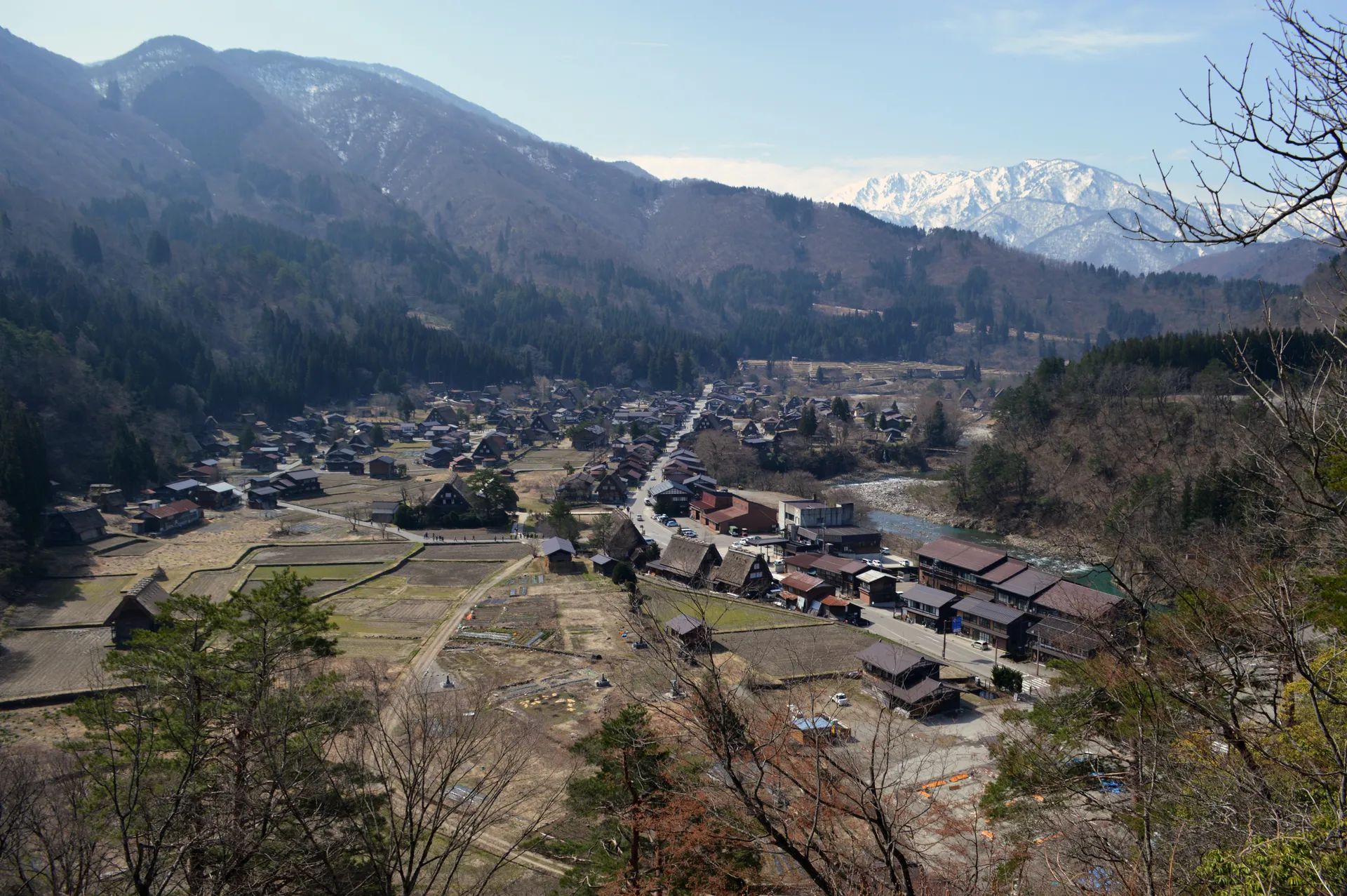
The village itself is small and easily walkable, and honestly walking is the whole point: you wander the lanes between thatched farmhouses, cross the Deai bridge over the Shogawa river, and take your time. There is no train station in the village, so you arrive by highway bus. Buses connect Shirakawa-go with the nearby town of Takayama in about fifty minutes, with the city of Kanazawa, and with Nagoya, making these the usual gateways. The Ogimachi viewpoint, which gives the classic panorama over the gassho rooftops, is reached by a short uphill walk or a paid shuttle bus. Winter roads can be snowy, so leave buffer time and book seats ahead. From December 2026 tour buses need an advance slot at Seseragi Park, the main car park across the river, part of the same effort by the village to manage numbers on its busiest days.
- The core Ogimachi village is fully walkable in an afternoon.
- Highway buses link to Takayama (~50 min), Kanazawa, and Nagoya.
- No train serves the village; plan around bus schedules.
- Reach the Shiroyama viewpoint on foot or by shuttle.
Sorting transport? Book an airport transfer, or compare car rental on Auto Europe and QEEQ.
Visas for Shirakawa-go
Shirakawa-go follows Japan's national entry rules, so nothing here is village-specific. Many nationalities receive visa-exempt short-stay entry, commonly up to 90 days, for tourism, which comfortably covers a slow cultural visit. Exemption terms vary by passport. For longer stays, Japan has introduced a digital-nomad route with its own income and insurance conditions, alongside traditional work, student, and other visa categories. Overstaying is taken seriously, so track your permitted days carefully. If you plan to base yourself in Japan and merely use Shirakawa-go as a scenic escape, sort your longer-term status separately.
- Short-stay visa exemption commonly allows up to 90 days for eligible passports.
- Longer stays may fit the digital-nomad or other formal visa categories.
Best Time to Visit Shirakawa-go
Winter, roughly December to February, is the iconic season, when deep snow blankets the steep thatched roofs and the village looks exactly like the postcards. On select evenings the winter light-up illuminates the farmhouses after dark, and these dates draw huge demand, so book lodging and any viewpoint or shuttle slots far ahead. Spring and autumn are lovely alternatives: fresh green in spring and glowing foliage in autumn, with milder walking weather and slightly thinner crowds. Summer is lush and quieter but can be warm and humid. On peak days the village fills with day-trippers, so an overnight stay lets you enjoy the calm early mornings and evenings after the tour buses leave. The light-up is now rationed rather than open to all: the 2027 edition falls on four January dates, a holiday Monday and three Sundays, rooms booked through the tourist association are allocated by lottery, and the first round of car-park reservations sold out soon after opening on 10 September. Anyone set on seeing it needs to enter that lottery months ahead rather than turn up on the night.
- December to February: snow scenery and the famous light-up evenings (book very early).
- Spring and autumn: green valleys or fall foliage with gentler crowds.
- Summer: lush and quieter, but warm and humid.
- Staying overnight beats a day trip for peace and atmosphere.
Pros and Cons of Shirakawa-go
Shirakawa-go rewards travelers who want beauty, quiet, and living heritage rather than productivity or nightlife. The upside is real: a UNESCO World Heritage landscape, warm farmhouse hospitality, superb safety and cleanliness, and mountain scenery that shifts dramatically with the seasons. The trade-offs are equally real. This is a very touristy village with limited services, near-silent nightlife, little English, and heavy day-tripper crowds on peak dates. Winters are cold and snowy, and there is simply no nomad community to plug into. Come for a short, intentional cultural stay and it can be unforgettable; come expecting a work base or a social scene and you will be disappointed. The houses are working structures with a demanding upkeep rather than museum pieces: a thatched roof here is replaced every 30 to 40 years, a job that once took 200 to 300 people a day under yui, the custom of unpaid mutual labour among neighbours. The steep attics under that thatch were built for raising silkworms, and the space beneath the ground floor was used to make nitre for gunpowder.
- Pros: stunning heritage setting, farmhouse stays, top-tier safety and cleanliness, strong nature.
- Pros: authentic rural culture and unforgettable snow-season atmosphere.
- Cons: limited services, quiet nightlife, minimal English, crowded peak days.
- Cons: cold snowy winters and no nomad scene or coworking.
Who Shirakawa-go Is For
Shirakawa-go is for the slow traveler and the culture-seeker, not the remote-work grinder. It suits someone weaving a short, memorable stop into a wider Japan itinerary, perhaps pairing it with Takayama and Kanazawa, who wants to sleep in a thatched farmhouse, walk snowy lanes at dawn, and unplug from the noise of a city. Photographers, couples on a quiet escape, and anyone drawn to traditional rural life will feel right at home. It is a poor fit for nomads needing reliable coworking, nightlife, a social scene, or a long stable base. Treat it as a two-to-four-night cultural retreat rather than a place to settle, and it delivers something few destinations can. For deeper quiet, the same World Heritage listing includes Ainokura and Suganuma in Gokayama, across the prefecture line in Toyama, hamlets of a few dozen households at most that make Ogimachi look like a town.
- Great for: slow travelers, culture and heritage lovers, photographers, couples.
- Great for: anyone wanting a quiet snow-season escape within a larger Japan trip.
- Not for: nomads needing coworking, nightlife, or a long-term base.
- Best enjoyed as a short, intentional overnight stay.