Cost of Living in Rocamadour
Where this figure comes from. No cost survey covers Rocamadour, so the $1,050 a month above is our own estimate rather than a measurement. On 416 of our 999 city guides the figure is built from a published Numbeo basket, a one-bedroom rent in the centre plus one person's monthly costs without rent, converted to USD; this city is not one of them. How we source everything.
Rocamadour is a small, tourist-driven village in the Lot department of Occitanie, and prices reflect that: a coffee or croissant near the Cite Religieuse can run higher than in an average French town, especially April through September. Budget nomads should expect around $1,840 to $2,530 a month for a comfortable stay, covering a gite or small apartment, groceries from Gramat or Souillac, and occasional meals out. Renting directly in the medieval village itself is rare and pricey, since most buildings are shops, hotels, or pilgrim lodgings, so many longer-stay visitors base themselves in L'Hospitalet just above the cliff or in nearby Gramat, where rents and daily costs drop noticeably. Self-catering is the most economical route: the weekly market in Gramat and local farm shops sell Rocamadour AOP goat cheese, walnuts, and Quercy lamb at fair prices. Winter, when the village empties out, is considerably cheaper across the board, with some restaurants and hotels closing entirely. All prices are in US dollars, and cash is still useful for smaller family-run eateries.
Where to Work in Rocamadour
Rocamadour was stacked into a cliff for pilgrims rather than laptops, and nothing about it has since been adapted for remote work. There is no dedicated coworking space, and the village's steep, stepped layout makes it awkward to set up a laptop routine. Wifi is generally decent in hotels and gites aimed at tourists, but it can wobble during peak pilgrimage and summer crowds when everyone is online at once. The most realistic options are working from your accommodation, from a quiet hotel lounge or terrace in L'Hospitalet with valley views, or from a cafe table in the lower village during shoulder season when it is not overrun. Some visitors drive the fifteen minutes to Gramat, a proper working town with more reliable connectivity and a couple of cafes that tolerate a laptop for an hour or two. If your work depends on stable video calls or fast uploads, treat Rocamadour as a short, scenic detour rather than a base, and keep a mobile data backup, since rural French coverage in the gorge can dip.
Getting Around Rocamadour
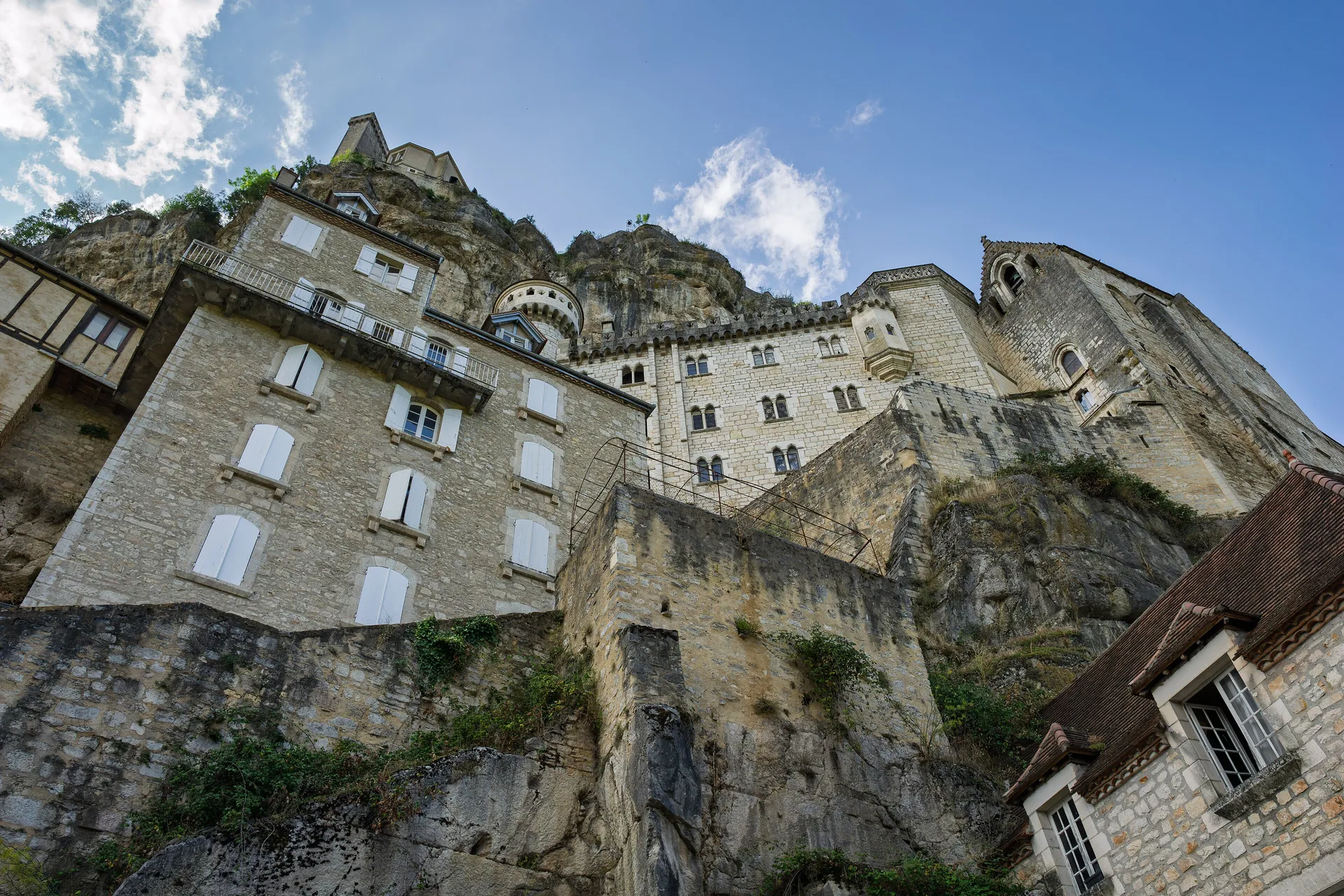
A car is genuinely helpful here, and for many practical errands it is close to essential, since the village sits at the bottom of a gorge with the wider Lot countryside spread out around it. The village itself is pedestrian and famously vertical: a single main street climbs from the Alzou riverbed up to the sanctuary halfway up the cliff, and then further up to the chateau at the top. Steps are unavoidable, though an elevator and a small tourist train help cover the steepest sections for those who cannot manage the climb. There is a train station, Rocamadour-Padirac, on the Brive to Toulouse line via Gourdon, but it sits several kilometers from the village and taxis or a rental car are needed to close the gap. The nearest airports are Brive-Vallee de la Dordogne, about 50 minutes away, and Toulouse-Blagnac, roughly two hours by car, with Toulouse offering far more international connections. Cycling is popular among visitors staying longer, though the surrounding hills are demanding.
Sorting transport? Book an airport transfer, or compare car rental on Auto Europe and QEEQ.
Visas for Rocamadour
France is a Schengen Area member, so most nomads from the US, UK, Canada, Australia and similar non-EU countries can visit visa-free for up to 90 days within any 180-day period, which comfortably covers a stay of any realistic length in Rocamadour itself. For longer stays, France offers a long-stay visitor visa (VLS-TS) for those who can show sufficient income or savings and do not intend to work for a French employer, and a separate "passeport talent" track that includes provisions for remote workers and freelancers meeting income thresholds. EU and EEA citizens can live and work here without a visa at all. Given how small and seasonal Rocamadour is, almost nobody settles here on a work visa specifically for the village; instead, people basing themselves in the wider Lot region for months typically process paperwork through the French consulate in their home country before arrival, since in-country visa conversions from tourist status are limited. In summer the closest external border is Brive airport, where Ryanair's seasonal flights from London Stansted put non-EU arrivals through Entry/Exit System enrolment with fingerprints and a photograph; outside that season the first crossing is usually at Toulouse or Paris.
Best Time to Visit Rocamadour
Late spring through early autumn, roughly May to September, brings warm, dry days ideal for walking the ramparts and gorge trails, but this is also when coach tours and pilgrim groups pack the narrow main street shoulder to shoulder, particularly around midday. If you want the postcard views without the crush, aim for May, June, or September, when the weather is still pleasant but crowds thin noticeably in the mornings and evenings. Winters are mild by northern European standards but genuinely quiet, with many shops, restaurants and even some hotels shutting for the season between November and Easter, so it suits travelers who want solitude over amenities. The oceanic climate means rain is possible year round, so pack layers regardless of season. For photographers, the golden hour light on the cliff face in shoulder season is hard to beat. Pentecost weekend brings the village's cheese fair, when Rocamadour AOP producers sell from stalls along the main street, and mid-August, around the Assumption, adds pilgrims to the peak of the holiday crowds.
Pros and Cons of Rocamadour
The pros are substantial: Rocamadour is one of the most visually striking villages in France, with chapels and houses stacked into a sheer limestone cliff, deep pilgrimage history tied to the Black Madonna, genuinely excellent regional food including its namesake AOP goat cheese, and easy access to major Dordogne and Lot attractions like the Gouffre de Padirac caves and the Dordogne valley. The cons are just as real: it is tiny, with a permanent population in the low hundreds, meaning almost no long-term community or professional network to plug into. The terrain is steep and stairs-heavy, which is tough with luggage, mobility limits, or small children. Coworking infrastructure is essentially nonexistent, tourist crowds in peak season can make simple errands slow, and much of village life shuts down outside the main season. It is also expensive relative to its size given how tourism-dependent the local economy is.
Who Rocamadour Is For
Rocamadour suits travelers, photographers, pilgrims and history lovers who want a short, memorable stop rather than a working base: two to five days is the natural rhythm here, ideally combined with a longer stay in Gramat, Souillac, or elsewhere in the Dordogne and Lot where daily life is easier and remote work is realistic. It is a poor fit for anyone who needs dependable coworking, an active nomad community, or step-free access. It works well for slow travelers doing a countryside circuit through southwest France who can treat Rocamadour as a scenic, culturally rich detour, working remotely from a nearby town in the mornings and exploring the cliffside village and gorge on foot in the afternoons and evenings when the crowds have eased. Walkers on the Way of St James are a natural fit: Rocamadour sits on a variant of the route through Quercy and is part of the UNESCO listing for the Santiago pilgrim paths, so a day on foot down the Alzou gorge gives the village the arrival it was built for. Families with children who like animals also get more than they expect, with the Rocher des Aigles birds of prey and the Foret des Singes macaque park both a few minutes' drive from the cliff.