Cost of Living in Kaş
Where this figure comes from. No cost survey covers Kaş, so the $800 a month above is our own estimate rather than a measurement. On 416 of our 999 city guides the figure is built from a published Numbeo basket, a one-bedroom rent in the centre plus one person's monthly costs without rent, converted to USD; this city is not one of them. How we source everything.
Kaş runs on the Turkish lira (TRY), and while Turkey overall remains one of the cheaper countries for remote workers, Kaş is priced above inland Anatolian towns because it is a well-established Turquoise Coast resort. A studio or one-bedroom apartment in the town center or on the Cukurbag peninsula runs roughly $315-590 a month in the summer season, dropping by a third or more if you sign a longer winter lease. A simple lunch of grilled fish or a pide runs $3-6.50, a coffee at a harbour cafe around $1.50-3, and a beer $3-5.50, all noticeably higher than Fethiye or Antalya city because Kaş leans on tourist footfall. Groceries from the Friday pazar (market) and local markets are still good value: vegetables, olives, cheese, and bread cost a fraction of Western Europe. Budget nomads can live comfortably on $525-735 a month outside July and August; during peak summer, expect costs to climb 30-50% as short-term rental demand spikes and restaurants raise prices for the crowds arriving by yacht and gulet.
Where to Work in Kaş
Kaş has no dedicated coworking space as of this writing, so most remote workers piece together a routine from harbour-view cafes with decent wifi, a handful of boutique hotel lobbies, and their own rented apartment. Cafes around the old harbour and the main square (Cumhuriyet Meydani) are the default daytime option, several with outdoor seating and usable, if not fast, connections. Wifi in Kaş is generally mid-tier for Turkey standards: fine for email, video calls, and browsing, but liable to hiccup during peak summer when the town's population multiplies and everyone is streaming. If your work depends on rock-solid bandwidth, carry a local SIM (Turkcell or Vodafone Turkey both have reasonable 4G coverage in and around town) as backup, and test any apartment's connection before committing to a long stay. The upside is a relaxed, low-distraction pace: mornings on a cafe terrace overlooking the marina, afternoons free for a swim or dive, which is exactly the trade nomads come to Kaş for.
Getting Around Kaş
Kaş itself is compact and steeply hilly, built on a slope down to the harbour, so most daily errands are done on foot, with sturdy shoes recommended for the cobbled inclines. For getting to Kaş from outside, the nearest airports are Dalaman (about 2-2.5 hours by road) and Antalya (about 3-3.5 hours), both served by direct and connecting international flights; from either, you continue by intercity coach or a private transfer. Regular long-distance buses connect Kaş to Antalya and Fethiye (roughly 2-3 hours each), run by companies like Kamil Koc and Pamukkale, with a change often required at Antalya's main terminal for onward international coach links. Locally, dolmus minibuses shuttle along the coast to Kalkan, Kaputas beach, and nearby villages frequently and cheaply. Taxis are available but pricier than dolmus. Renting a scooter or small car is popular for exploring Kalkan, Kaputas, and the Lycian Way, since Kaş's own bus and ferry links to more remote coves are limited outside peak season, and having your own wheels opens up the coast considerably.
Sorting transport? Book an airport transfer, or compare car rental on Auto Europe and QEEQ.
Visas for Kaş
Most Western nomads (US, UK, EU, Canada, Australia and many others) can enter Turkey visa-free or via the e-Visa system, typically granting a 90-day stay within any 180-day period, though requirements vary by nationality. This 90/180 rule is the key constraint for longer stays: Turkey keeps its own rolling 180-day count, separate from Schengen, so once your days are used you must leave and wait until enough of them fall out of the window before re-entering. For nomads wanting to stay longer than that, the usual route is Turkey's short-term residence permit (ikamet), which asks for proof of address (a rental contract), health insurance and a visit to the immigration office, but first applications made simply to live by the sea are refused far more often than they were a few years ago, and because Kaş sits in Antalya province rather than in Muğla, where Fethiye is, the appointments and paperwork mean trips to the provincial office in Antalya. The Greek island of Kastellorizo lies about two kilometres off the harbour, close enough to tempt a day across, but it is Schengen territory: neither a Turkish e-Visa nor a Turkish residence permit covers it, so anyone whose passport needs a Schengen visa has to arrange one before buying the boat ticket.
Best Time to Visit Kaş
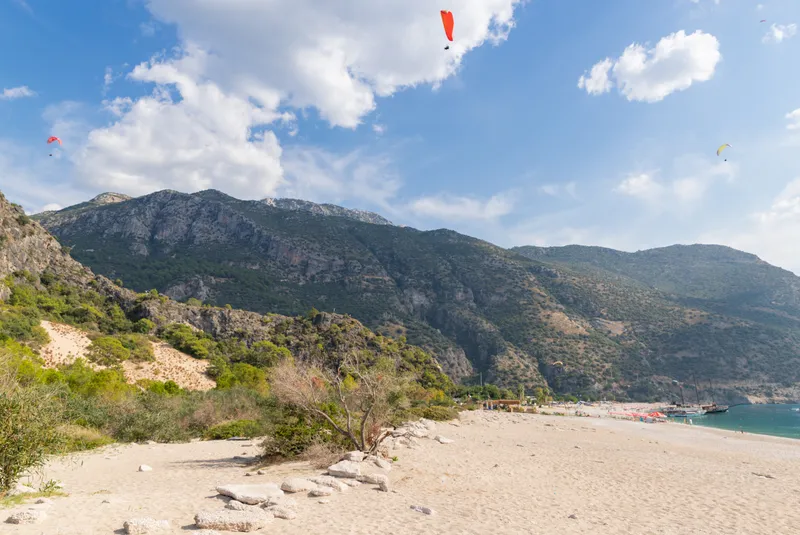
Kaş has a genuine warm season stretching from April through October, with the sweet spot for most nomads being May-June and September-October: warm enough to swim, dive, and kayak the Kekova coves, without the peak crowds, prices, or heat of July-August, when Mediterranean sun and tourist volume both spike hard. Winter (December-February) is a different town altogether: quiet, cooler and rainier, with many restaurants, dive shops, and boat tours shutting down or scaling back for the off-season, so it suits nomads who want solitude and low cost over lively social life or open dive centers. If diving, sea kayaking over the sunken ruins near Kekova, or paragliding off the nearby ridges are priorities, plan around the April-October window when operators are running full schedules. Walkers work to a different calendar from swimmers. The Lycian Way stages either side of town, west towards Gökçeören and east along the coast, are best done in spring and again in October and November, when full days on the exposed limestone are comfortable rather than punishing.
Pros and Cons of Kaş
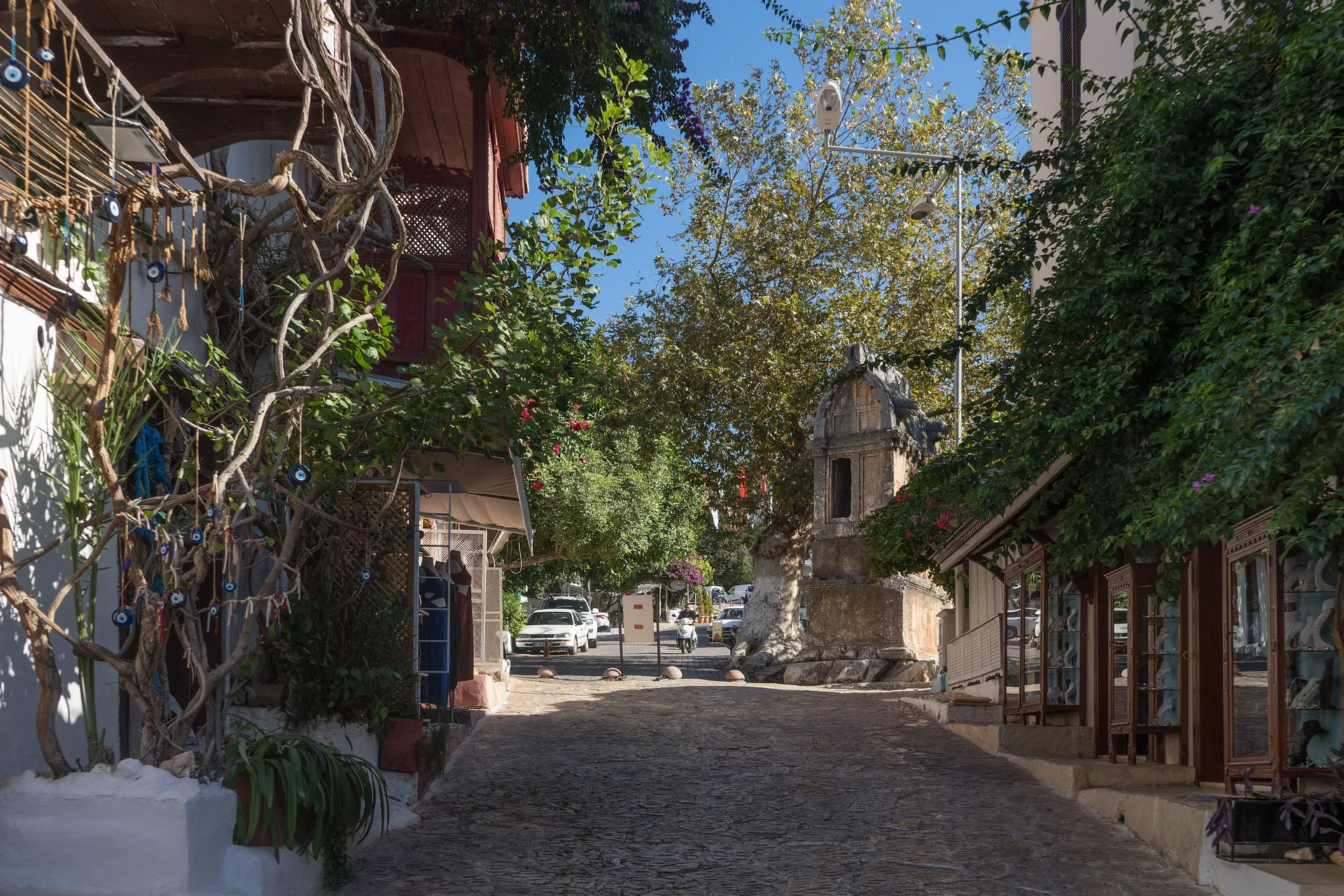
Pros: a genuinely beautiful, whitewashed harbour town with bougainvillea-lined streets and a Lycian rock tomb carved into the hillside right above town; excellent diving, sea kayaking over the sunken city near Kekova, and paragliding on the doorstep; a relaxed, slower pace than the bigger Turkish resort towns; a growing and increasingly visible slow-travel and remote-work community; and genuinely good, affordable Turkish and seafood dining. Cons: extremely seasonal, with a lively, expensive summer giving way to a quiet winter where many businesses close; steep, hilly streets that are a real workout (and a challenge with luggage or mobility issues); wifi that is workable but not fast or fully reliable, especially in peak season; no dedicated coworking space; and a town that can feel overrun with day-trippers and yacht tourists in July and August, pushing prices and crowds up sharply. Distance from a large hospital is the con that rarely gets mentioned: Antalya, the nearest big city, is three hours or more by road, which deserves some thought from anyone planning to dive or fly off the ridges every week.
Who Kaş Is For
Kaş suits nomads who want a coastal, outdoors-oriented lifestyle base built around diving, sea kayaking, swimming, and hiking the Lycian Way, and who are comfortable working from cafes rather than a formal coworking desk. It is a strong fit for those who can flex their travel dates around the shoulder seasons (spring and autumn) to get the best balance of good weather, lower prices, and thinner crowds, and who don't mind steep walks and modest wifi in exchange for genuinely striking scenery. It is less suited to nomads who need fast, guaranteed connectivity for demanding video calls, who want a large always-on international coworking scene, or who are visiting in deep winter expecting a lively social calendar, since much of the town's rhythm shuts down between November and March. Divers are the other natural audience, because a stay of a few months leaves room to finish a full certification course around a working week, with the dives fitted into afternoons once the calls are done.