Cost of Living in Monaco
Where this figure comes from. No cost survey covers Monaco, so the $5,200 a month above is our own estimate rather than a measurement. On 416 of our 999 city guides the figure is built from a published Numbeo basket, a one-bedroom rent in the centre plus one person's monthly costs without rent, converted to USD; this city is not one of them. How we source everything.
Budget around $5,200 a month as a solo remote worker in Monaco, which makes it by a distance the most expensive place on this site. A one-bedroom flat runs roughly $3,500 to $5,000 and that is the ordinary market rather than the top of it: Monaco has the highest property prices per square metre in the world. Groceries and restaurants are priced for the residents, though the market at La Condamine and a short trip into France are both considerably cheaper. There is no income tax for residents other than French nationals. This is our own estimate rather than measured data. The obvious economy is geographic. Beausoleil begins at the top of the hill and is in France, with rents a fraction of Monegasque ones and a five-minute walk to the border, which is how a large share of the people who work in the principality actually live. Doing that forfeits the tax position entirely. Inside Monaco, a parking space is bought or rented separately and costs what a flat does in many European cities. Agency fees and several months of deposit are standard, and landlords select tenants rather than the other way round.
Where to Work in Monaco
Monaco's infrastructure is as good as anywhere in Europe: fibre throughout, comprehensive 5G, and a state that has invested in being an early adopter of network technology. Power is entirely reliable. There is coworking, aimed largely at the financial and yachting sectors. French is the official language and the language of administration, with Italian and English both widely spoken given the international population; a majority of residents are not Monegasque. The principality sits in central European time and functions as part of the French Riviera economy. Anyone working with London should note the one-hour offset, which makes a British afternoon and a Monegasque one almost entirely overlapping. The professional world here is narrower than the infrastructure suggests, and it concentrates in a handful of sectors: private banking and wealth management, the yachting industry, motorsport and a growing sports-business cluster. Anyone outside those will find the local network of limited use and is better off treating Monaco as a place to work from rather than a place to work in. The rhythm follows the Riviera's, which means the principality empties of its business population in August and fills up with everyone else.
Getting Around Monaco
Monaco is two square kilometres and can be crossed on foot in half an hour, though it is built up a steep hillside and the walk involves a network of public lifts and escalators that residents use constantly and visitors rarely find. Buses cover the principality. There is a railway station, entirely underground, with frequent trains along the coast to Nice in twenty minutes and Ventimiglia in Italy. Nice airport is thirty minutes by road or seven minutes by the helicopter shuttle, which is a genuinely normal way to arrive here. The lifts are the thing to learn first, because they are public, free and open long hours, and they turn a punishing gradient into a flat city. A bike share is shared with the neighbouring French communes. Driving is the option to avoid: the streets are narrow, one-way and frequently closed for events, and public parking is expensive even by local standards. A coastal path runs west towards Cap d'Ail, which is the pleasantest way out of the principality on foot and takes about an hour to reach the first proper beach.
Sorting transport? Book an airport transfer, or compare car rental on Auto Europe and QEEQ.
Visas for Monaco
Monaco is not in the European Union but is in the Schengen area in practice, with its border controls handled by France under a long-standing arrangement, so Schengen rules and Schengen day counts apply exactly as they would in France. There is no remote work visa. Residence requires proving accommodation in the principality, which given the property market is the real barrier, along with a substantial deposit with a Monaco bank, generally several hundred thousand dollars. The tax advantage applies to residents and to nobody else. Anyone considering residence should also budget for the annual renewal process, which requires demonstrating continued means and occupancy of the property. The residence card runs in stages, a first card of one year renewed annually, then longer terms and eventually a ten-year card for those who stay, and each renewal tests presence rather than paperwork alone: a holder who is rarely here can lose it. The exclusion of French nationals from the tax position is not an administrative quirk but a bilateral treaty dating from the 1960s, and it has no workaround. Applicants from outside the European Union need a French long-stay visa before they can apply at all.
Best Time to Visit Monaco
May to September is the warm half, with daytime temperatures in the high twenties and the Mediterranean swimmable from June. Two events dominate the calendar and both fill every room in the principality and along the coast: the Rolex Masters tennis in April and the Formula One Grand Prix over a weekend in late May, when the streets become the circuit and the whole place is closed to ordinary traffic. Winter is mild, around thirteen degrees, and the principality is noticeably quieter and cheaper. The Monaco Yacht Show in late September is the third of the events that fills the principality and is the largest of its kind anywhere. The Grand Prix needs a decision rather than a shrug. Grandstand seats are expensive and sell out far ahead, the free viewing spots on the Rock fill hours before the cars run, and accommodation along the whole coast prices up for the week, so anyone here for other reasons should either commit to it or leave. Winter has an advantage beyond the price: the ski resorts of the southern Alps are inside two hours, so a morning on snow and an afternoon by the sea is an ordinary thing to do.
Pros and Cons of Monaco
Monaco has one of the lowest crime rates in the world, no income tax for residents, a Mediterranean climate, the Oceanographic Museum that Jacques Cousteau ran for thirty years, and the Alps an hour inland. Nice airport is half an hour away with connections everywhere. The cost of accommodation is the entire story here: the residence requirement amounts to proving you have somewhere to live in the most expensive property market on earth, the principality is very small, and the social scene is narrow and heavily weighted towards wealth. The principality has also reclaimed a substantial part of its territory from the sea, and continues to, which is the only way it can grow at all. The principality is a permanent building site, since the only directions it can grow are upward and out into the sea, so construction noise and hoardings are a constant somewhere in view. And it is among the most closely watched places in the world, with dense camera coverage and a very high ratio of police to residents, which is precisely why the crime figures read as they do and which some people find reassuring and others find airless.
Who Monaco Is For
Almost nobody reading this site should move here, and it is included because it is one of the few places whose figures are worth seeing plainly. As a base for ninety days on a Schengen allowance it is possible and expensive. As a residence it requires capital rather than income. Cost of living, a community to join and physical space are three things Monaco has arranged its entire existence around not providing to anybody arriving without means. Anyone drawn to the Riviera should look at Nice or Menton, both of which are ten minutes away and a different economy. Where it does make sense is narrow and specific: someone whose work is already in the yachting, motorsport or private banking worlds, or a family with the capital for whom the tax position and the safety together justify the property cost. For everyone else the useful version of this place is a day at a time from Nice or Menton, which costs a train ticket, shows you the whole principality in an afternoon and settles the question. Anyone treating the tax position as the reason should take advice on their own country's rules first, since residence here does not by itself end an obligation elsewhere.
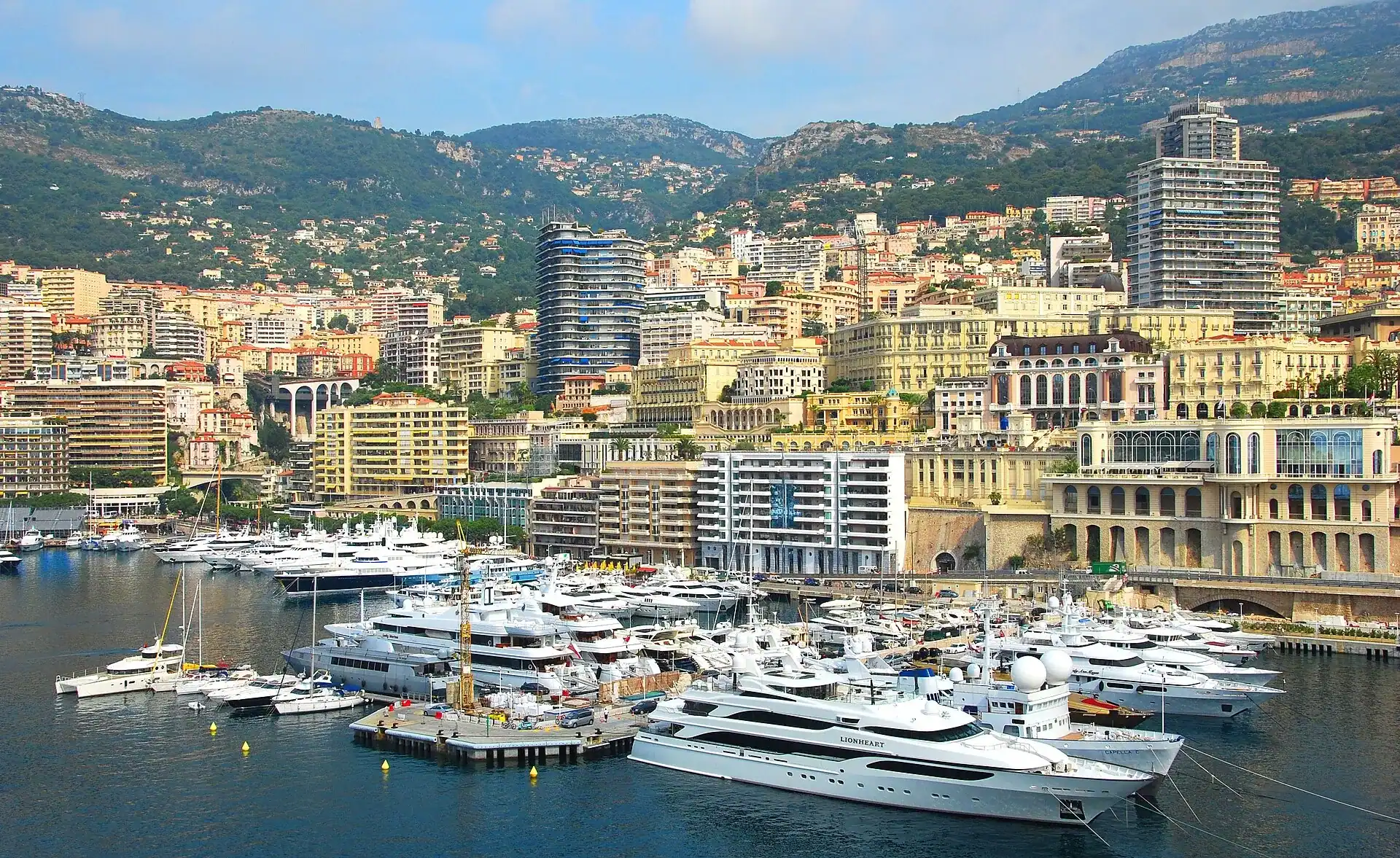 Photo: Mike McBey / Wikimedia Commons (CC BY 2.0)