Cost of Living in Regensburg
Real market data
Source: Numbeo · August 2026
$1,780/moSolo nomad1-bed centre + living costs
$2,510/moCoupleshared 1-bed + costs
$1,570/moLean / localcheaper area + costs
- 1-bed rent, city centre$850€740
- 1-bed rent, outside centre$650€562
- Monthly costs excl. rent (1 person)$920€803
- Meal, inexpensive restaurant$17€15
- Monthly transit pass$69€60
- Buy price, per m² (centre)$8,590€7,460
Prices are from Numbeo (August 2026), converted to USD at $1 = €0.87 (01 Aug 2026). The monthly living-costs figure is our transparent one-person basket, groceries, a few meals out, utilities, phone, internet, transport and essentials, priced from those figures. Solo adds central rent; couple and lean are estimates from the same numbers.
Regensburg is more affordable than Munich while still offering Bavarian quality of life, though it is not a budget destination by German standards. A modest monthly budget runs roughly $1,100 to $1,600, covering a small flat, groceries, transport, and a healthy dose of the city's cafe and beer-garden culture. Rents form the biggest cost, and the large student population keeps demand high, so central studios command a premium. You will pay less by cooking at home, cycling instead of driving, and shopping at discount supermarkets. These figures are editorial estimates rather than official data, and your actual spend will vary with lifestyle, flat size, and how often you eat out. With two universities feeding the rental market, September and early October, just before the winter semester starts, are the hardest weeks of the year to find a room, so arriving outside that window saves both money and stress. The Deutschlandticket, now about $74 a month, covers the local buses as well as regional trains, so it replaces a city pass rather than adding to one.
- Studio or small one-bed flat: roughly $650 to $950 a month, higher for a furnished central place.
- Groceries: around $250 to $350 a month cooking mostly at home.
- Monthly public transport pass: budget-friendly, with Germany's nationwide Deutschlandticket a great deal.
- A meal out or a few beers in the old town: a manageable weekly treat, cheaper than Munich.
Where to Work in Regensburg
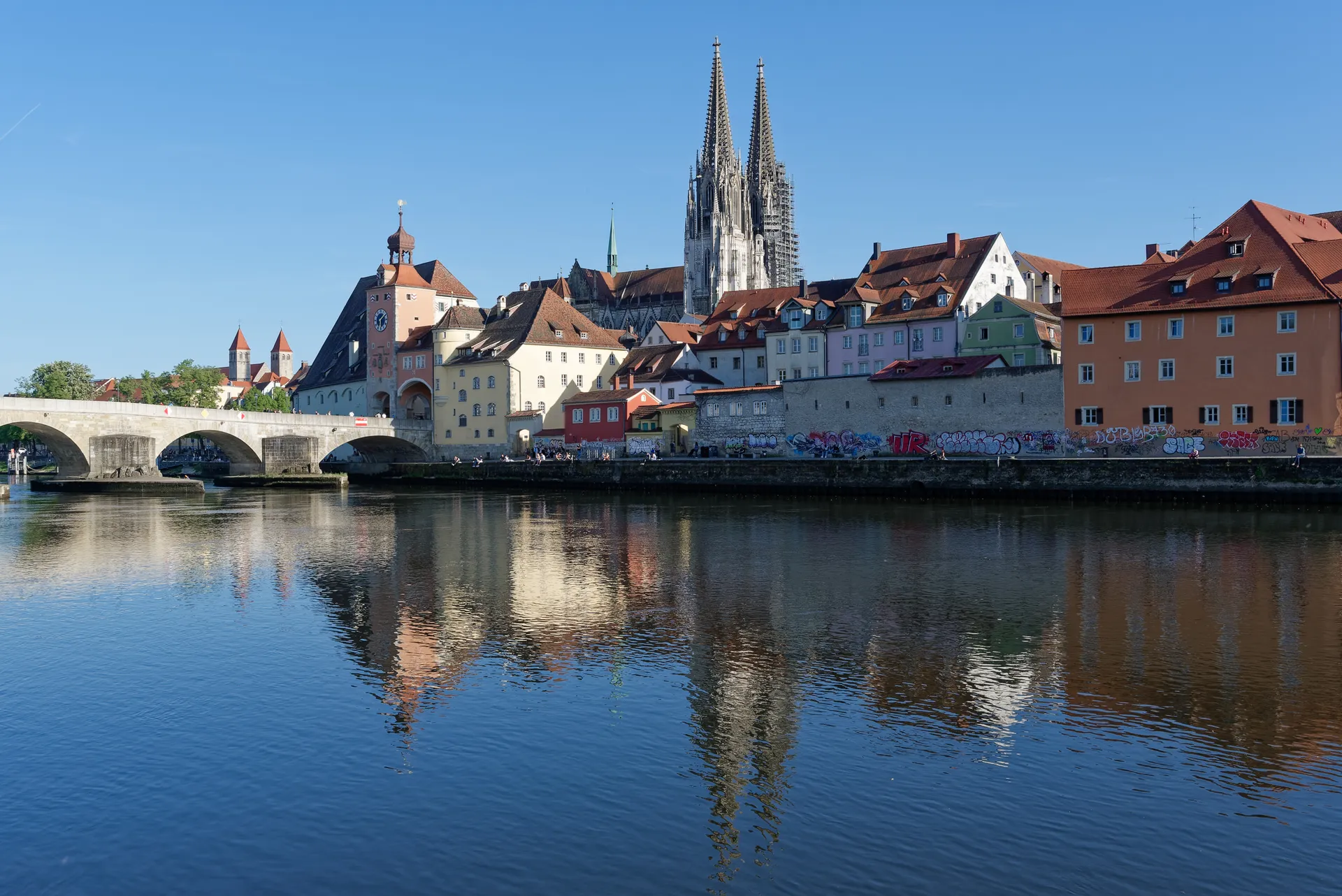
Regensburg suits remote workers who like compact, walkable settings. The Altstadt is dotted with independent cafes offering reliable wifi and good coffee, many housed in centuries-old buildings with vaulted ceilings. A handful of dedicated coworking spaces serve the city's start-up and student scene, giving you desks, meeting rooms, and a community if working from cafes wears thin. The University of Regensburg and the technical university (OTH) add a steady stream of academic and tech energy, plus libraries and quiet study corners. In warmer months the Danube riverbank and green spaces make pleasant spots for a laptop and a phone hotspot. Home broadband is quick to arrange and dependable once you have a lease.
Getting Around Regensburg
Regensburg is a walker's and cyclist's city. The UNESCO-listed old town is largely pedestrianised, and most daily errands sit within a fifteen-minute stroll, so many residents skip a car entirely. Cycling is popular and well catered for, with bike lanes and flat riverside paths. A network of local buses connects the centre with outer districts and the two campuses, and the nationwide Deutschlandticket makes regional travel simple and cheap. The main station puts you about ninety minutes from Munich by train, with fast links to Nuremberg and beyond. The nearest major airport is Munich, reachable by train and bus, so weekend trips across Europe are straightforward. Excursion boats leave the old-town quays in season for the Walhalla, the hilltop hall of fame downstream, and the Danube Cycle Path runs right through the city if you would rather pedal there. Upstream, Kelheim is under an hour away by regional train and bus, and from there boats run through the Danube Gorge to Weltenburg Abbey, a classic day out that needs no car.
Sorting transport? Book an airport transfer, or compare car rental on Auto Europe and QEEQ.
Visas for Regensburg
Germany sits within the Schengen Area, so many visitors can arrive for up to ninety days in any one-hundred-and-eighty-day period without a visa, though this does not permit long-term work. For a longer stay, Germany offers a well-known freelance route, the Freiberufler residence permit, aimed at self-employed professionals such as writers, designers, and consultants. You apply through the local immigration office (Auslanderbehorde) and typically show proof of clients, income, health insurance, and accommodation. Germany has also widened its routes for skilled workers, but it still has no visa built for remote or digital professionals, which is why the freelance permit carries most of the weight. Regensburg is a city outside any county, so it runs its own foreigners' office, while anyone renting in a commuter village such as Lappersdorf or Pentling deals with the county office at the Landratsamt instead, with its own queue and its own habits. Most long-haul arrivals land at Munich, where the EU Entry/Exit System takes a face image and fingerprints at the first crossing and then logs every entry and exit in place of a stamp. With no stamps left in the passport, keep boarding passes until a stay is over, since they are the only record of your dates that you hold yourself.
Best Time to Visit Regensburg
Regensburg has a mild continental climate with warm summers and cold, sometimes grey winters. Late spring through early autumn, roughly May to September, is the most rewarding window, when riverside terraces, beer gardens, and the Danube itself come alive under long, pleasant days. Summer is lively and green, though it can bring occasional thundery showers. Autumn offers golden light on the medieval towers and thinner crowds. Winter is atmospheric, especially during the Christmas markets that fill the old town squares, but expect short days and temperatures around or below freezing. If you dislike cold, aim for the warmer half of the year; if you love festive charm, December has its own quiet magic. The Dult, Regensburg's own fair of beer tents and rides on the Dultplatz, runs twice a year, in May and again from late August, and it is a local occasion rather than a tourist one. In December the festive market in the palace grounds of the Thurn und Taxis family charges admission, which keeps it calmer than the free markets on the old town squares.
Pros and Cons of Regensburg
Regensburg rewards nomads who value beauty, safety, and a human scale over big-city buzz and international convenience. Its medieval core is genuinely stunning and remarkably intact, everyday life feels calm and orderly, and the student population keeps evenings surprisingly lively. The trade-offs are a smaller expat community, a stronger reliance on German in daily life, and costs that, while below Munich, are still solidly Western European. Weigh these points against your own priorities before deciding. The Danube floods, and Stadtamhof and the Wöhrd islands sit low enough that riverside ground floors have taken water in past high floods, so check where a flat stands before you sign for it. The city is also more industrial than its postcard suggests: the BMW plant, the chipmaker Infineon and the machine builder Krones are major employers, which keeps shops, services and the job market healthy but holds rents firm. That same economy means the place does not empty out when the tourists leave.
- Pros: gorgeous, walkable UNESCO old town; high safety and cleanliness; lively student nightlife; easy rail links to Munich and Nuremberg; strong quality of life.
- Cons: small international nomad scene; German needed for much of daily life; cold winters; no major airport in the city; rents rising with student demand.
Who Regensburg Is For
Regensburg fits the remote worker who wants an authentic, beautiful German base rather than a ready-made expat bubble. It is ideal if you enjoy walkable historic streets, riverside beer gardens, a young university atmosphere, and easy weekend trains into Bavaria and central Europe. It suits solo travellers and couples who value safety, calm, and culture over nightlife-heavy party scenes or a large English-speaking crowd. Those willing to learn some German will get far more from the place and settle in faster. It is less suited to nomads who need a big international community, year-round warmth, or a direct international airport on the doorstep. For quiet productivity wrapped in medieval charm, Regensburg is hard to beat.