Cost of Living in Cudillero
Where this figure comes from. No cost survey covers Cudillero, so the $950 a month above is our own estimate rather than a measurement. On 416 of our 999 city guides the figure is built from a published Numbeo basket, a one-bedroom rent in the centre plus one person's monthly costs without rent, converted to USD; this city is not one of them. How we source everything.
Cudillero is inexpensive by Western European standards, and cheaper than the bigger Spanish nomad hubs like Barcelona or Madrid. A simple studio or one-bedroom apartment runs roughly $520 to $750 a month, more if you want harbour views in high season, when short-term rental supply tightens and prices spike for July and August. A sit-down seafood lunch at a harbourside marisqueria costs $17 to $29, a bottle of local Asturian sidra (cider) is a few dollars, and a basic grocery run for one person lands around $205 to $290 a month. Overall, a modest single-person budget outside of rent sits around $805 to $1,150 monthly, with rent as the main variable. There is no real coworking scene to price in, since almost nobody works remotely here long term. Cash is still useful in small bars, though cards are widely accepted in restaurants and shops.
Where to Work in Cudillero
Nowhere in Cudillero rents out a coworking desk, and a village of steep, narrow streets with houses stacked up a cliff was never going to leave room for the big, laptop-friendly cafes a work base usually leans on. A handful of hotel lounges and cafes around the harbour and main square have decent wifi and will tolerate a laptop over a slow coffee, but none are designed for a full workday, and tables are limited. Working from your rental is the realistic default, so check listings carefully for confirmed fibre or fast fixed-line internet before booking, since some older village buildings still rely on weaker connections. Mobile data from Movistar, Vodafone or Orange is generally reliable and can serve as a solid backup, especially since 4G coverage along this stretch of the Asturian coast is decent even where fixed wifi is patchy. Video calls are doable but plan for occasional interruptions.
Getting Around Cudillero
Cudillero itself is entirely walkable, in fact walking is your only real option inside the old village, since the streets are steep stone stairways unsuited to cars. That charm comes with a tradeoff: getting to and from Cudillero without a car takes effort. ALSA buses connect Cudillero to Oviedo and Gijon a few times a day, with the journey taking around 45 minutes to just over an hour depending on the route and stops. Cudillero does have a station, the terminus of the narrow-gauge C-4 commuter line from Gijón, with at least fifteen trains each way on weekdays and fewer at weekends, though for buses to the wider region and the airport the regional capital remains the better hub. If you plan to explore nearby beaches like Playa del Silencio, smaller villages such as Soto de Luina, or the coast toward Luarca, a rental car is genuinely worth it, since public transport to these spots is thin or nonexistent. Parking in Cudillero's centre is limited, with most visitors leaving cars in the upper village near El Pito and walking down.
Sorting transport? Book an airport transfer, or compare car rental on Auto Europe and QEEQ.
Visas for Cudillero
As part of Spain, Cudillero follows standard Spanish and Schengen entry rules. Most non-EU nomads, including US, UK, Canadian and Australian citizens, can stay visa-free for up to 90 days within any 180-day period under the Schengen rules, which is plenty for a scenic short base but not a long-term solution. For longer stays, Spain's digital nomad visa lets remote workers employed by or contracting for companies outside Spain apply for residency, typically renewable and eventually a path to longer-term status, though the paperwork (proof of remote income, health insurance, a clean criminal record) takes real time to assemble and is best started a few months ahead. EU and EEA citizens can simply live and work here without a visa. Given Cudillero's tiny size and near-total lack of expat infrastructure, most digital nomad visa holders in Asturias actually base themselves in Oviedo or Gijon and treat a village like Cudillero as a weekend or short-stay retreat rather than a full-time residence. The region's airport, a short drive east along the coast, takes Vueling flights from London Gatwick, with Wizz Air adding Luton from 27 October 2026, so British passengers have their Entry/Exit System record opened on landing there rather than at a Madrid connection.
Best Time to Visit Cudillero
Cudillero has an oceanic climate: mild but genuinely wet, with grey skies and rain a real possibility in any month. Summer, June through September, is by far the most pleasant window, with warmer temperatures, more sunshine, and the best chance of dry beach days at spots like Playa del Silencio, but it is also when the village is at its busiest and most expensive, with day-trippers filling the harbour by midday. Spring and early autumn offer a reasonable compromise: cooler weather, fewer crowds, and lower prices, though rain is more frequent. Winter is quiet, sometimes eerily so, with many restaurants and rental options scaling back, persistent damp weather, and a village that can feel half-shuttered outside the core tourist streets. If you want atmosphere and services, come in summer; if you want solitude and don't mind grey skies, winter delivers that too. Aim for 29 June if you can. On the feast of San Pedro a fisherman stands in a boat in the harbour and delivers L'Amuravela, a sermon in verse in the local Pixueto dialect that has teased the village about its year since the sixteenth century.
Pros and Cons of Cudillero
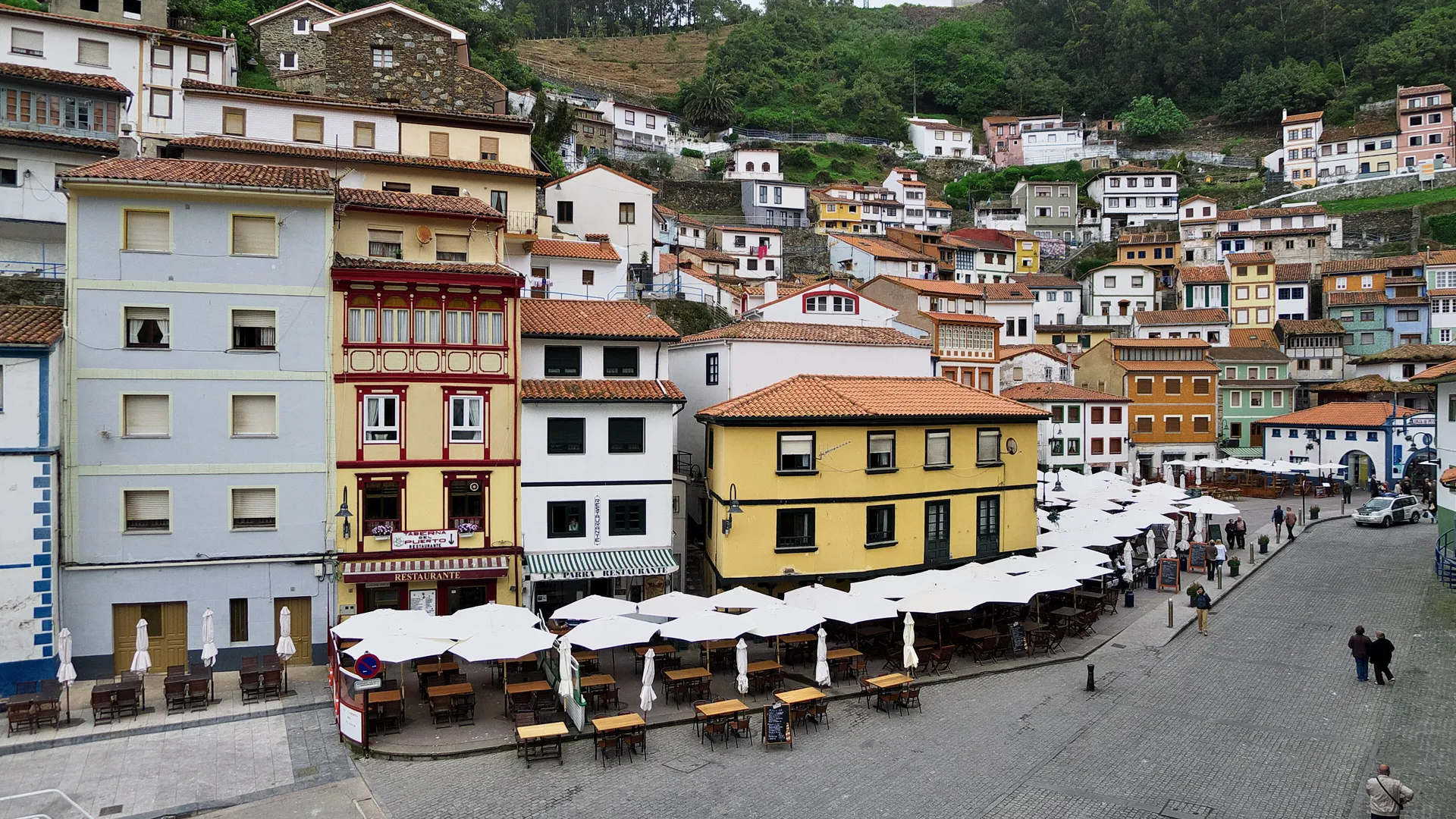
The pros are real: Cudillero is genuinely beautiful, with brightly painted houses cascading down a cliff amphitheatre to a working fishing harbour, excellent and affordable fresh seafood, a slower pace of life, and easy access to some of the greenest, least crowded coastline in Spain. It is also cheap relative to major Spanish cities and safe, with very low crime. The cons matter just as much for a nomad specifically: there is no coworking infrastructure, the village is tiny with a limited long-term social or professional community, public transport beyond Oviedo and Gijon is sparse, the steep terrain makes daily life with luggage or mobility issues harder, and the climate is wet more often than postcard-sunny. Off-season, many businesses close early or shut down entirely, and the sense of isolation can set in quickly if you are here for more than a couple of weeks without a car.
Who Cudillero Is For
Cudillero suits nomads who want a short, scenic reset rather than a home base, ideally one to two weeks tucked into a longer stay in Oviedo, Gijon, or elsewhere in Spain. It works well for writers, photographers, and anyone who genuinely wants quiet and natural beauty over nightlife, networking events, or a built-in remote-work community, none of which exist here in any meaningful way. It is a poor fit for anyone who needs reliable fast wifi in a dedicated workspace, wants an active social scene, or is not comfortable without a car for exploring the surrounding coast. Couples and solo travellers who cook simply, enjoy hiking and seafood, and can structure their own workday from a rental apartment will get the most out of it. Families should weigh the steep stairs and limited amenities carefully before settling in for anything beyond a short visit. For a wet afternoon there is La Quinta de Selgas, a nineteenth-century palace and garden at El Pito, just above the village, whose collection includes paintings by Goya.