Cost of Living in Rostock
Where this figure comes from. No cost survey covers Rostock, so the $1,500 a month above is our own estimate rather than a measurement. On 416 of our 999 city guides the figure is built from a published Numbeo basket, a one-bedroom rent in the centre plus one person's monthly costs without rent, converted to USD; this city is not one of them. How we source everything.
Budget around $1,500 a month, which makes Rostock cheaper than most western German cities. A one-bedroom runs roughly $600 to $950, with the Warnemunde seaside district at the top and the outer Plattenbau estates considerably cheaper. Groceries are ordinary German prices. Eating out is reasonable and the Baltic fish, particularly the herring and the Fischbrotchen sold from harbour kiosks, is cheap and good. Utilities run through a cold windy winter. Mecklenburg-Vorpommern has among the lowest wages in Germany, which is reflected in local prices. Anyone comparing with Hamburg two hours west should note that Rostock runs roughly half the price for a comparable flat, which is the largest such gap on this coast. The seaside district charges a visitor levy per night, standard at German coastal resorts, which pays for the beach access and the promenade. Heating is settled as a yearly reckoning rather than month by month, so the bill that lands after a cold winter arrives as one large figure rather than as a smooth cost. Flats in the prefabricated estates are cheap, well insulated and better built than their reputation, and that is where most of the value in this market sits, provided a tram line runs close enough to the door to make the distance irrelevant.
Where to Work in Rostock
Connectivity is good. Fibre coverage in Rostock is reasonable, mobile service is comprehensive and power is entirely reliable. There is a coworking presence helped by the University of Rostock, which was founded in 1419 and is the oldest in the Baltic region, and by a marine technology and offshore wind sector that is genuinely significant here. The time zone is central European. German administrative requirements apply, with the Anmeldung within two weeks mandatory and appointments best booked before arrival. Anyone in offshore wind should know that Rostock and the surrounding coast host manufacturing, installation and research operations that make it a genuine national centre. Shipbuilding was the identity of this place for a century, and the yards still here build sections rather than whole vessels, which is why the maritime work has become more research and engineering than production. Several national research institutes keep laboratories in the city, and a good share of the English-speaking professional population sits inside them. The working culture is eastern German and direct, and meetings begin when they were scheduled to begin.
Getting Around Rostock
Rostock is spread along the Warnow with the old town at one end and Warnemunde at the sea, and the S-Bahn connects them in about twenty minutes, which means the beach is genuinely at the end of the line. Trams cover the city. Cycling is easy on flat ground. Trains reach Berlin in about two and a half hours and Hamburg in two. Ferries run to Denmark, Sweden and Finland from the overseas port, and Rostock is a major Baltic cruise call. Anyone heading to Warnemunde should use the S-Bahn rather than drive, since parking near the beach in summer is difficult and the train runs every fifteen minutes. The coastal cycle route passes through the city and runs east and west along the shore for hundreds of kilometres, and the flat ground means ordinary people use it rather than only long-distance tourers. The regional airport inland keeps a thin schedule, so almost everyone flies from elsewhere. Parking in the old town is metered and scarce, which is one reason the tram carries as much of the city as it does.
Sorting transport? Book an airport transfer, or compare car rental on Auto Europe and QEEQ.
Visas for Rostock
Germany is in the European Union and the Schengen area, so European Union and EEA citizens may live and work here without a permit, subject to the Anmeldung. Everyone else needs a Schengen visa or a residence permit, with the EU Blue Card the main skilled route and the 2024 Opportunity Card available for qualifying job seekers. There is no digital nomad visa. The offshore wind and maritime sectors here do sponsor skilled roles, which is a more realistic route than most for non-Europeans. Anyone booking the Anmeldung should secure an appointment before arriving, since German registration offices release slots in batches and the two week deadline is real. Anyone who does land one of those offshore wind or maritime jobs also leaves the EU Entry/Exit System behind once the residence permit is issued, since the system tracks only short stays: the 90-day count and the fingerprint check at each external crossing stop applying when the card is in hand.
Best Time to Visit Rostock
June to August is the season, with July around twenty two degrees and Warnemunde's wide beach at its best, though the Baltic stays cold and the wind is constant. May and September are quieter and often clear. Winter from November to March is cold, dark and very windy, with the Baltic occasionally icing in the shallows. Hanse Sail in August fills the harbour with tall ships and is among the largest maritime festivals in Europe, drawing over a million visitors across four days. Warnemunder Woche in early July is the other date to know, a sailing week that predates the tall ships by decades and stays far more local, which makes it the better of the two if crowds are the concern. The hooded wicker beach chairs rented by the day are a north German institution rather than a novelty, and they exist because the wind makes an unsheltered beach unpleasant even in July. Sea temperature peaks in August at around eighteen degrees, which is why the sand is busier than the water. Storms push water up into the harbour, and the flood marks on the old buildings record the years it came furthest.
Pros and Cons of Rostock
Rostock has a Hanseatic brick gothic old town, a genuine Baltic beach at the end of a tram and train line, an old and serious university, and costs that sit well below anything in western Germany. The offshore wind sector gives it a real professional base. The wind here never really stops, the winter is dark at this latitude, the economic gap eastern Germany has not closed is visible, and the city empties out considerably once the summer season ends. The university was also the first in northern Europe when it was founded in 1419, and it remains a substantial research institution particularly in maritime and medical fields.
Who Rostock Is For
Maritime engineering, offshore wind and marine science are concentrated here, and beyond that it is sailors and anyone who wants a Baltic beach at German prices. It suits students given the university. Warmth and shelter from the wind are two things the Baltic coast does not provide in any season. Anybody expecting a prosperous western German city should also adjust: Mecklenburg-Vorpommern remains among the poorest parts of the country and the difference is visible. Brick gothic is the local architecture, and the Marienkirche holds its best argument: an astronomical clock built in 1472 that still runs and carries a calendar good until the year 2150, at which point somebody will have to deal with it. A semester or a posting is the natural length here, since the university and the offshore industry both work to fixed terms and the housing market follows them. Anyone arriving in October should understand that the city they see in February is the real one and the August version is the exception. The language is needed for everything outside the laboratories and the shipyard offices.
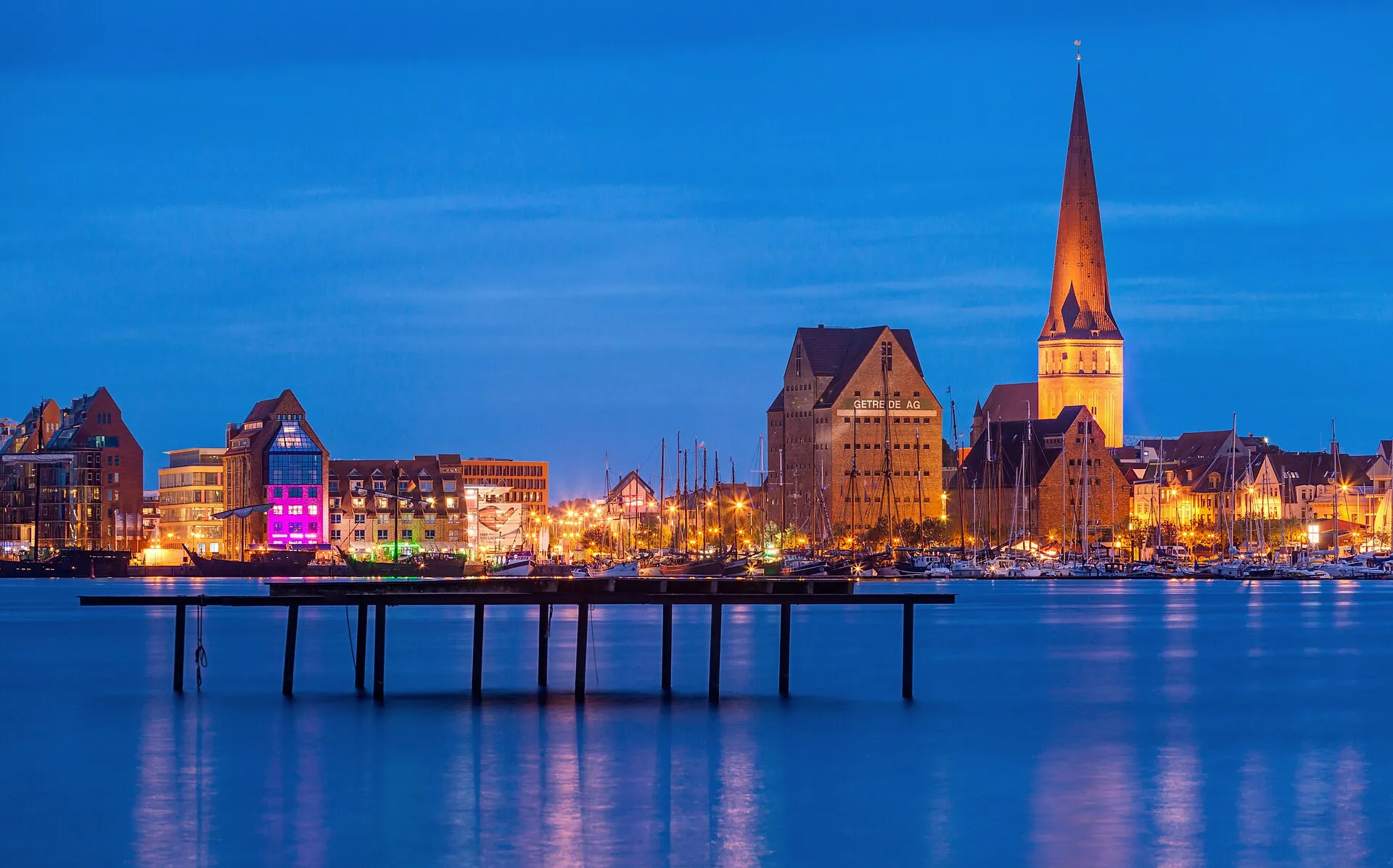 Photo: Moahim / Wikimedia Commons (CC BY-SA 4.0)