Cost of Living in Odense
Real market data
Source: Numbeo · September 2026
$1,930/moSolo nomad1-bed centre + living costs
$2,660/moCoupleshared 1-bed + costs
$1,650/moLean / localcheaper area + costs
- 1-bed rent, city centre$1,010kr6,574
- 1-bed rent, outside centre$730kr4,763
- Monthly costs excl. rent (1 person)$910kr5,934
- Meal, inexpensive restaurant$28kr180
- Monthly transit pass$54kr350
- Buy price, per m² (centre)$4,540kr29,477
Prices are from Numbeo (September 2026), converted to USD at $1 = kr6.49 (01 Aug 2026). The monthly living-costs figure is our transparent one-person basket, groceries, a few meals out, utilities, phone, internet, transport and essentials, priced from those figures. Solo adds central rent; couple and lean are estimates from the same numbers.
Budget around $1,930 a month, which is Danish pricing and considerably cheaper than Copenhagen. A one-bedroom runs roughly $850 to $1,300, and the student population means the market has more small flats than most Danish cities. Groceries are expensive, though the discount chains keep a basic shop manageable. Eating out is where the cost bites: a simple restaurant meal runs thirty dollars and up. Utilities are high and heating runs for half the year, usually through district heating. Denmark's tax rates are among the highest in the world, which is the other half of the arithmetic. The deposit convention is the shock for anyone arriving from outside Scandinavia: three months held as a deposit plus up to three months prepaid is standard and legal, so signing a lease can require six months of rent in hand before a single night is spent in the flat. Housing benefit exists and is means-tested, and students and low earners routinely claim it. The discount chains, Rema, Netto and Lidl, are where the weekly shop actually happens, and the gap between them and the full-service supermarkets is wide.
Where to Work in Odense
Connectivity is excellent. Denmark has near-universal fibre at high speeds, complete mobile coverage and entirely reliable power, and everything administrative runs through digital systems that genuinely work, though getting a CPR number is the gate to all of them. There is a real coworking scene, helped by the university and by Odense's robotics cluster, which grew out of the university and the shipyard and now employs several thousand people. The time zone is central European, so European work is straightforward and the American afternoon is reachable. Anyone arriving without a CPR number should expect it to gate a bank account, a phone contract and much of the digital administration, so it is the first thing to arrange. The robotics cluster is more than a local boast. Universal Robots and Mobile Industrial Robots both grew out of the university here and were sold internationally for very large sums, and the ecosystem that followed is why engineers move to Odense rather than Copenhagen. There is a drone testing centre at the airport with unusually permissive airspace. Danish work culture is flat to a degree that surprises newcomers, and a first name and a direct disagreement are both normal upward.
Getting Around Odense
Odense rebuilt its centre in the 2010s, removing a major road and putting a light rail through it, and the result is a city arranged around bicycles and walking rather than cars. The cycle infrastructure is excellent even by Danish standards. Buses and the tram cover the rest. Odense station puts Copenhagen about ninety minutes away by train and Hamburg around four hours. Billund Airport, the nearest with international service beyond Copenhagen, is about ninety minutes by road, and Copenhagen Airport is reachable by direct train. Anyone cycling here should also learn the hand signals, since Danish cycling has its own etiquette and locals are direct about correcting visitors who do not follow it. Fyn sits between the two halves of the country, so almost every journey involves a bridge: the Great Belt to Zealand carries a substantial toll for cars while the train fare absorbs it, which is why so many people take the train to Copenhagen without thinking about it. The tram opened only in 2022 and locals still discuss whether it was worth the years of roadworks. Cargo bikes are ordinary family transport here rather than a statement.
Sorting transport? Book an airport transfer, or compare car rental on Auto Europe and QEEQ.
Visas for Odense
Denmark is a member of the European Union and the Schengen area, so European Union and EEA citizens may live and work here with no permit, registering for a CPR number once resident. Everyone else needs a Schengen visa for short stays or a residence and work permit for longer ones, and Denmark's schemes include the Pay Limit and Fast Track routes for qualifying employment. There is no digital nomad visa. Denmark also has opt-outs from parts of European Union law, which occasionally complicates arrangements that work elsewhere in the bloc. The sequence after arrival matters more than the permit itself: residence first, then the CPR, then the tax card, and a job cannot pay you properly until the last of those exists, which catches people who assumed the contract was the hard part. Denmark maintains a Positive List of shortage occupations that shortcuts the labour market test, and it is updated twice a year, so it is worth reading rather than assuming. Working Holiday agreements exist with a handful of countries and are the simplest route in for those who qualify. The Danish opt-outs stop short of the border: the Entry/Exit System runs at Billund and Copenhagen airports as everywhere in Schengen, taking fingerprints and a facial image from non-EU arrivals in place of a stamp.
Best Time to Visit Odense
May to August is the season, with long days, temperatures around twenty one degrees and the city genuinely pleasant. June is the best month, with light until well after ten in the evening. Winter from November to February is dark rather than cold, with sunset before four in December and a great deal of grey drizzle, and this is the thing people underestimate about Denmark. The Hans Christian Andersen Festival in August fills the city. Spring arrives late and the first warm week is treated as a public event. The Flower Festival in August turns the centre into a display of planted arrangements, and it is one of the few weeks in the year the city fills with visitors. The wind is the underrated variable. Fyn is flat and open, the westerlies come off the North Sea unimpeded, and a still winter day at four degrees is pleasant while a windy one at the same temperature is not, which is why Danes dress for wind rather than for cold. The Christmas markets and the light in the shop windows are the local answer to December, and they work better than a visitor expects.
Pros and Cons of Odense
Odense is Denmark at a discount: the same infrastructure, safety, cycling and public services as Copenhagen at a substantially lower cost, in a city small enough to cross end to end by bicycle in twenty minutes. Hans Christian Andersen was born here and the museum built around that in 2021 is genuinely good. The robotics cluster gives it a real professional scene. The cost is still Danish, the tax is Danish too, the winter is dark, and the city is quiet enough that it can feel provincial next to Copenhagen ninety minutes up the line. The language paradox catches most arrivals. Danes speak English so well that daily life needs no Danish at all, which makes Danish extremely hard to learn in practice, and without it the social world stays a step away. Danish friendship groups also tend to have formed at school and to be settled by thirty, which Danes discuss openly and which foreigners who leave cite more often than the weather or the tax. Healthcare through the CPR system is free at the point of use and generally excellent.
Who Odense Is For
Robotics, engineering or the university sector, and anyone after Scandinavian quality of life without Copenhagen rents. It suits families, given the schools, the safety and the cycling. It suits English speakers, since Danes speak it near-universally. Danish prices defeat a modest budget quickly, the international community is small once you step outside the university, and four months of short dark days is the thing to weigh honestly before committing to a winter here, because it sends more newcomers home than the cost ever does. Carl Nielsen is Denmark's most significant composer, he grew up a few kilometres outside the city, and Odense carries both a concert hall and a museum in his name. Weighed against the other Danish cities, Aarhus is bigger, younger and has the cultural weight, Aalborg is cheaper again and further from everything, and Odense sits in the middle with the shortest train to Copenhagen. Anyone considering a move should visit in January rather than June, since the summer here sells itself and the dark half is what a year actually consists of.
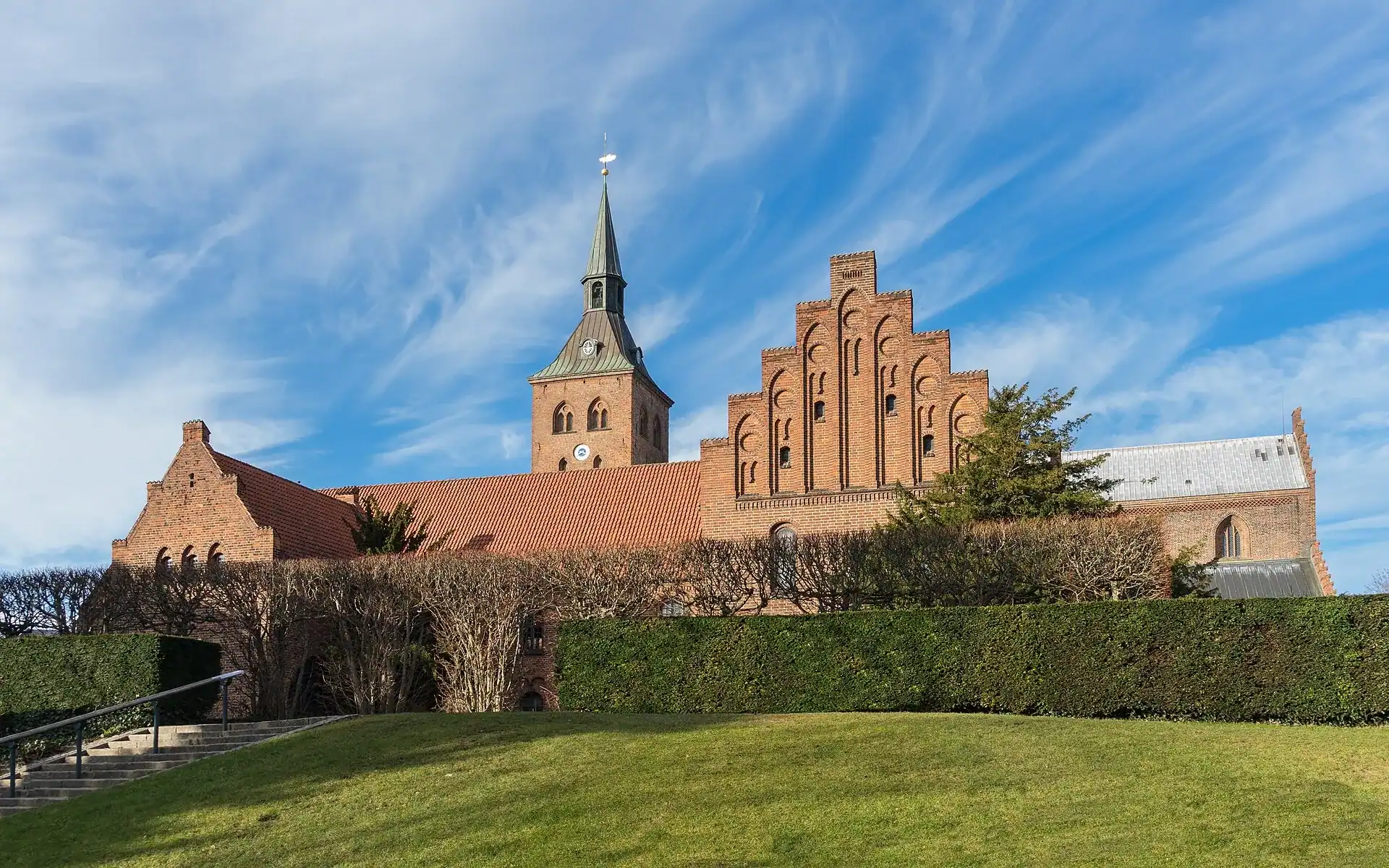 Photo: Jebulon / Wikimedia Commons (CC0)