Cost of Living in Wurzburg
Where this figure comes from. No cost survey covers Wurzburg, so the $1,700 a month above is our own estimate rather than a measurement. On 416 of our 999 city guides the figure is built from a published Numbeo basket, a one-bedroom rent in the centre plus one person's monthly costs without rent, converted to USD; this city is not one of them. How we source everything.
Budget around $1,700 a month. A one-bedroom runs roughly $750 to $1,150, and the student population of around thirty five thousand across two institutions keeps the small-flat market tight rather than cheap. Groceries are ordinary German prices. Eating out is reasonable and Franconian wine, which comes in the distinctive flat Bocksbeutel bottle and is almost all drunk within the region, is excellent and cheap at source. Utilities run through a continental winter. Bavaria's costs sit above the German average, though Wurzburg is well below Munich. Anyone comparing with Munich should note that Wurzburg runs roughly forty per cent lower for a comparable flat while staying on the same north-south rail line. Rents are advertised as Kaltmiete, the cold rent, with heating, water and service charges added on top as Nebenkosten, and the gap between the two numbers is usually a fifth or more. Every household pays the broadcasting fee whether or not it owns a television, a fixed monthly line nobody escapes. Deposits run to three months, are held in a separate account and are returned with interest, which is a legal requirement rather than a courtesy.
Where to Work in Wurzburg
Connectivity is good. Fibre coverage in Wurzburg is reasonable by German standards, mobile coverage is comprehensive and power is entirely reliable. There is a coworking presence helped by the Julius Maximilian University, founded in 1402, and by a medical and biotech sector around the university hospital that is genuinely substantial. The time zone is central European. The Anmeldung registration within two weeks is mandatory and gates the bank account and tax number, and appointments at the Burgeramt should be booked before arriving rather than after. Anyone at the university hospital should know that it is among Germany's largest teaching hospitals and anchors a biotech cluster that employs several thousand people. Landlords ask for a Schufa credit record before signing, and a newcomer with no German credit history has nothing to show, which is the hardest part of arriving rather than the visa. The semester rhythm decides the flat market entirely: September and March are when student rooms turn over and when anything at all comes free. The main campus sits on the plateau above the city and the tram does not reach all of it, which is worth checking against an address before signing anything.
Getting Around Wurzburg
Wurzburg is compact and walkable, with a tram network covering the rest and the Alte Mainbrucke, the old bridge lined with statues, at the centre of the city's social life: people stand on it drinking wine in the evening, which is a genuine local institution. The Marienberg fortress is a twenty minute climb above. Trains reach Frankfurt in an hour, Nuremberg in an hour and Munich in two, which puts Wurzburg on the main north-south axis of German rail. Anyone drinking on the Alte Mainbrucke should buy the wine from one of the bars at either end, which lend the glass against a deposit and take it back afterwards. The Deutschlandticket covers every local and regional service in the country for one monthly fee, which turns the trams here and the regional trains out to the vineyards into a single purchase, and it is the first thing anyone staying more than a few weeks should buy. It does not cover the fast intercity services, which is the catch. Bicycles travel free on regional trains outside the morning peak.
Sorting transport? Book an airport transfer, or compare car rental on Auto Europe and QEEQ.
Visas for Wurzburg
Germany is in the European Union and the Schengen area, so European Union and EEA citizens may live and work here without a permit, subject to the Anmeldung. Everyone else needs a Schengen visa or a residence permit, with the EU Blue Card the main skilled route and the 2024 Opportunity Card available for qualifying job seekers. There is no digital nomad visa, though the freelance residence permit exists and is administered locally, with the criteria varying considerably between one Auslanderbehorde and another. Anyone booking the Anmeldung should secure a slot before arriving, since the Burgeramt releases appointments in batches and the two week deadline runs from the move-in date. The freelance permit is assessed on letters of intent from clients, proof that the income covers living costs and evidence of health cover, and an applicant over forty five may also be asked to show pension provision, which surprises people. Health insurance is compulsory from the first day of residence rather than the first day of work. The tax number arrives by post some weeks after registration, and nothing can be invoiced properly until it does. For anyone flying long-haul into Frankfurt Airport, the first Entry/Exit System enrolment there, fingerprints plus a face image, can mean a long queue, so a tight ICE booking on to Wurzburg is a gamble.
Best Time to Visit Wurzburg
May to September is the best window, with July around twenty four degrees and the wine terraces and the bridge at their best. September and October bring the Franconian harvest and the wine festivals. Winter from December to February is cold at around two degrees, grey and occasionally snowy. The Residenz gardens are worth seeing in every season. Wurzburg sits in a sheltered valley on the Main which makes it warmer than the surrounding Franconian plateau and is why the vineyards climb the slopes right into the city. Anyone here at the end of May should look for the Africa Festival, which has run since 1989 and is among the largest festivals of African music in Europe. Kiliani, the folk festival in the first half of July, is the city's own fortnight of beer tents and fairground on the meadow across the river, and it draws the region rather than the tourists. The wine villages upriver hold their own festivals through late summer, each for a weekend, and the regional train reaches them without a car. Frost in April is the recurring threat to the vineyards, rather than anything the summer does.
Pros and Cons of Wurzburg
The Residenz is a baroque prince-bishop's palace whose staircase ceiling carries the largest fresco ever painted anywhere, by Tiepolo, and UNESCO put the building on its list in 1981. Add the Marienberg fortress, vineyards inside the city limits, and a bridge people drink wine on. Wurzburg was almost entirely destroyed in twenty minutes on the 16th of March 1945, and what stands today is largely reconstruction, which is done well and is still, unavoidably, a reconstruction of what was there. The Residenz staircase also has no supporting pillars beneath the fresco, which is why the roof survived the 1945 firestorm when almost everything around it did not. Two of the largest wine estates in the city are charitable foundations rather than businesses: the Juliusspital and the Burgerspital have funded hospitals and homes for the old from their vineyards since the sixteenth and fourteenth centuries respectively, and both still do, which is why their cellars sit in the middle of town rather than out among the vines.
Who Wurzburg Is For
Wine people, since Franconian Silvaner is a serious and under-appreciated wine and the estates sit inside the city, along with anyone drawn to baroque architecture, for whom the Residenz alone justifies a stay. It suits students and researchers given the university and the medical cluster. German is needed for the paperwork, and anybody wanting an untouched historic city should know that March 1945 removed most of this one in twenty minutes. What stands is a careful reconstruction rather than a survival. It also suits cyclists, since the Main cycle path runs from the city through the vineyards and connects to the Romantic Road, which starts here and runs south to the Alps. Anyone choosing between the cities of the region should know that Bamberg kept its old town intact and has the beer, Nuremberg has the size and the airport, and this one has the wine and the fastest trains. A semester fits the rhythm of the place better than a month, since the university calendar governs the housing and the social life together. Without the language the professional side narrows to the university and the hospital and stops there.
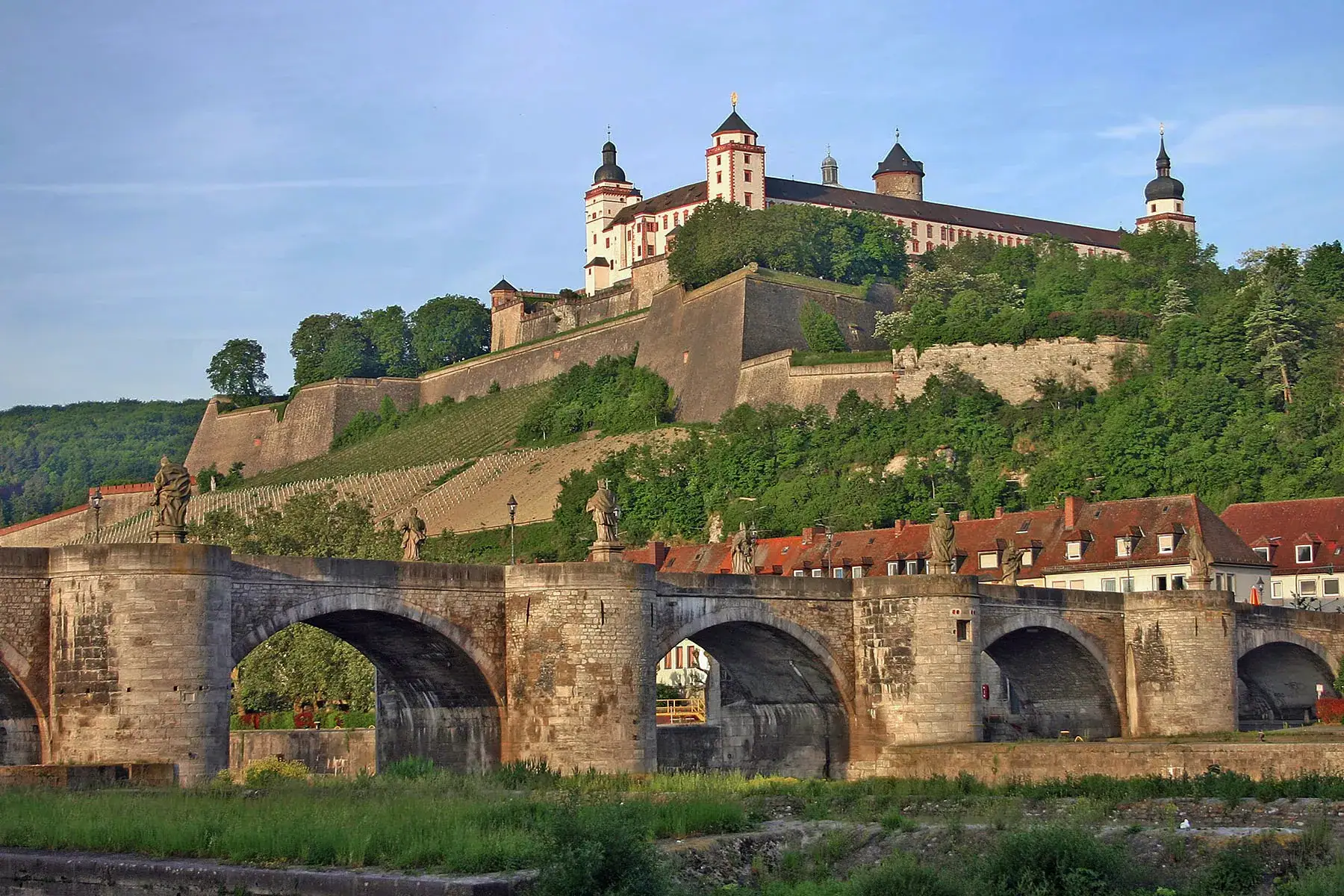 Photo: Christian Horvat / Wikimedia Commons (Public domain)