Cost of Living in Hamburg
Real market data
Source: Numbeo · Jul 2026
$2,490/moSolo nomad1-bed centre + living costs
$3,430/moCoupleshared 1-bed + costs
$2,120/moLean / localcheaper area + costs
- 1-bed rent, city centre$1,320€1,146
- 1-bed rent, outside centre$950€821
- Monthly costs excl. rent (1 person)$1,170€1,018
- Meal, inexpensive restaurant$17€15
- Monthly transit pass$73€63
- Buy price, per m² (centre)$10,250€8,907
Prices are from Numbeo (Jul 2026), converted to USD at $1 = €0.87 (01 Aug 2026). The monthly living-costs figure is our transparent one-person basket, groceries, a few meals out, utilities, phone, internet, transport and essentials, priced from those figures. Solo adds central rent; couple and lean are estimates from the same numbers. The guide below quotes its own monthly range, which is a different measurement rather than a competing one: this table prices a defined basket at the figures above, while that range is a judgement about how somebody actually lives here.
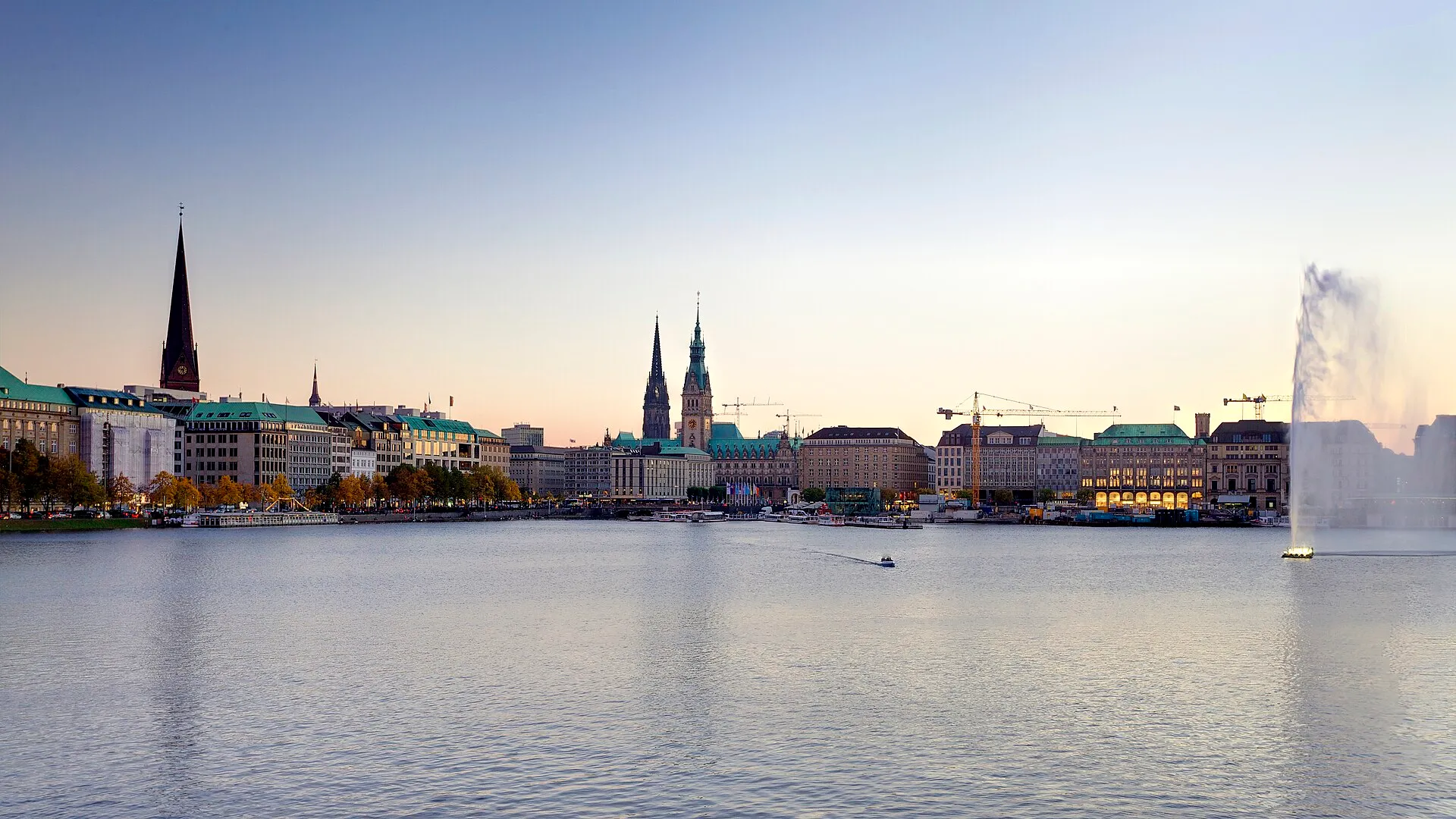
Hamburg is one of Germany's priciest cities, and you should budget honestly before committing. Rent dominates the equation. A one-bedroom apartment in central neighborhoods like Eimsbüttel, Altona, or Sternschanze runs $1,380 to $1,730 per month (roughly USD 1,300 to USD 1,650). Move out toward Harburg, Bergedorf, or Wandsbek and you drop to $980 to $1,270 (USD 930 to USD 1,210). The rental market is competitive; expect to show proof of income and pay a deposit of up to three months' rent.
Beyond rent, here is a realistic monthly breakdown:
- Groceries: $290 to $460. Aldi and Lidl keep costs down; organic shops in Eimsbüttel will push you toward the top.
- Eating out: $14 to $21 for a casual lunch; $29 to $58 for a sit-down dinner. Budget $175 to $345 if you eat out a few times a week.
- Coworking hot-desk: $175 to $405 per month, depending on the space. Day passes run $22 to $35.
- Local transport: The Deutschlandticket covers all HVV buses, U-Bahn, S-Bahn, and regional trains across Germany for $56 per month. A standard HVV monthly pass is $96.
- Total monthly range: $2,190 to $2,990 for a comfortable nomad lifestyle with rent, coworking, food, and transport included. You can live on $1,960 if you choose a cheaper area and cook most meals.
Where to Work
Hamburg has more than 60 coworking spaces, ranging from polished corporate hubs to scrappy creative dens. Betahaus Hamburg (Eifflerstraße 43, Altona) is a Hamburg institution: light-filled, community-driven, and popular with freelancers in design and tech. Mindspace (Rödingsmarkt 9) occupies a historic building near the city center and is rated highly for design and amenities. Beehive has three locations with 24/7 access and simple hot-desk pricing.
Cafe work culture is alive but mixed. Many Hamburg cafes are small and get full quickly. The ones that genuinely welcome laptops tend to advertise it. Nord Coast Coffee Roastery on Deichstrasse is well-rated (4.5 on Tripadvisor) and has reliable WiFi and sockets. hugsandcoffee on Lange Reihe in St. Georg is considered one of the best laptop cafes in the city, with ample power outlets and a relaxed atmosphere. Cafe May has several locations (St. Pauli, Eimsbüttel, Winterhude), all reasonably laptop-friendly.
WiFi reliability across Hamburg is generally solid. Most coworking spaces advertise high-speed connections and fiber is common. In cafes, quality varies; bring a backup mobile data plan for anything critical.
Getting Around
Hamburg's public transport network (HVV) is extensive and punctual. Four U-Bahn lines, four S-Bahn lines, and a dense bus network cover virtually every neighborhood. The Deutschlandticket at about $74 per month is the best value for nomads as it covers unlimited travel across all HVV zones and regional trains throughout Germany.
The city center and inner districts are walkable. Altona, Eimsbüttel, and St. Pauli are particularly pleasant on foot. Hamburg also has a strong cycling culture; bike lanes are widespread and rentals are easy to find.
Getting to and from Hamburg Airport (HAM) is straightforward. The S1 S-Bahn runs directly from the airport to Hamburg Hauptbahnhof every 10 minutes and takes about 25 minutes. A single ticket costs around $4.50. Taxis cost roughly $35 to $41 and take a similar amount of time depending on traffic. The airport is only 8.5 km from the city center.
Sorting transport? Book an airport transfer, or compare car rental on Auto Europe and QEEQ.
Visas and Staying Long-Term
EU and EEA citizens can stay and work in Hamburg indefinitely. Citizens of the US, Canada, Australia, UK, and most other wealthy nations can enter Germany visa-free for up to 90 days within any 180-day period under the Schengen rules.
Germany does not offer a visa specifically labeled a "digital nomad visa," but there are two practical routes for longer stays. The Freiberufler visa (freelancer visa) suits writers, designers, developers, and other recognized liberal professions. The self-employment visa covers entrepreneurs and business owners. Both require applying through a German embassy or consulate in your home country first, then registering with the local Foreigners' Office (Ausländerbehörde) after arrival. Initial grants are typically for one to three years, with extensions possible. Processing takes four to twelve weeks and fees range from $69 to $115. The flights from Hamburg Airport to London and Istanbul leave from non-Schengen gates, where the EU Entry/Exit System now logs each exit and return in place of a passport stamp. That record is kept for at least three years, so an overstay of a few days here stays visible to a border officer in Lisbon or Athens long after the trip.
Best Time to Visit
Hamburg sits at roughly the same latitude as the southern tip of Alaska, and the weather reflects that. Winters (December to February) are cold, grey, and damp, with temperatures hovering between 0 and 5C (32 to 41F) and very short daylight hours. Rain is spread fairly evenly across the year, so pack accordingly regardless of season.
The best window for remote work is late April through June, and again in September. Temperatures are pleasant (14 to 22C / 57 to 72F), daylight is long, and the city is vibrant without the peak summer crowds. July and August are warm (averaging 20 to 23C / 68 to 73F) and festival-heavy, but accommodation prices rise and the city fills with tourists. October and November are crisp and quieter; coworking spaces stay busy but cafes feel less hectic. December brings the famous Christmas markets if you enjoy that atmosphere.
Pros and Cons
Pros
- Excellent and affordable public transport, including the $56 Deutschlandticket covering all of Germany
- Diverse coworking scene with spaces to suit every style and budget
- Strong English proficiency across the city, especially in hospitality and tech
- Rich cultural life: world-class music at the Elbphilharmonie, a thriving arts scene, and the legendary Reeperbahn nightlife
- High safety and cleanliness; consistently ranked among Europe's most livable cities
- Easy rail connections to Berlin (under two hours), Copenhagen, and Amsterdam
- Beautiful waterways and green spaces for outdoor breaks
Cons
- Cost of living is high; rent in particular is expensive relative to most European nomad destinations
- The housing market is competitive and short-term furnished rentals command a significant premium
- Grey, wet weather dominates roughly six months of the year
- No dedicated digital nomad visa; the freelancer visa process requires paperwork and planning lead time
- Cafe-work culture is more limited than in Southern European cities; not every cafe tolerates long laptop sessions
- German bureaucracy (Anmeldung registration, bank accounts) can be slow and frustrating for short-stay visitors
Who Hamburg Is Best For
Hamburg suits nomads who prioritize reliability and quality over low cost. If you value a high-functioning city with excellent infrastructure, a real professional coworking community, and easy access to Northern Europe, Hamburg delivers. It works particularly well for people in tech, design, media, or creative industries who want to plug into a startup and agency ecosystem. The freelancer visa route also makes it a realistic long-term base for those willing to deal with the paperwork.
Hamburg is also a strong fit for people who enjoy cold-weather outdoors, cycling, live music, and a port city's particular energy. The maritime culture, Elbphilharmonie concerts, and weekend trips to the Danish coast or Berlin add texture to a longer stay.
It is a harder sell if you are watching your budget closely or depend on beach weather to stay motivated. Southeast Asia or Southern Europe will give you better value for money, warmer weather, and more relaxed cafe culture. Hamburg also rewards people who speak at least some German when navigating bureaucracy; purely English-speaking stays are very possible but can hit friction points.