Cost of Living in Malmö
Real market data
Source: Numbeo · August 2026
$1,830/moSolo nomad1-bed centre + living costs
$2,460/moCoupleshared 1-bed + costs
$1,620/moLean / localcheaper area + costs
- 1-bed rent, city centre$1,050kr10,027
- 1-bed rent, outside centre$840kr7,967
- Monthly costs excl. rent (1 person)$780kr7,433
- Meal, inexpensive restaurant$16kr150
- Monthly transit pass$67kr634
- Buy price, per m² (centre)$4,250kr40,470
Prices are from Numbeo (August 2026), converted to USD at $1 = kr9.53 (01 Aug 2026). The monthly living-costs figure is our transparent one-person basket, groceries, a few meals out, utilities, phone, internet, transport and essentials, priced from those figures. Solo adds central rent; couple and lean are estimates from the same numbers.
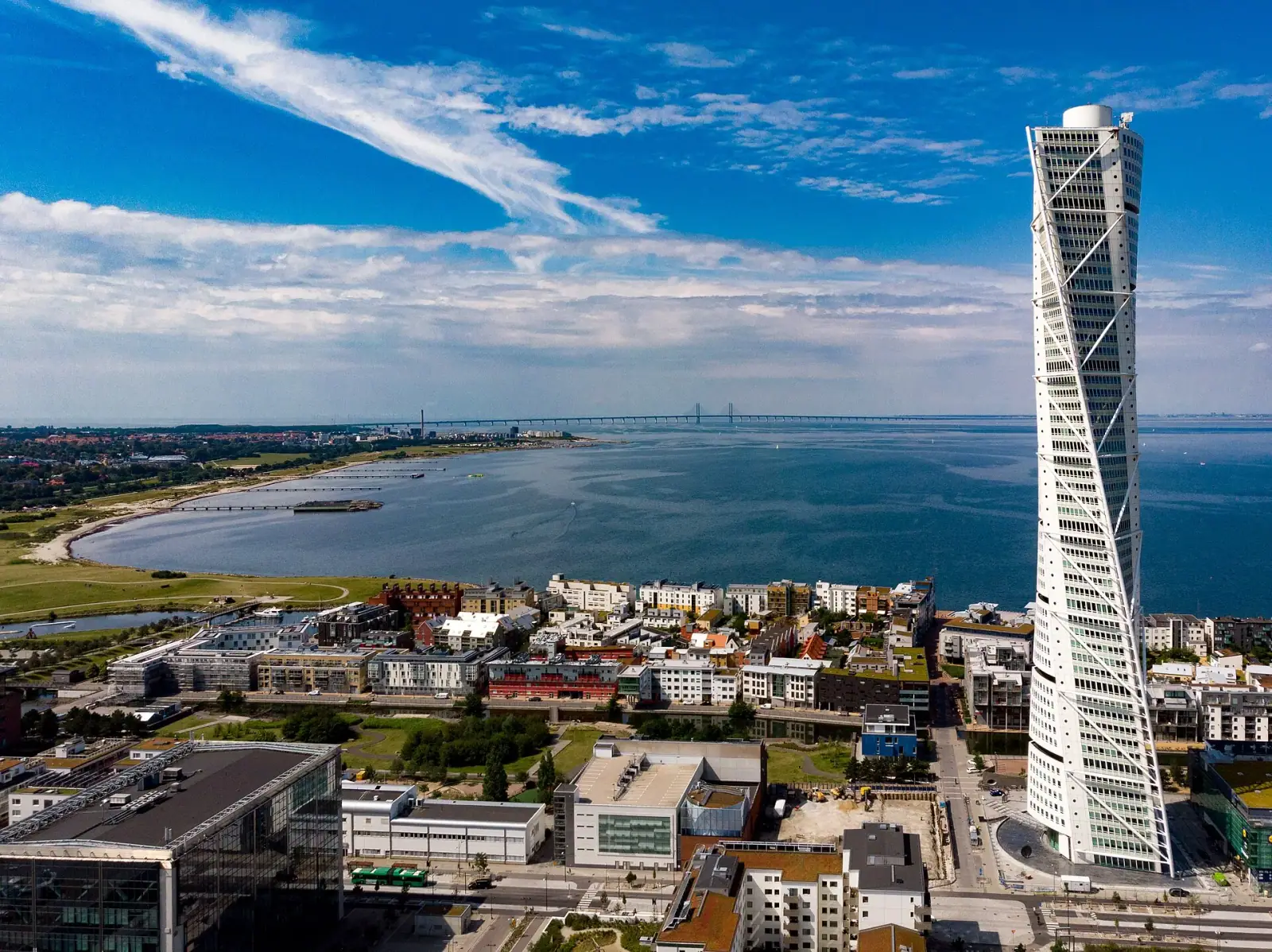
Malmö is cheaper than Stockholm and noticeably cheaper than Copenhagen across the bridge, but it is still an expensive city by most European standards. Expect to spend more than you would in southern or eastern Europe, especially on rent.
A one-bedroom apartment in the central districts (Gamla Staden, Centrum, Västra Hamnen) runs roughly $945-1,260 per month. Move further out toward Husie or Limhamn and you can find the same size for $785-945. Utilities add another $63-94 on top.
Groceries for one person run around $190-230 per month if you shop at ICA, Coop, or Lidl. Cooking at home keeps costs manageable. A sit-down lunch at a casual spot costs $14-19, and a dinner for two at a mid-range restaurant runs $63-94 before drinks.
A hot-desk coworking membership costs around $260-365 per month depending on the space. A Skånetrafiken monthly transport pass is $67 and covers buses and regional trains including cross-border trips to Copenhagen.
- Realistic monthly budget (single nomad, central flat): $1,890-2,410
- Lean budget (cheaper area, cook most meals): $1,470-1,780
Where to Work
Malmö has a solid and growing coworking scene, and a cafe-work culture that is more permissive than many Scandinavian cities. Most cafes with good seating welcome laptop workers during off-peak hours, though you should buy something regularly.
Mindpark is the most well-known local brand, with locations in the city center near Malmö Central Station and a second site in the Hyllie business district. It is popular with startups and freelancers and has reliable fast WiFi. United Spaces in Västra Hamnen is the premium option, with a design-forward space inside the STUDIO building close to the water. Media Evolution City caters more to tech and media professionals and doubles as a hub for the local digital sector.
For cafe work, Solde in Gamla Staden is a strong choice: a minimalist specialty coffee shop with natural light and plenty of space at tables. Beans and Tales Café also has reliable WiFi and is explicitly welcoming toward remote workers.
WiFi in Malmö is generally fast. Sweden consistently ranks among the top countries globally for broadband speeds, and mobile data is cheap and reliable as a backup. You are unlikely to have connectivity problems at any established coworking space or coffee shop.
Getting Around
The compact city center is very walkable. Most things you need day-to-day are reachable on foot or by bike within 20 minutes. Malmö is one of Sweden's most bike-friendly cities, and you will see dedicated lanes throughout. Many locals cycle year-round; bike theft is common, so use a good lock.
Skånetrafiken runs the local bus network and the regional train system. A single bus ride costs $3.50 on the app or card. The monthly pass at $67 is good value if you ride daily and also covers trips to Lund, Helsingborg, and across to Copenhagen.
Getting to Copenhagen Airport (CPH/Kastrup) is straightforward: the regional Pågatåget train from Malmö Central takes about 20-25 minutes and connects directly to the airport. This is your main international hub. Malmö's own airport (MMX) is smaller and serves primarily domestic and European budget routes. Below the centre, the City Tunnel links the main station with Triangeln and Hyllie, which is the line the trains over the bridge use, so Triangeln is often the handier stop for the southern districts. Sturup, Malmo's own airport, lies about 28 kilometres east, which makes the Danish airport the quicker one from most addresses in town.
Sorting transport? Book an airport transfer, or compare car rental on Auto Europe and QEEQ.
Visas and Staying Long-Term
Sweden is a Schengen member. Citizens of roughly 60 countries including the United States, Canada, the UK, Australia, and most of the EU can enter visa-free and stay up to 90 days within any 180-day period across the entire Schengen Area.
Sweden does not currently offer a dedicated digital nomad visa. For stays beyond 90 days, you would need to apply for a Swedish residence permit (a visitor's permit for extended stays, or a self-employment permit if you earn income there). These are not quick or straightforward to obtain. The most common nomad approach is to use the 90-day window and then travel outside Schengen before returning.
The EU's Entry/Exit System became fully operational on 10 April 2026, replacing the passport stamp with a biometric record of each entry and exit and counting the ninety days automatically across every member state.
Best Time to Visit
Late spring through early autumn is the best window. May through September gives you mild temperatures (15-24°C), long daylight hours, and an active outdoor scene. June and July are peak season with nearly 17 hours of daylight, but accommodation can be pricier and the city is busier.
September is often the sweet spot for remote work: pleasant weather, fewer tourists, and the city's creative and business communities are back in full swing after summer. April and early October are shoulder seasons with cooler but workable conditions and lower costs.
Winter (November through February) is cold, dark, and grey. Temperatures can drop below freezing, daylight can be under 8 hours, and the energy of the outdoor cafe scene mostly disappears. It is livable but hard going if you are not used to Nordic winters. Winters are milder than the latitude suggests, with temperatures holding between about minus three and plus four, and the snow that falls between December and March rarely lies for long, so the problem is greyness rather than ice and cycling carries on through it.
Pros and Cons
- English is nearly universal: Sweden consistently ranks second globally for non-native English proficiency, so language is never a barrier.
- Copenhagen access: A 20-25 minute train ride gives you a second major European city, airport, and professional network.
- Fast and reliable internet: Sweden's broadband infrastructure is among the best in the world.
- Walkable, bike-friendly, and compact: You can live without a car comfortably.
- Multicultural food scene: Over 150 nationalities live here, which translates directly into an excellent and diverse restaurant scene, especially around Möllevången.
- Milder than the rest of Sweden: Shorter winters and less snow than Stockholm or northern cities.
- Expensive by European standards: Budget carefully; this is not a low-cost destination.
- No nomad visa: The 90-day Schengen limit applies, and extensions require formal residency applications.
- Winters are hard: Dark, cold, and damp from November to February, which affects mood and motivation.
- Bike theft is rampant: Buy a quality lock and treat it as a necessary expense.
- Some neighborhoods feel unsafe at night: Areas around Rosengård and parts of the Triangeln Station area are best avoided late at night.
- Coworking options are decent but not vast: The scene is smaller than Stockholm or Copenhagen.
Who Malmö Is Best For
Malmö works well for nomads from expensive countries (US, UK, Australia, Canada) who find the cost reasonable relative to home, especially if they want a real European city without the scale of London or Paris. It suits people who value outdoor urban life, cycling, and a strong food scene over nightlife or warm weather. The Copenhagen proximity makes it particularly good if you need access to a large international hub for meetings or flights.
It suits EU passport holders who can stay indefinitely without visa stress. Tech and creative freelancers will find a modest but real professional community here.
Skip Malmö if you are on a tight budget (under $1,500/month all-in), if long Nordic winters sound miserable to you, or if you need a large established nomad community with regular meetups and events. Lisbon, Tbilisi, or Chiang Mai will serve those needs better. Academics have a particular reason to look here: Lund University, founded in 1666, keeps several facilities in the city, and Malmo University, opened in 1998, adds a second institution, so a research visit can run comfortably from a Malmo flat.