Cost of Living in Liepaja
Real market data
Source: Numbeo · June 2026
$1,080/moSolo nomad1-bed centre + living costs
$1,690/moCoupleshared 1-bed + costs
$1,000/moLean / localcheaper area + costs
- 1-bed rent, city centre$320€280
- 1-bed rent, outside centre$240€208
- Monthly costs excl. rent (1 person)$760€660
- Meal, inexpensive restaurant$12€10
- Monthly transit pass$35€30
- Buy price, per m² (centre)$1,550€1,350
Prices are from Numbeo (June 2026), converted to USD at $1 = €0.87 (01 Aug 2026). The monthly living-costs figure is our transparent one-person basket, groceries, a few meals out, utilities, phone, internet, transport and essentials, priced from those figures. Solo adds central rent; couple and lean are estimates from the same numbers.
Budget around $1,080 a month, which makes Liepaja one of the cheaper places in the European Union with a beach. A one-bedroom runs roughly $250 to $450, and the housing stock ranges from restored Art Nouveau in the centre to Soviet blocks and wooden houses. Market produce is cheap and Latvia's own vegetables, dairy and rye bread are good. Eating out is inexpensive by European standards. Utilities are the northern cost: heating runs from October to April and is the largest variable in most bills. Latvia uses the euro, and prices have risen noticeably since adoption in 2014. Heating through a Baltic winter can double a monthly utility bill between October and April, which is the single line most people underestimate when comparing Liepaja with somewhere southern. A good number of the wooden houses here still heat with wood, bought by the cubic metre and stacked in the yard through the autumn, which is cheaper than the municipal system and a great deal more work. The grand old flats in the centre look a great deal better than they heat, with original windows and ceilings too high to warm. Ask what the previous winter actually cost before signing anything at all.
Where to Work in Liepaja
Connectivity is very good. Latvia has extensive fibre at high speeds and low prices, and Liepaja is well served, with comprehensive mobile coverage and reliable power. There is a small coworking presence, helped by the university and a growing startup scene that Riga's overflow has fed. The time zone is two hours ahead of GMT, giving a full European overlap and a workable American afternoon. Latvia's digital administration is good and the eID system works, though a personal code is the gate to much of it and is easier for European Union citizens to obtain. Fast fibre costs around $15 to $20 a month, which is among the best value in the European Union and a genuine reason to consider Latvia over its neighbours. The harbour does not freeze, which is the whole reason a tsar put a naval base here and why the port still works through a Baltic winter when others further north cannot. A steelworks and the port between them are the industrial base of the town. Neither is hiring from abroad, but they are why the place has a working population all year rather than only a summer one.
Getting Around Liepaja
Liepaja is flat and compact and works well on a bicycle or on foot, with a single tram line, the oldest in the Baltics, running through the centre. Buses cover the rest. The beach and the pine woods behind it are a short walk from the middle of town. Buses to Riga take about three hours and to Klaipeda in Lithuania about two. Liepaja Airport has limited seasonal service, so Riga is the practical air connection. The port is a working one and the ferry to Travemunde in Germany runs several times a week. The tram has run since 1899 and is the oldest continuously operating line in the Baltics, which is a small thing but tells you how long the town has been the size it is. The road north to the old naval district crosses a swing bridge that opens for shipping and stops the traffic while it does, which is a fixed feature of any journey out that way rather than an occasional delay. Cycle paths run along the canal and out through the pine woods to the sand, flat the whole way and empty for most of the year.
Sorting transport? Book an airport transfer, or compare car rental on Auto Europe and QEEQ.
Visas for Liepaja
Latvia is a member of the European Union and the Schengen area, so European Union and EEA citizens may live and work here with no permit, registering for a personal code once resident. Everyone else needs a Schengen visa for short stays or a residence permit for longer ones. Latvia operates a digital nomad visa, introduced in 2022, available to nationals of OECD member countries who work remotely for a foreign employer and meet an income threshold, valid for a year and renewable once, which makes it one of the more accessible schemes in the region. Latvia is in the eurozone and Schengen but shares a land border with Russia and Belarus, and the crossings there have been progressively restricted since 2022, so the overland options eastward that used to exist no longer do. A residence application wants health insurance valid across the whole area rather than a domestic policy, and the certificates issued locally do not always satisfy a consulate abroad, so buy the cover after checking which version is accepted. Biometrics are taken in person and the card is collected in person, which means two appointments rather than one and a gap of weeks between them. Before a second summer on the beach, the EES tool at travel-europe.europa.eu shows from a passport number how many days remain.
Best Time to Visit Liepaja
June to August is the season, with temperatures around twenty degrees, the Baltic just about swimmable and long light evenings. Liepaja is famous nationally for wind, which blows almost constantly off the sea and is the reason it hosts kitesurfing and wind sport events. Winter from December to March is cold and grey, often around freezing, with the sea rarely icing but the wind making it feel far colder. The Summer Sound festival in August is the city's largest event and fills the beach for a weekend. Anyone visiting Karosta should aim for a dry day, since much of the fortress is open ground and the beach batteries are reached across sand and rubble. The Baltic reaches only about eighteen degrees at its warmest, so swimming here is a brief and bracing business rather than a Mediterranean afternoon.
Pros and Cons of Liepaja
Liepaja is a genuine Baltic beach town inside the European Union at very low cost, with seven kilometres of white sand and pine forest, a well-preserved wooden and Art Nouveau centre, and Karosta, the ruined tsarist naval fortress and prison just north of the city, where the fortifications are literally crumbling into the sea. The wind is relentless, the winter drags on in grey, the population has been shrinking for years, and Riga is a full three hours off, so every international connection starts with a bus or a long drive. Karosta was a closed military zone until 1991 and parts of it still read that way, which makes it one of the more genuinely atmospheric ruins in northern Europe rather than a managed attraction.
Who Liepaja Is For
A European Union base with a beach at Latvian rather than Mediterranean prices, particularly for nationals of OECD countries who can use the digital nomad visa. It suits kitesurfers and wind sport people, for whom the constant wind is the attraction rather than the drawback. It suits musicians, since the city has a serious rock heritage and a purpose-built concert hall. Winter sun does not reach the Baltic coast, this is a town of seventy thousand rather than a large city, and February in a Baltic seaside town empties out to a degree that lands somewhere between peaceful and desolate depending entirely on temperament. Some people simply work better in the cold, and Liepaja is built for them. The summer here is short and mild, and the rest of the year offers very little temptation to be outdoors at all.
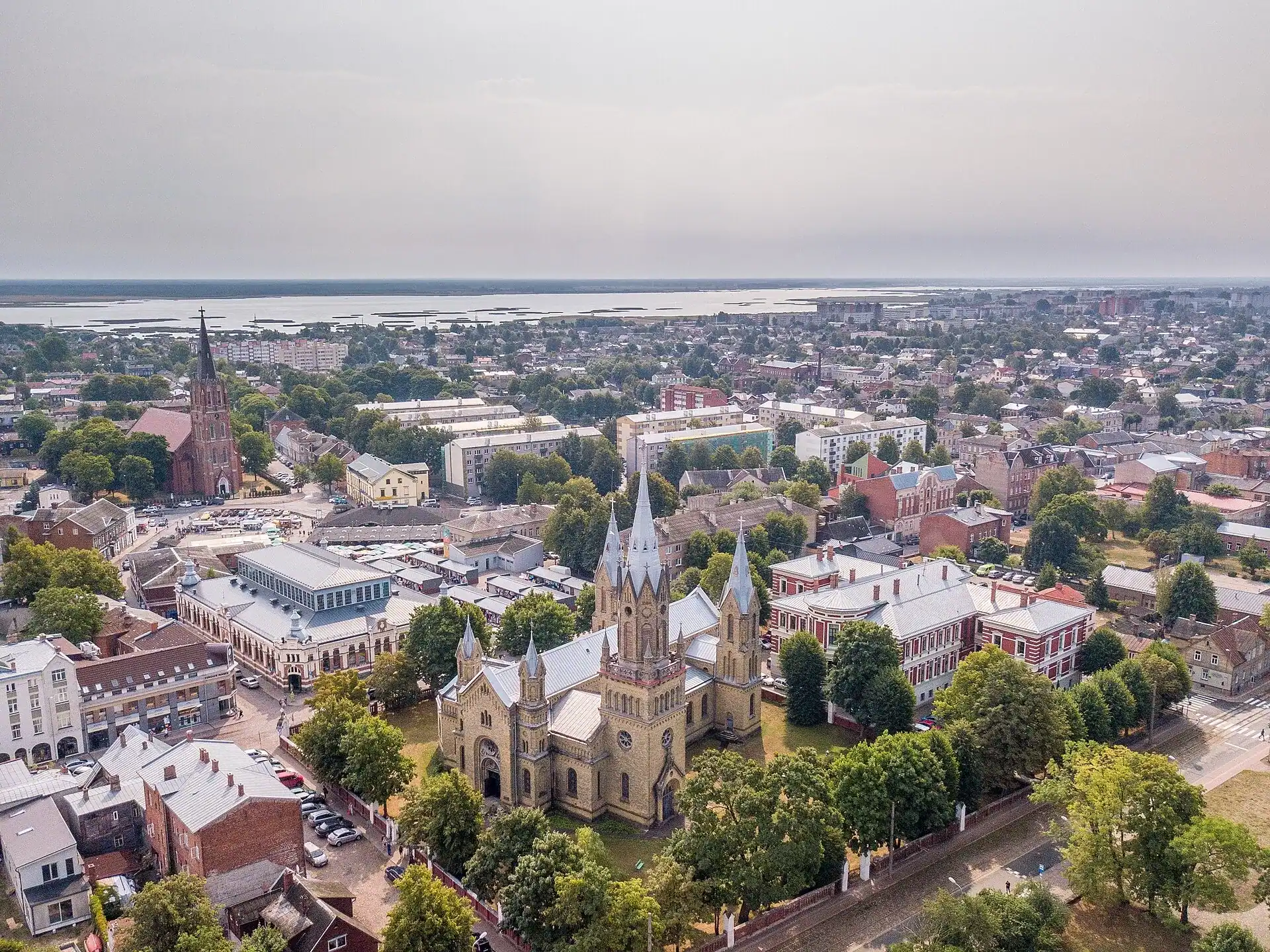 Photo: Edgars Šulcs / Wikimedia Commons (CC BY-SA 4.0)