Cost of Living in Riga
Real market data
Source: Numbeo · August 2026
$1,510/moSolo nomad1-bed centre + living costs
$2,230/moCoupleshared 1-bed + costs
$1,300/moLean / localcheaper area + costs
- 1-bed rent, city centre$600€524
- 1-bed rent, outside centre$400€348
- Monthly costs excl. rent (1 person)$900€783
- Meal, inexpensive restaurant$17€15
- Monthly transit pass$35€30
- Buy price, per m² (centre)$3,240€2,815
Prices are from Numbeo (August 2026), converted to USD at $1 = €0.87 (01 Aug 2026). The monthly living-costs figure is our transparent one-person basket, groceries, a few meals out, utilities, phone, internet, transport and essentials, priced from those figures. Solo adds central rent; couple and lean are estimates from the same numbers. The guide below quotes its own monthly range, which is a different measurement rather than a competing one: this table prices a defined basket at the figures above, while that range is a judgement about how somebody actually lives here.
Riga is one of the more affordable EU capitals, though prices have crept up in recent years. Here is what you can expect on a monthly basis in 2025-2026:
- Rent, central (Centrs, Quiet Centre): $680-970/month
- Rent, outer areas (Purvciems, Imanta, Ziepniekkalns): $460-680/month
- Groceries (self-catering, one person): $230-320/month
- Eating out (mix of local spots and cafes): $9-16 per meal at a mid-range restaurant; budget $230-400/month for regular dining
- Coworking hot desk: $170-280/month depending on the space
- Local transport (monthly pass): $34/month covering all trams, trolleybuses, and buses
- Phone and home internet: $23-46/month
Realistic monthly total: A solo nomad renting centrally and coworking a few days a week should budget roughly $1,600-2,150/month. Living in an outer district and cooking at home drops this to $1,150-1,500/month. These figures assume moderate dining out, no car, and a standard coworking membership.
Latvia uses the euro (EUR). The exchange rate at time of writing hovers around 1 EUR to 1.09 USD, so prices are very accessible compared to Nordic or Western European cities of similar quality.
Where to Work
Riga has a solid set of dedicated coworking spaces and a growing cafe-work culture, making it easy to stay productive without committing to a long-term office.
Coworking spaces: Workland operates two locations: one in Galleria Rigа (central, 300+ workstations) and one in Telegraph on Peldu iela in Old Town. Both offer hot desks, private offices, meeting rooms, and fast fiber connections. Teikums, located in the Jauna Teika mixed-use district northeast of center, is community-focused with a strong resident tech crowd. Regus also has a presence for those needing a multinational operator. Hot desk rates start around $170/month; daily drop-in rates run $17-28.
Laptop-friendly cafes: Rocket Bean Roastery is the go-to specialty coffee chain for remote work, with multiple locations across the city. Outlets are plentiful, seating is comfortable, and WiFi is reliable. Kalve Coffee has expanded to several locations and is quieter than Rocket Bean, making it a good option for focused work in shorter sessions.
WiFi situation: Fiber is common in apartments and mobile 4G/5G coverage is nearly ubiquitous. In coworking spaces and most cafes, you will rarely experience a slow connection. Public WiFi in Old Town is available but inconsistent; a local SIM card from LMT or Tele2 costs around $11-17 for a month of unlimited data.
Getting Around
Riga is a comfortable city to navigate without a car. The historic center is compact and very walkable, though cobblestone streets in Old Town require flat shoes.
Public transport: The Rigas satiksme network covers the entire city with 6 tram lines, 22 trolleybus routes, and 52 bus routes. Services run daily from approximately 5:30 AM to 11:30 PM. A single ride costs $1.50 when paid via the Mobilly app (slightly more for a paper ticket). A monthly unlimited pass costs $34. Night buses operate on three routes every hour between midnight and 4 AM on weekends.
Ride-hailing: Bolt is the dominant ride-hailing service; Uber does not operate here. A typical cross-city ride costs $5.50-11.
Cycling: Riga has a growing network of dedicated bike lanes. The city's Sixt cycle-share scheme and private rental shops make cycling a practical option in summer, particularly along the canal belt and Riga's central parks.
Airport: Riga International Airport (RIX) is around 10 km southwest of the center. Bus No. 22 runs directly from the airport to the city center in about 30 minutes, with departures every 10-30 minutes. A Bolt from the airport costs approximately $9-14.
Sorting transport? Book an airport transfer, or compare car rental on Auto Europe and QEEQ.
Visas and Staying Long-Term
Latvia is a Schengen Area member, so the standard rules apply for most Western passport holders: 90 days visa-free within any 180-day period across the entire Schengen zone. This is the simplest option for short stays.
Latvia Digital Nomad Visa: Latvia has a dedicated digital nomad visa that allows a one-year stay, renewable for a second year. It covers non-EU/EEA nationals working remotely for an employer or clients based in an OECD country. Key requirements include a minimum monthly income of approximately $4,800, valid health insurance with at least $48,500 coverage valid in Latvia and the Schengen Area, and proof of remote employment. The application fee is $68 and can be submitted online or at a Latvian embassy. This is a solid option if you want a longer, legally clear base in the EU.
Best Time to Visit
Riga has a Baltic continental climate with genuine seasons. Summer is the standout period for both comfort and lifestyle.
May to September is the sweet spot for remote workers. June through August brings temperatures of 18-25°C (64-77°F), long daylight hours (near-white nights in June and early July), outdoor terraces, festivals, and the city at its most energetic. May and September offer fewer crowds, lower accommodation prices, and still-comfortable weather.
October and November turn grey quickly. Rain is frequent, temperatures drop to 5-10°C (41-50°F), and daylight shortens noticeably. It is workable but can dampen mood over weeks.
December through February is cold, often hitting -5°C to -10°C (23-14°F), with snow and early darkness by 4 PM. The Christmas market in December is atmospheric, but working through a Baltic winter demands a tolerance for darkness. On the upside, rents and coworking rates are sometimes negotiable off-season.
For pure productivity combined with a good quality of life, May through September is the ideal window, with June and early September being the most balanced.
Pros and Cons
- Affordable for an EU capital with strong infrastructure and fast internet
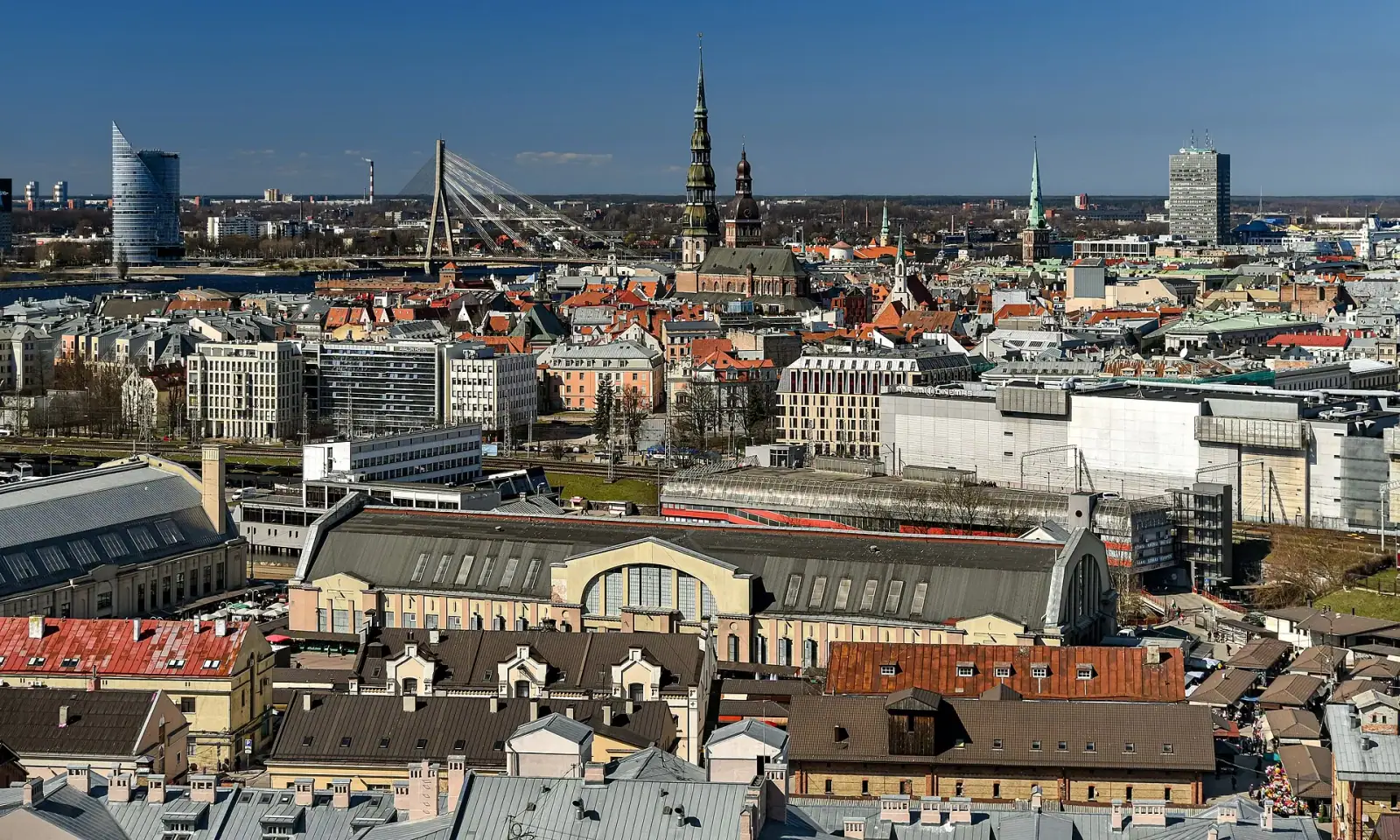
- Stunning architecture: the largest collection of Art Nouveau buildings in the world, plus a beautiful Old Town (UNESCO Heritage Site)
- EU base with straightforward travel across Europe and a legitimate digital nomad visa pathway
- Safe and orderly, rated Level 1 by the US State Department
- Good food scene mixing Latvian tradition, Nordic influence, and a growing specialty coffee culture
- English widely spoken among professionals and anyone under 40
- Dark, cold winters that genuinely test resilience; limited sunlight from November through February
- Small nomad community compared to Lisbon, Tbilisi, or Chiang Mai; harder to organically meet other remote workers
- Old Town tourist traps: some bars and restaurants in the main tourist zone have a history of inflated prices and occasional drink scams
- Language barrier for older residents; official signage is in Latvian, and navigating bureaucracy without Russian or Latvian takes patience
- Limited direct flights from some regions; airBaltic connects well within Europe but long-haul options require a connection
Who Riga Is Best For
Riga suits nomads who value EU residency options, architectural beauty, and low costs without sacrificing urban quality. If you want a proper European city with reliable infrastructure, a serious specialty coffee scene, and the legal framework to stay long-term, Riga delivers. It works especially well for those based in or frequently traveling to Europe who need a Schengen-legal home base. The digital nomad visa is one of the more accessible in the EU for income-earners above the threshold.
Writers, developers, designers, and creators who thrive in quieter, culturally rich environments tend to find Riga absorbing rather than overstimulating. The city rewards curiosity: there are layers of history, excellent museums, and a distinct local identity that takes time to appreciate.
You should look elsewhere if you need a large, established nomad community for daily social connection, if you work in a timezone that requires afternoon overlap with the Americas (UTC+2/+3 is manageable for EU clients but challenging for US ones), or if cold, dark winters are a dealbreaker. Budget nomads on under $1,150/month will also find it tighter than Southeast Asia or Georgia, though the EU access and infrastructure quality are in a different category.