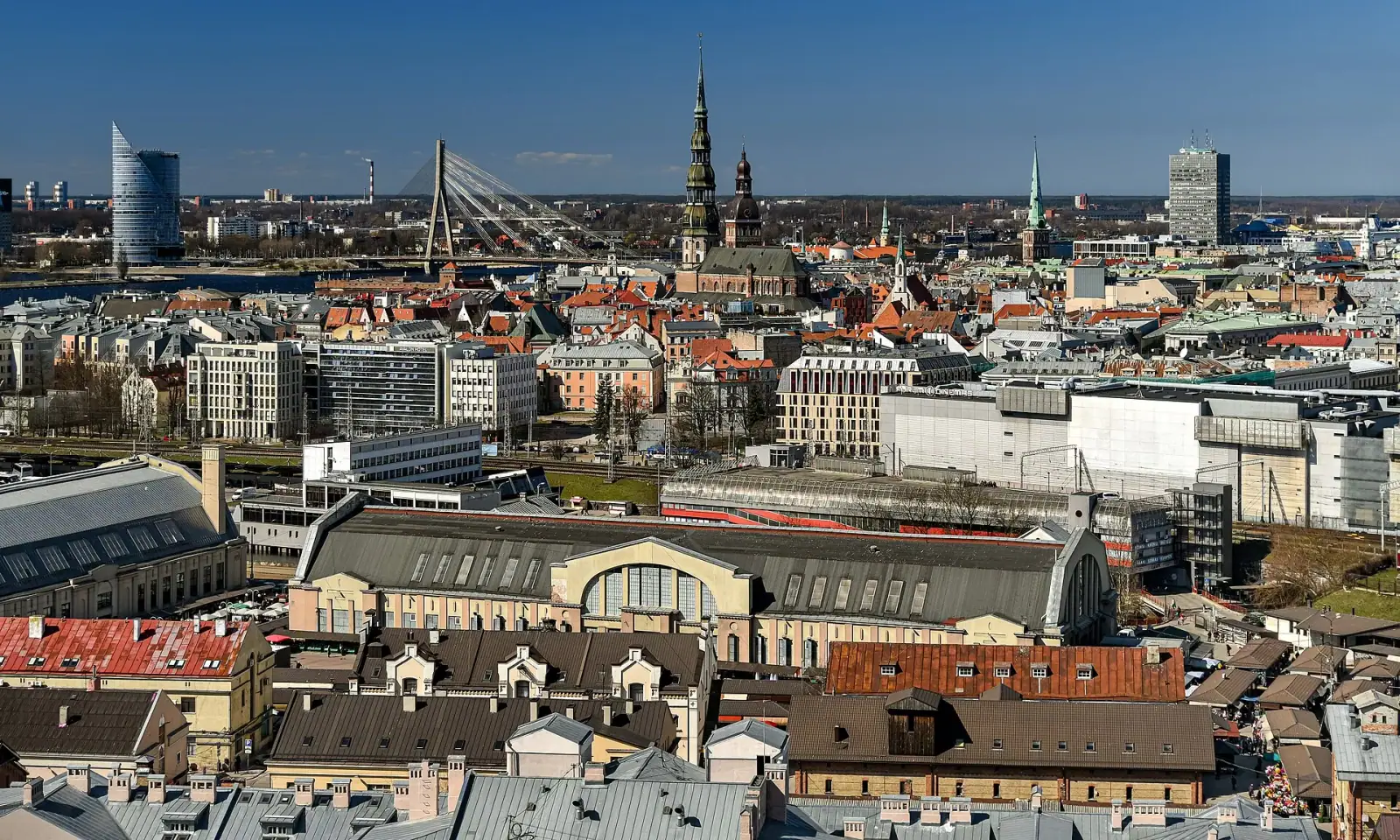
 Riga
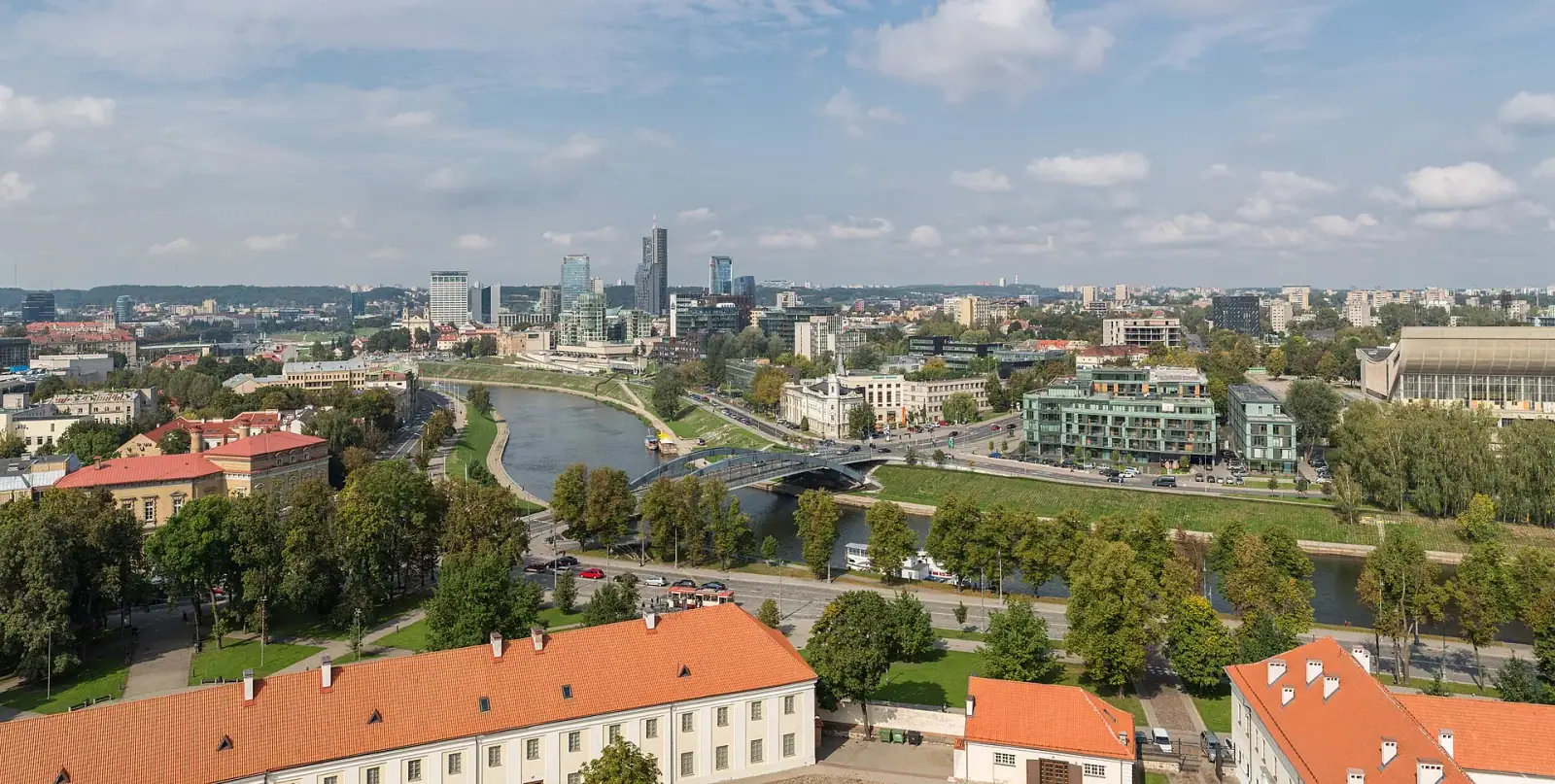
 Vilnius
Both of these capitals have a name for the far side of the river, and it means the same thing in each language. In Vilnius the word is Užupis, roughly "across the river". In Riga it is Pārdaugava, "over the Daugava". Walk to each one and you learn most of what separates the two cities.
To reach Užupis you leave the Old Town and cross a short bridge over the Vilnia, a small river you could easily miss on a map. On the other side are 60 hectares, about 7,000 residents, and a republic declared on 1 April 1997. Its constitution is posted on a wall in Paupio Street in 23 languages, 38 articles long. Article 12 says a dog has the right to be a dog. A bronze angel blows a trumpet in the square. It is a joke the whole city is in on, and it tells you what kind of place Vilnius wants to be: compact, pleased with itself, and young enough to find this funny for thirty years.
Pārdaugava is no joke and no single place. The Daugava is a 1,020 kilometre river that reaches the sea here, and Riga needs several big bridges to cross it. On the left bank you find whole districts, including the old wooden houses of Āgenskalns, once a summer retreat for rich citizens, and the 68 metre peak of the National Library, the "Castle of Light", which faces the Old Town across the water. Riga on its own side is a port city on an imperial scale: about a third of the buildings in the centre are Art Nouveau, mostly apartment blocks from the decade before 1914, and the Central Market fills the frames of German Zeppelin hangars, with more than 3,000 stands.
The size people assume
All that grandeur leaves the impression that Riga is the big one. It no longer is. Vilnius now has about 619,000 people against 589,000 in Riga. You would not guess it, partly because nearly 70 percent of Vilnius is green space, and partly because the areas you would use are all within a half-hour walk of each other. Its growth has come with a working crowd too, in a fintech sector well out of proportion to the city's size. A remote worker looking for people who are building companies will find them more readily here.
Riga's mix is different. More than a third of its residents are ethnic Russians, so you will hear two languages in the street, whereas about two-thirds of Vilnius is Lithuanian.
Sea and flights
A third word settles the summer. Jūrmala, Riga's beach town, is Latvian for the edge of the sea, and that is what you get: about 33 kilometres of white quartz sand, wooden villas, and a railway running within a kilometre of the shore, with ten stations a short walk from the beach. Vilnius is 312 kilometres from the Baltic. It has forest and parks, and in July both cities reach about 24°C, but it does not have that.
Riga also wins on getting away. Its airport is the largest in the Baltic states, with 7.1 million passengers and more than 100 direct destinations, most of the traffic on airBaltic. Vilnius handled 4.8 million and has one great advantage, since it is 8 minutes by train from the central station. It also has one great weakness. Balloons carrying smuggled cigarettes from Belarus have shut its airspace again and again, more than ten times between October 2025 and early 2026, with further closures that spring. Anyone with a client meeting on the far end of a Monday flight should take that seriously.
Paper and price
The money barely matters: our estimates are $1,900 a month for Riga and $1,800 for Vilnius, both in euros, both in Schengen, and both with January highs around freezing. The visa may matter more. Latvia's nomad visa asks about $5,220 a month, pegged to the national wage, and it can be renewed only once.
We lean towards Riga, for the sea and the flights, unless you would really use the startup scene in Vilnius. The two are not hard to compare: buses take about four hours, and a through train takes 4 hours 21 minutes twice a day, at least until Rail Baltica turns up, which is officially 2030 and openly doubted. Start in Riga in June. Take a Sunday at Jūrmala, then ride down to Vilnius the following month, read Article 12 on Paupio Street, and see which side of which river you would rather be on. Estonia makes a three-way decision of it, and we cover that in Tallinn vs Riga.
 United States
 United Kingdom
 Germany
 Canada
 Australia
 India