Cost of Living in Maastricht
Real market data
Source: Numbeo · August 2026
$2,300/moSolo nomad1-bed centre + living costs
$3,090/moCoupleshared 1-bed + costs
$2,170/moLean / localcheaper area + costs
- 1-bed rent, city centre$1,320€1,143
- 1-bed rent, outside centre$1,180€1,029
- Monthly costs excl. rent (1 person)$990€857
- Meal, inexpensive restaurant$21€18
- Monthly transit pass$92€80
- Buy price, per m² (centre)$5,470€4,750
Prices are from Numbeo (August 2026), converted to USD at $1 = €0.87 (01 Aug 2026). The monthly living-costs figure is our transparent one-person basket, groceries, a few meals out, utilities, phone, internet, transport and essentials, priced from those figures. Solo adds central rent; couple and lean are estimates from the same numbers.
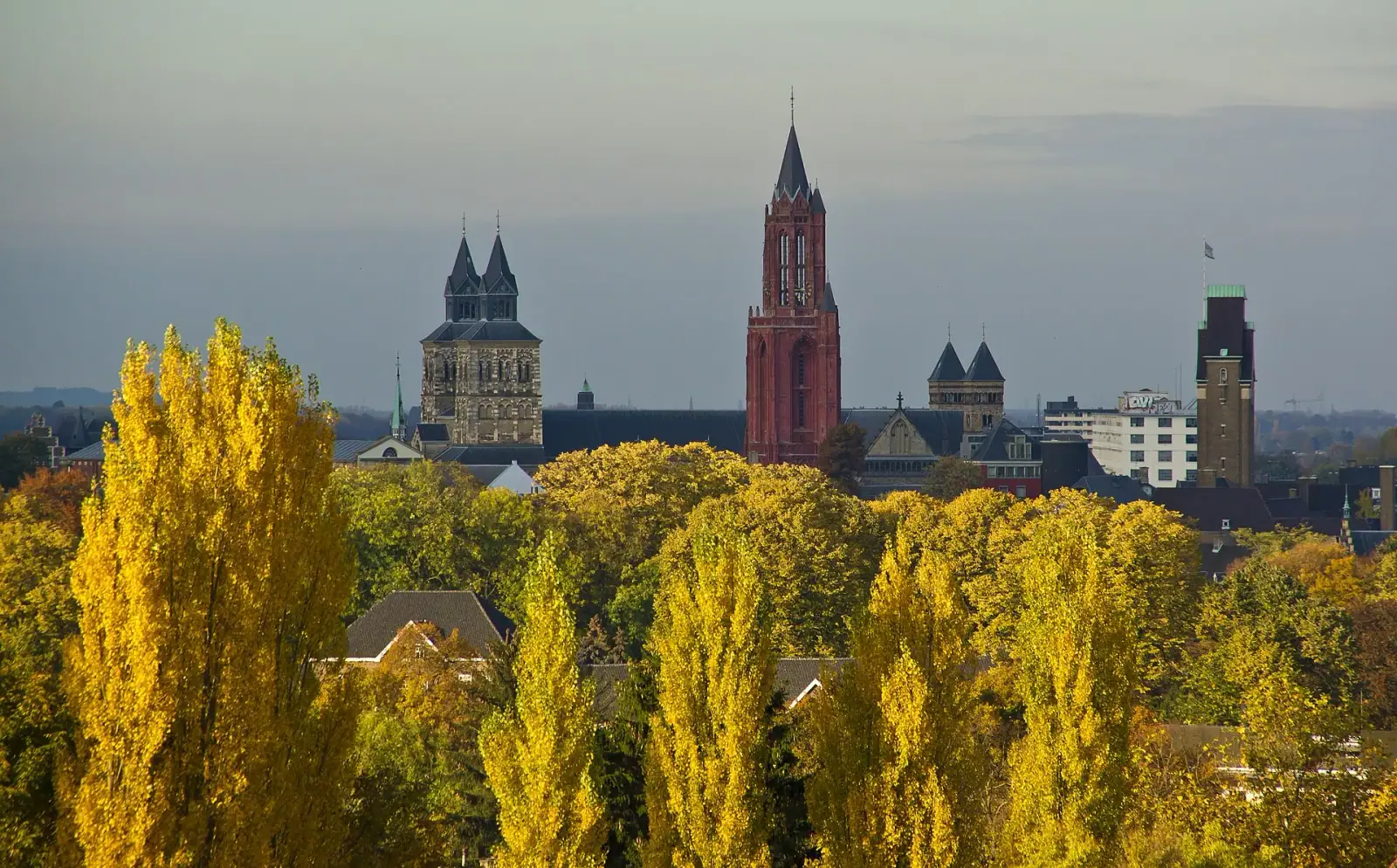
Maastricht is one of the more affordable Dutch cities for remote workers, though it is not cheap by global standards. Expect to spend roughly $2,070 to $2,990 per month (approximately USD 1,950 to USD 2,800) as a solo remote worker, depending on your lifestyle.
- Rent, central apartment (1BR): $1,090 to $1,610 per month
- Rent, outside the center (Wyckerpoort, Nazareth, Sint Pieter): $980 to $1,270 per month
- Groceries (self-catering): $230 to $345 per month at Albert Heijn or Lidl
- Eating out: $17 to $23 for a single meal at a casual restaurant; a three-course dinner in the Wyck district runs $40 to $69
- Coworking hot desk: $75 to $230 per month depending on the space and access level
- Local transport (monthly bus pass): $81 to $98
- Utilities (if not included in rent): $175 to $265 per month
Compared to Amsterdam, you save roughly 25 percent on rent and day-to-day costs. The historic center has a dense concentration of cafes and restaurants, so it is easy to overspend on food and drink if you lean into the city's famously social culture.
Where to Work
Maastricht has a genuine coworking scene, anchored by a university population and a growing number of freelancers and small businesses.
Coworking Spaces
ROOOMS on Boschstraat in the Sphinx Quarter is the most established independent coworking space, with a community of more than 60 companies and freelancers, reliable WiFi, printers, and a flexible strip-card system starting around $75 per month. The Social Hub Maastricht (formerly The Student Hotel) on Sphinxcour offers day passes, monthly memberships, dedicated desks, and a lively atmosphere with good natural light. Regus also operates a serviced office location for those who need a more formal setup.
Cafes and Cafe-Work Culture
Cafe culture is strong here and most venues tolerate laptops, especially outside peak lunch hours. Coffeelovers Centre Ceramique, inside the public library on Avenue Ceramique, has long communal tables and free WiFi, making it a reliable backup without buying a coworking membership. Fixed Gear Coffee on Grote Gracht is a small specialty coffee shop that welcomes laptops. Alley Cat Bikes & Coffee clearly marks laptop-friendly tables.
WiFi Reality
The Netherlands has excellent broadband infrastructure and Maastricht benefits from that fully. Fiber is widely available in apartments. Cafe WiFi is generally solid for video calls, though shared spaces on busy afternoons can slow down. If you need guaranteed bandwidth, a coworking membership is worth the investment.
Getting Around
Maastricht's historic center is compact and very walkable. You can cross it on foot in about 20 minutes, and most daily needs, coworking spaces, restaurants, and the train station fall within a comfortable walk or short bike ride.
Cycling
Cycling is the dominant mode of transport. The city has well-maintained bike lanes and flat terrain across most of the center. Rental bikes are available through OV-fiets at the train station if you do not bring your own.
Buses
Arriva operates the city bus network. Buses connect the center with outer neighborhoods and suburbs. Pay with an OV-chipkaart for cheaper fares than single tickets. A monthly pass costs $81 to $98.
Train Connections
Maastricht Centraal connects to Amsterdam (roughly 2.5 hours), Utrecht, and Eindhoven via NS Intercity trains. Arriva also runs regional trains toward Heerlen and into Aachen, Germany, in about 45 minutes.
Airport Access
Maastricht Aachen Airport (MST) is small and limited in routes. Arriva bus line 30 connects the city center to the airport in about 30 minutes. For more flight options, Eindhoven Airport is roughly 70 km away by train and bus, and Brussels Airport is about 90 minutes by train via Liege.
Sorting transport? Book an airport transfer, or compare car rental on Auto Europe and QEEQ.
Visas and Staying Long-Term
EU, EEA, and Swiss nationals can live and work in the Netherlands indefinitely with no additional permit required.
Non-EU nationals may enter the Netherlands and the broader Schengen Area visa-free for up to 90 days within any 180-day period, depending on passport. Common visa-free passports include US, Canadian, Australian, UK, and Japanese citizens.
The Netherlands does not offer a dedicated digital nomad visa. The closest option for longer stays is the Self-Employed Residence Permit (MVV), which is designed for entrepreneurs establishing a business in the Netherlands. It requires demonstrating a viable business plan, adequate income (roughly $1,500 gross per month), and international health insurance. The initial permit lasts one year. This route involves significant paperwork and is better suited to those planning to remain in the Netherlands long-term rather than those on a working holiday. Extensions are possible.
Best Time to Visit
Maastricht has a sub-oceanic climate, wetter and cloudier than many nomads expect from Western Europe. The city lies in the far south of the Netherlands, so summers are slightly warmer than the north.
Late May through September is the best window for remote work visits. Temperatures sit between 18 and 25 degrees Celsius, terraces fill up on Vrijthof Square, and the city is at its most sociable. June, July, and August bring the famous outdoor André Rieu concerts and peak street life.
April and October are good shoulder options with fewer crowds and still manageable weather, though expect overcast days and light rain.
November through February is cold, damp, and frequently grey. The Christmas market on Vrijthof in December draws visitors, but working through winter months here requires tolerance for long dark days. Spring arrives slowly in March.
Pros and Cons
Pros
- Genuinely beautiful historic city with one of the best preserved old towns in the Netherlands
- Strong cafe and restaurant culture, excellent food and wine scene
- More affordable than Amsterdam or Rotterdam for rent and daily costs
- Highly walkable and cycle-friendly center
- Close to Belgium and Germany, easy day trips to Liege, Aachen, and the Ardennes
- Strong English fluency across most of the population
- Safe, low-crime environment
- Good coworking options for a city of this size
Cons
- No dedicated digital nomad visa; 90-day Schengen limit applies to most non-EU passports
- Rent has risen significantly in recent years and availability can be tight
- Limited flight connections from local airport; getting out requires planning
- Grey, wet winters make it a poor year-round base for those who need sunshine
- Relatively small city; the social scene, while excellent, can feel limited over a long stay
- Coworking options are adequate but sparse compared to larger Dutch cities
Who Maastricht Is Best For
Maastricht suits remote workers who want a high-quality, culturally rich European base without paying Amsterdam prices. It is a strong fit if you value walkability, a world-class food and cafe scene, and easy access to three countries. It works particularly well for EU passport holders who can stay as long as they like, and for non-EU travelers on a focused two to three month stint within their Schengen allowance.
The city also appeals to those who enjoy history, architecture, and outdoor cycling in the surrounding Limburg hills and valleys, which are unlike anything in the flat north of the Netherlands.
Skip Maastricht if you need a large, fast-growing nomad community with daily meetups, if you want a warm-weather winter base, or if flight connectivity is a priority for your work. It is also not ideal for those on a very tight budget, as the Netherlands in general requires a reasonable income to live comfortably.