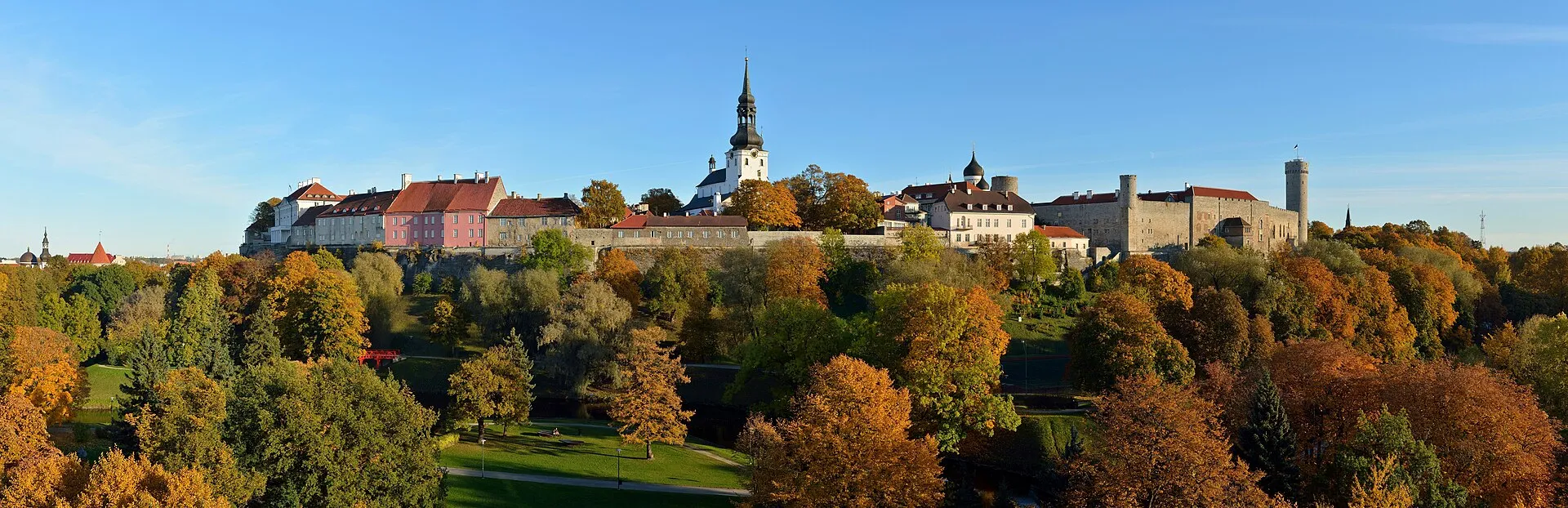
 Tallinn
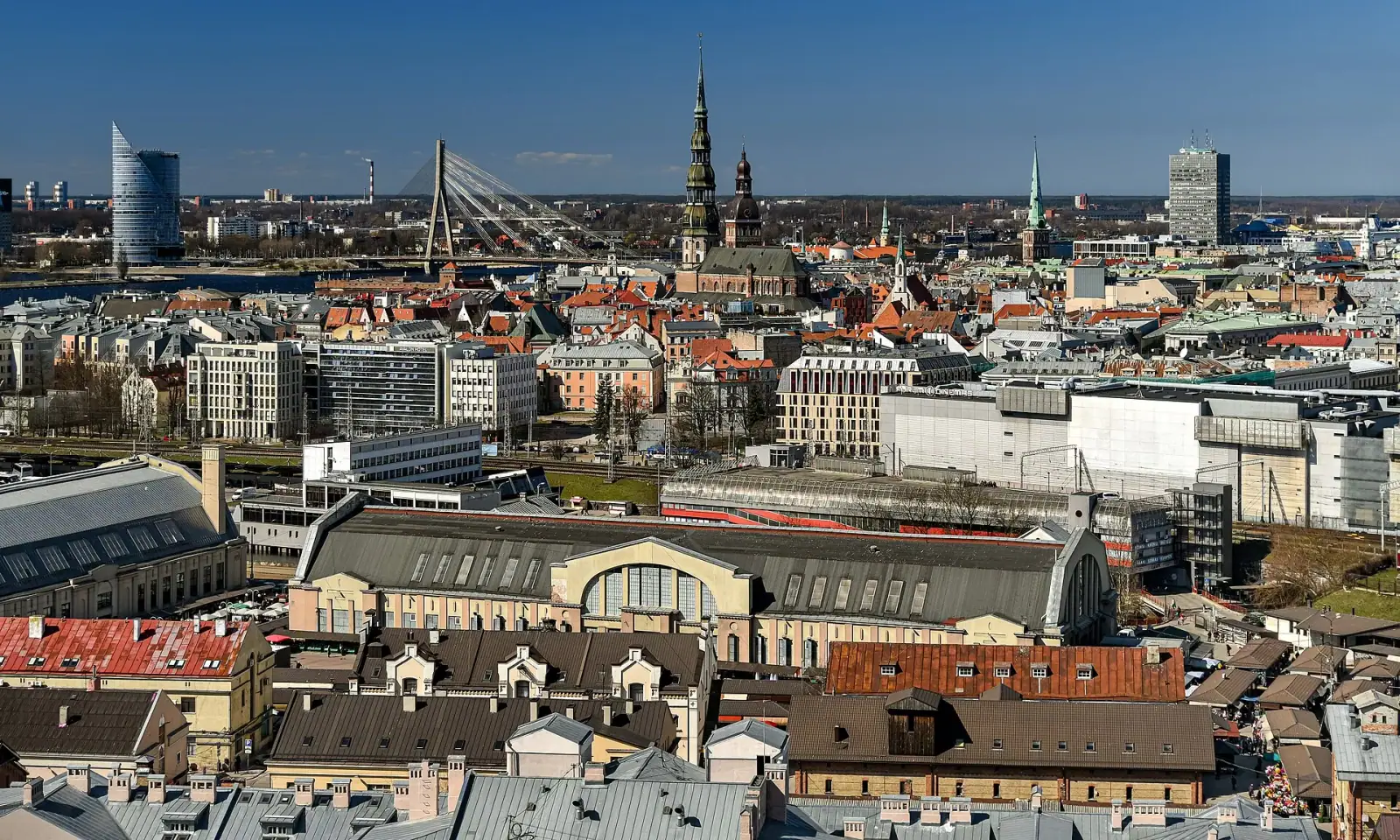
 Riga
Pick Riga. For most people working remotely, it is the better Baltic capital to live in, and the rest of this page tries to talk you out of that.
Why Riga comes first
Start with what you would see every day. About a third of the buildings in central Riga are Art Nouveau, most of them put up between 1904 and 1914 as ordinary apartment blocks, so you are not visiting them behind a rope: you may be renting one. On Alberta iela, Mikhail Eisenstein's facades go well past reason. Your food can come from the Central Market, five pavilions built with the frames of First World War Zeppelin hangars, and more than 3,000 stands in all. On a hot Saturday, a commuter train runs out to Jūrmala's 33 kilometres of white sand, with ten stations a short walk from the beach.
The money points the same way. We estimate $1,900 a month here and $2,400 in Tallinn, or $6,000 a year, enough to pay for all your flights out of the dark months. And there are more flights to buy. Riga's airport is the largest in the Baltics, with about 7.1 million passengers in 2024 and direct service to over 100 destinations, roughly twice Tallinn's traffic.
Visas do not separate them. Estonia wants about $5,180 a month and Latvia about $5,220, though Latvia's can be renewed once and Estonia's is listed as a single year. Estonia also measures yours after tax, which makes it the harder test of the two, whereas Latvia wants your employer or business to be in an OECD country. The full conditions are worth reading before you decide you qualify for either.
The case for Tallinn
The strongest objection is people. Telliskivi Creative City, on the site of old railway works at the edge of Kalamaja, holds more than 300 companies, Lift99's founder crowd among them, with a flea market and Fotografiska on the same site. If you want a coworking desk beside someone who has actually built a company, Tallinn is ahead, and the wooden streets of Kalamaja and the new waterfront at Noblessner are lovely places to walk home through. Riga has nothing quite as dense. It also has fewer people than it did: the city has lost about a third of its population since 1991, and Vilnius has lately passed it as the largest city in the Baltics. For a look at that rival, see our Riga and Vilnius comparison.
Next is friction. Much of Estonian government runs online, which is a real pleasure after a few weeks of queues elsewhere. A Tallinn tram reaches the airport terminal in under 20 minutes, restored this August after a long suspension, and register as a resident and every city bus and tram is free, as they have been since 2013. Riga's airport is a half-hour bus ride, and dealing with officials there without Latvian or Russian takes patience.
Then there is Helsinki, 80 kilometres over the water and about two hours by ferry. If your clients, your friends or your idea of a good weekend are in Finland, this alone can decide it, and at that point the rent is a commuting cost, not an extra.
The last objection is one we would not give much weight. The medieval Old Town, on UNESCO's list since 1997, is more complete and more impressive than Vecrīga. It also has more tourist traffic than work cafés, and remote workers tend to end up in the districts just outside its walls.
What will not help you choose
Winter is the same bad news in both. Tallinn has barely six hours of daylight at the solstice and about 20 hours of sunshine in all of December, and Riga, a little further south, is dark by four and regularly down to -5°C or worse. Do not expect Rail Baltica to change the geography soon either. The official date for the new line is 2030, a Polish minister has called that impossible, and costs have roughly quadrupled. For years yet you will make this trip on a Lux Express coach, about four and a half hours for $40 or less.
So the verdict stands, with one exception: Tallinn for founders, and for anyone tied to Helsinki. Everyone else should take the coach to Tallinn for a long weekend from Riga, enjoy it, and come home.
 United States
 United Kingdom
 Germany
 Canada
 Australia
 India