Cost of Living in Rarotonga
Where this figure comes from. No cost survey covers Rarotonga, so the $1,800 a month above is our own estimate rather than a measurement. On 416 of our 999 city guides the figure is built from a published Numbeo basket, a one-bedroom rent in the centre plus one person's monthly costs without rent, converted to USD; this city is not one of them. How we source everything.
Budget around $1,800 a month as a solo remote worker on Rarotonga, which is expensive for the Pacific and reflects an island that uses the New Zealand dollar and imports from New Zealand. A one-bedroom place runs roughly $700 to $1,200. Groceries carry the freight cost that every remote island pays, and the difference between shopping at the Punanga Nui market on a Saturday and shopping at a supermarket is substantial. There is no local income tax on foreign earnings. This is our own estimate rather than a reconciliation against measured data. Fibre runs about $80 to $150 a month, which is the price of a small island buying its bandwidth wholesale, and it is the single line most people find steeper than expected. Scooter hire is around $150 a month and a car double that. Eating out is expensive outside the Muri night markets and the Saturday market, where a plate of ika mata, raw fish cured in lime and coconut cream, costs a few dollars and is what most residents eat. Rentals are found through noticeboards and word of mouth rather than listing sites, and a month's stay is usually cheaper arranged after arrival than before it.
Where to Work in Rarotonga
The Cook Islands are served by the Manatua submarine cable, completed in 2020, which transformed connectivity from satellite-dependent to genuinely workable, and fibre now reaches most of Rarotonga at reasonable speeds. Prices are high. Mobile data from Vodafone Cook Islands covers the island. Power is reliable and increasingly solar. There is a small amount of coworking. English is an official language alongside Cook Islands Maori and is used everywhere. Rarotonga sits ten hours behind London and is a day behind New Zealand despite being two hours ahead of it in clock terms, which confuses everybody. The date-line confusion is worth stating plainly: Rarotonga is ten hours behind GMT and sits on the same side of the line as Hawaii, so when it is Monday morning in Auckland it is still Sunday afternoon here. Anyone coordinating with New Zealand is working a day apart on the calendar even though the clock difference is small. The Manatua cable links Rarotonga to Niue, Samoa, French Polynesia and on to the wider network, and it is the single change that moved the Cook Islands from impossible to workable for remote work within the last five years.
Getting Around Rarotonga
Rarotonga is thirty-two kilometres around and has exactly one ring road, which two buses circle all day: one clockwise, one anticlockwise, and that is the entire public transport system. It works. Scooters are the common rental and a local licence is issued at the police station, which used to involve a practical test and has become a formality. Cycling the ring road is easy and flat. The interior is mountainous and crossed by the Cross-Island Track past the Needle. The airport is on the ring road with flights to Auckland, Sydney and, seasonally, Los Angeles and Tahiti. The Cross-Island Track takes about four hours from Avatiu to Wigmore's Waterfall and is genuinely steep and slippery rather than a stroll. Aitutaki is fifty minutes by air and its lagoon is the one that appears in most photographs attributed to the Cook Islands.
Sorting transport? Book an airport transfer, or compare car rental on Auto Europe and QEEQ.
Visas for Rarotonga
The Cook Islands grant thirty-one days on arrival to citizens of most countries with no visa and no fee. That permit can be extended once, by another thirty-one days, at the immigration office in Avarua; anything longer means applying for the Long-term Visitor Visa and Permit, which is capped at eight months. New Zealanders who are not Cook Islanders get three months on arrival, extendable by three more. Cook Islanders themselves hold New Zealand passports, since the country is in free association with New Zealand. There is no remote work visa, so a season of remote work here runs on the visitor route, and the long-term permit is the piece to plan for if you want more than two months. Stays beyond eight months require a permit through employment or business. Lodge any extension before the permit lapses rather than after, since the immigration office treats an overstay far less lightly than the easy entry suggests.
Best Time to Visit Rarotonga
April to November is the dry season and the comfortable window, with daytime highs of twenty-six to twenty-nine, low humidity and the calmest lagoon. December to March is the wet season and the cyclone season, and while the Cook Islands are hit less often than Vanuatu or Fiji, the exposure is real. The shoulder months of April, May, October and November are the best combination of weather and price. The Te Maeva Nui festival at the start of August, marking self-government, is the largest cultural event of the year and worth timing around. Te Maeva Nui runs for about a week around the fourth of August and every island in the group sends a performing team, which makes it the one time the whole country is visibly in one place. Humpback whales pass Rarotonga between July and October and are often visible from the shore on the southern coast, which is an unusually easy way to see them without a boat.
Pros and Cons of Rarotonga
Rarotonga has one of the most beautiful lagoons in the Pacific at Muri, a mountainous green interior you can walk across in a morning, no building taller than a coconut palm by law, and a genuinely safe, easy, English-speaking society running on New Zealand dollars. The submarine cable made working here possible. It is expensive and very small, with no remote-working scene here at all, the choice of anything at all is limited by the size of the island, and getting here means Auckland for almost everyone. The law capping building height at a coconut palm is also the reason the island looks the way it does, and it is enforced. Land in the Cook Islands cannot be sold to foreigners and is held under customary title, leased rather than bought, which is why the island has no resort development of the scale seen in Fiji and why it looks as it does. Power runs on a mix of diesel and a large solar installation, and the island has been working toward full renewable generation for years, which for a country of seventeen thousand people is an unusually concrete commitment.
Who Rarotonga Is For
An easy, safe, English-speaking Pacific island where the paperwork is trivial and the lagoon is the reason to be there. Anyone working New Zealand or Australian hours will find the time zone awkward but the flights simple. Most people find one or two months is the honest answer, even though the long-term permit will stretch to eight. Variety runs out on an island this size, there is no professional network beyond tourism, and importing everything across the Pacific keeps costs a long way above low. Aitutaki, an hour north by air, has the lagoon that Rarotonga is often mistaken for. Children do unusually well here. Rarotonga can be learned in a week, its crime rate is low enough to stop thinking about, and the lagoon around it stays shallow in a way very few Pacific destinations manage. New Zealand citizens have an advantage nobody else does: under the free association arrangement they can live and work here without asking anyone's permission at all. Fiji is the comparison, and the trade is far smaller, considerably safer, easier paperwork and no domestic flight network to speak of beyond Aitutaki.
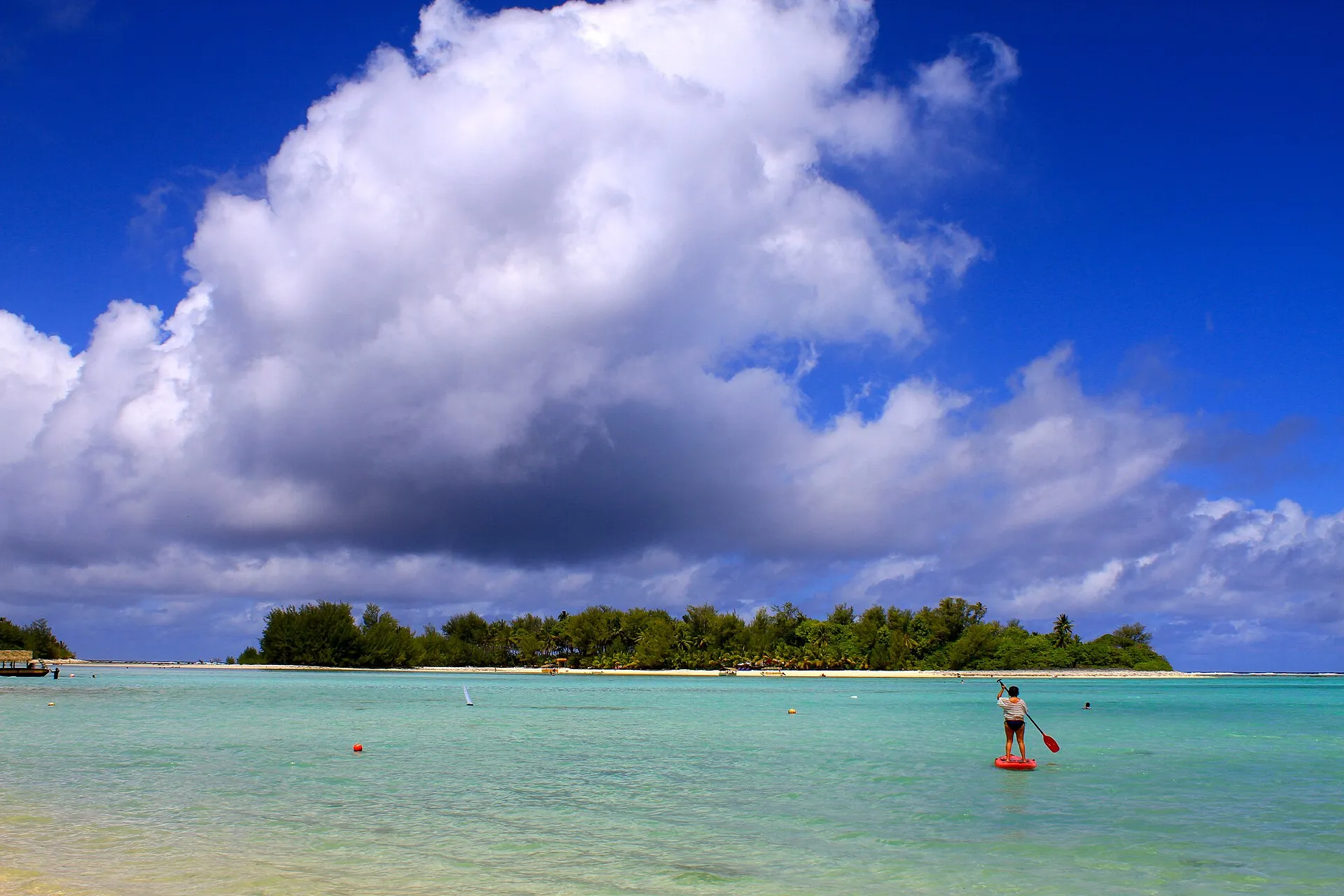 Photo: Christopher Johnson from Tokyo, Japan / Wikimedia Commons (CC BY-SA 2.0)