Cost of Living in Apia
Where this figure comes from. No cost survey covers Apia, so the $1,300 a month above is our own estimate rather than a measurement. On 416 of our 999 city guides the figure is built from a published Numbeo basket, a one-bedroom rent in the centre plus one person's monthly costs without rent, converted to USD; this city is not one of them. How we source everything.
Budget around $1,300 a month as a solo remote worker in Apia, which is moderate for the Pacific and lower than most of the region's capitals. A one-bedroom place runs roughly $400 to $700. Food from the market at Maketi Fou is cheap and Samoa grows taro, breadfruit and bananas in quantity; imported goods carry the heavy markup that every Pacific island pays for freight. The tala is stable. Fales, the open-sided beach huts let by families along the south coast, are a genuinely cheap way to stay outside the capital. This is our own estimate rather than measured data. Imported goods carry the Pacific freight premium and most of what is not grown locally arrives from New Zealand, which sets the price of everything in the supermarkets. Fibre where available runs $60 to $120 a month. The Samoan custom of fa'alavelave, contributions to family and church obligations, shapes the local economy in ways a visitor does not pay into but will notice in how money moves here.
Where to Work in Apia
Samoa's connectivity improved substantially with the Tui-Samoa submarine cable in 2018, and fibre now reaches Apia at speeds that work, though prices are high and coverage thins outside the capital. Mobile data from Digicel and Vodafone covers the populated coast. Power cuts happen. There is essentially no coworking. English is an official language alongside Samoan and is used throughout government and business. Samoa moved across the international date line in 2011 to align with Australia and New Zealand, so it now sits a day ahead of American Samoa two hours away. Working hours here align naturally with Auckland, which is where most of Samoa's business and diaspora connections run, and with Brisbane and Sydney an hour or two behind that. Anyone whose clients are in Europe or North America is looking at a genuinely inverted day rather than an awkward overlap, which is the single biggest practical filter on basing here. Most of the land in this country is held under customary title by extended families rather than owned outright, and it cannot be bought by anybody at all, which is why long leases are the only arrangement available and why the decision sits with a family council rather than with an individual.
Getting Around Apia
Apia runs along a harbour on the north coast of Upolu and its centre is walkable, with the market, the flag-tiled Immaculate Conception cathedral and the waterfront all within twenty minutes. Brightly painted wooden buses cover the island cheaply on no fixed timetable and are an experience in themselves. Most residents drive, and Samoa switched from driving on the right to the left in 2009, which makes it one of very few countries ever to have done so. Faleolo airport is forty minutes west with flights to Auckland, Fiji and Sydney. The ferry to Savaii takes ninety minutes. They have no fixed stops either. A passenger waves one down from the roadside and pays the driver on the way out, which is worth knowing before standing hopefully at what looks like a stop. To Sua Ocean Trench on the south coast and the Piula cave pool are the two trips most visitors make, both around an hour from Apia by road.
Sorting transport? Book an airport transfer, or compare car rental on Auto Europe and QEEQ.
Visas for Apia
Samoa grants a free entry permit on arrival to citizens of most countries for up to ninety days, which is generous and requires only a passport, onward ticket and proof of accommodation. There is no remote work visa. Extensions are applied for locally through the immigration office. Longer stays require a work or residence permit with local sponsorship. The simplicity of entry is one of Samoa's practical advantages over several of its Pacific neighbours, where the paperwork is heavier and the fees higher. Anyone island-hopping should note that American Samoa, two hours away by air, is United States territory and needs its own separate permission. Anyone arriving by yacht clears in at Apia, which is the only port of entry, and the Apia Marina is small enough that a berth should be arranged in advance.
Best Time to Visit Apia
May to October is the dry season and the comfortable window, with daytime temperatures around twenty-nine, lower humidity and the calmest seas. November to April is the wet season and also the cyclone season, and Samoa sits in the belt; the islands have taken serious hits, most memorably Cyclone Evan in 2012. The 2009 tsunami, caused by an offshore earthquake, killed nearly two hundred people on the south coast, and evacuation routes are marked there for good reason. Independence celebrations at the start of June are the biggest event of the year. Sunday observance is close to absolute in Samoa: villages hold a curfew for evening prayer, shops close, and travelling through a village during sa is a genuine breach rather than an inconvenience. Planning a week here means planning around it. Samoa jumped the date line at the end of 2011 and skipped the thirtieth of December entirely, moving from the last place on earth to see each day to the first, which put the country back on the same working calendar as Australia and New Zealand. The territory forty kilometres away did not follow.
Pros and Cons of Apia
Samoa is where fa'a Samoa, the Samoan way, still orders daily life more visibly than tradition does almost anywhere: village councils, Sunday observance that closes the country, and a formality of manner that visitors notice within a day. The To Sua ocean trench, the Piula cave pool and the waterfalls of the south coast are remarkable, and Robert Louis Stevenson's house above Apia is a genuinely good museum. It is remote, it is expensive to reach, the internet is adequate rather than good, and Sunday closure catches out anyone who has not planned for it. The 2009 tsunami struck the south coast hard and the rebuilt villages and the memorials along that shore are part of what a visitor sees. Samoa also has one of the highest rates of land held under customary title anywhere, around eighty per cent, which means almost nothing here is bought and sold in the way a foreigner might expect.
Who Apia Is For
A Pacific base with real cultural depth rather than a resort, for anyone comfortable with a slow pace and a country that stops entirely on Sundays. The ninety-day free entry makes a long stay unusually simple. Fast internet is not on offer this far into the Pacific, the nightlife amounts to a few venues, and any professional network has to arrive with you rather than be found on landing. Anyone coming should read a little about fa'a Samoa first, since the social rules here are more visible and more consequential than in most places visitors go. Savaii is the reason a lot of people end up staying. The larger and far quieter island has the lava fields and the blowholes, and hardly anybody crosses the strait to see them. A Polynesian base with a functioning capital behind it is a narrower proposition than it sounds. Apia has hospitals, flights and supermarkets that most of the region's smaller centres simply cannot offer, which is the difference between a posting and a stay.
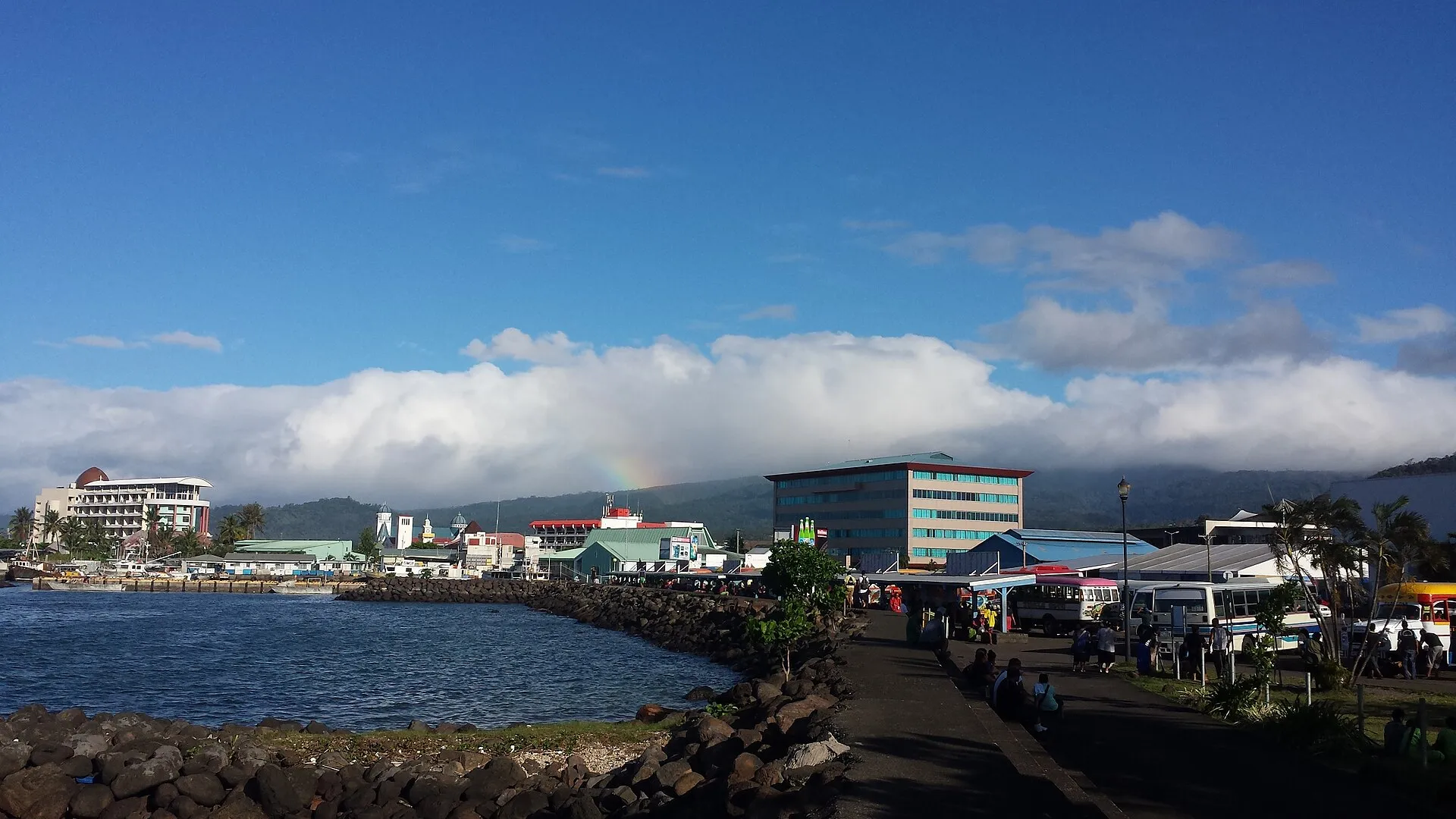 Photo: Rickard Törnblad / Wikimedia Commons (CC BY-SA 4.0)