Cost of Living in Broome
Where this figure comes from. No cost survey covers Broome, so the $2,200 a month above is our own estimate rather than a measurement. On 416 of our 999 city guides the figure is built from a published Numbeo basket, a one-bedroom rent in the centre plus one person's monthly costs without rent, converted to USD; this city is not one of them. How we source everything.
Budget around $2,200 a month as a solo remote worker in Broome, and understand that this is remote Western Australia, where almost everything arrives by road or air and is priced accordingly. A one-bedroom apartment runs roughly $1,200 to $1,600 and rises sharply in the dry season when the town fills. Groceries cost meaningfully more than in Perth, with fresh produce the worst affected. Eating out is expensive and the choice is limited. The wet season from November to March is the cheap window, when accommodation prices fall and much of the tourism economy pauses. Fuel is expensive and distances are large. NBN plans run about $60 to $90 a month and are the only real option, since there is no fibre competition this far out. A four-wheel drive is the other structural cost: hiring one runs $150 to $250 a day in the dry season, which is why most people who stay a while buy something second-hand and sell it on when they leave. Fuel on the roads out of town costs well above the Perth price and the gaps between servos are long enough that a jerry can is normal equipment rather than a precaution.
Where to Work in Broome
Broome has essentially no formal coworking. Remote work happens from accommodation, from the library or from cafes in Chinatown, and the practical constraint is connectivity rather than desk space. The NBN reaches the town with usable speeds, but this is the end of a very long network and outages and slowdowns are more common than in a capital. Mobile coverage is good in Broome itself and disappears quickly on the roads out. Anyone dependent on reliable video calls should test a specific connection before committing to a lease, and should expect the wet season to make things worse. Broome sits in Australian Western Standard Time, eight hours ahead of GMT, which gives a workable European morning at the end of the Broome day and puts the American markets out of reach entirely. Western Australia does not observe daylight saving, so that offset holds all year. The library on Hamersley Street has air conditioning, power points and a reliable connection, and it is where a good number of people actually work.
Getting Around Broome
Broome is spread out and the heat makes walking impractical for much of the year, so most people use a car or a bicycle. The town centre at Chinatown, the port and Cable Beach are several kilometres apart, linked by a limited bus service. A four-wheel drive is what unlocks the region: the Dampier Peninsula, the Gibb River Road and the Kimberley gorges all need one, and many roads close entirely in the wet season. The airport is in the middle of town with direct flights to Perth, Darwin and, seasonally, further afield. Distances here are measured in hours rather than kilometres. The Dampier Peninsula road to Cape Leveque was sealed in 2021, which changed access to Kooljaman and the communities up there considerably, though the side tracks remain four-wheel drive only. Cable Beach allows vehicles onto the sand north of the rocks, which is how most people watch the sunset here.
Sorting transport? Book an airport transfer, or compare car rental on Auto Europe and QEEQ.
Visas for Broome
Australia has no digital nomad visa. Most Western nationals use an eVisitor or Electronic Travel Authority giving three months per entry within twelve months, with no right to work for an Australian employer. Working Holiday visas are open to under-thirties or under-thirty-fives by nationality and allow twelve months with work rights, and Broome is a common place to complete the regional work requirement for a second-year extension. Longer stays require employer sponsorship or skilled migration. Anyone planning around the second-year extension should check which local work actually qualifies, since the rules are specific. Much of the Kimberley beyond the town is Aboriginal freehold, and travelling through it away from the main highways requires a permit from the relevant land council, applied for in advance and entirely separate from anything to do with a visa, a distinction that trips up travellers who expect one process to cover both.
Best Time to Visit Broome
The dry season from May to October is the whole season here: warm days around thirty, cool nights, almost no rain and reliable blue sky. It is also when the town fills, prices peak and accommodation needs booking well ahead. The wet season from November to March brings extreme humidity, temperatures in the high thirties, spectacular electrical storms and the risk of cyclones, and much of the tourism economy shuts. The shoulder months of April and November are a genuine compromise: quieter, hot, and mostly dry. Staircase to the Moon happens on specific full-moon nights between March and October. Staircase to the Moon is the reflection of the rising full moon on the exposed mudflats at Town Beach, visible on two or three consecutive evenings each month between March and October, and the dates are published a year ahead. Cyclone season officially runs November to April and the town has a well-drilled warning system, but roads and flights are the first things to go. Rents drop by a third or more through the wet, which is why some long-stay residents deliberately time a year to start in November and take the humidity in exchange for the price.
Pros and Cons of Broome
Broome puts Cable Beach, a genuine pearling history and the Kimberley on your doorstep, in a town with a distinct multicultural character shaped by Japanese, Malay and Aboriginal communities over more than a century. The dry season weather is close to perfect. It is expensive, it is isolated, and the wet season is genuinely difficult rather than merely inconvenient. There is no nomad community, connectivity is the weakest of any Australian city on this site, and the tyranny of distance affects everything from groceries to healthcare. Broome's pearling industry brought Japanese, Malay, Filipino and Chinese divers here from the 1880s, and the Japanese cemetery holds over nine hundred graves, which is the clearest surviving record of how dangerous that work was.
Who Broome Is For
The Kimberley brings people here, and the town is where they work from between trips, particularly those on working holiday visas or Australians with the flexibility to move. The landscape has to be the priority, and a small town with very limited choice has to be tolerable. High-bandwidth work is a gamble this far along the cable, no international community exists at this distance, and the climate splits the year in half. Remote Australian pricing then overwhelms every other line on a tight budget. Anyone arriving between November and March should understand that the wet season is not a lesser version of the dry one but a different place entirely, with much of the town closed and the roads out of it impassable. Indigenous land management and the arts turn the isolation into an advantage. The Kimberley's community art centres and ranger programmes employ real numbers of people and are run out of small towns like this one. Set beside Darwin, Broome is smaller, quieter, considerably more expensive and has the better beach by a wide margin. The Staircase to the Moon falls on only a handful of nights between March and October, when a full moon rises over the exposed mudflats at Roebuck Bay, so check the dates rather than the season.
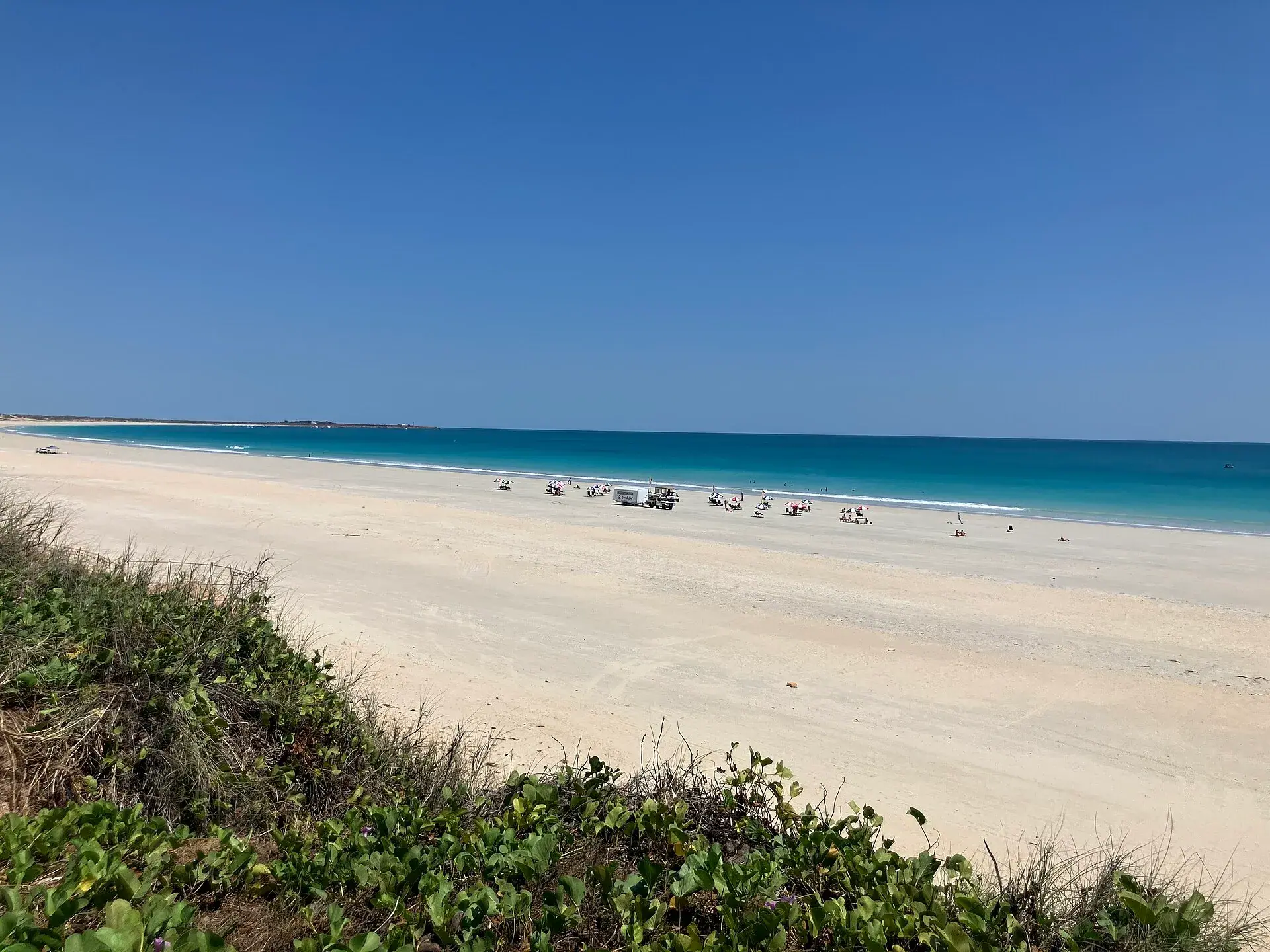 Photo: Dr-ziego / Wikimedia Commons (CC0)