Cost of Living in Mahe
Where this figure comes from. No cost survey covers Mahe, so the $2,200 a month above is our own estimate rather than a measurement. On 416 of our 999 city guides the figure is built from a published Numbeo basket, a one-bedroom rent in the centre plus one person's monthly costs without rent, converted to USD; this city is not one of them. How we source everything.
Budget around $2,200 a month as a solo remote worker on Mahe, which makes Seychelles one of the more expensive places in this batch and reflects an island nation that imports almost everything. A one-bedroom place runs roughly $800 to $1,400, with Beau Vallon and the northwest coast at the top of that and the areas around Victoria and the south considerably cheaper. Self-catering is what keeps a budget here in one piece: restaurant prices are set for resort guests, while the market in Victoria and the local takeaways are a different economy entirely. This is our own estimate rather than measured data. Electricity is a real line item on an island where almost everything runs on imported fuel, and air conditioning through the warmer months is what separates a comfortable budget from a tight one. Car hire is the largest discretionary cost most people meet here and can rival rent if it runs all month. Guesthouses will usually quote a monthly rate well below their nightly one if you ask directly, which is the single most effective thing a long-stay visitor can do about the cost of being here. Fish bought at the market is cheap; anything imported, from cheese to wine, is emphatically not.
Where to Work in Mahe
Seychelles has better connectivity than its remoteness suggests: the country is served by submarine cable and fibre reaches most of Mahe at workable speeds, with mobile data from Cable and Wireless and Airtel covering the island. Prices are high. Power is reliable. There is very little coworking, so remote work happens from guesthouses and self-catering apartments. English is one of three official languages alongside French and Seychellois Creole, and it is used throughout government and business, which makes the country straightforward to operate in. Anyone working with Europe will find the offset convenient, since Seychelles sits two hours ahead of central European time for most of the year. A local SIM is worth buying on arrival rather than roaming, since data bundles are the cheapest part of the telecoms bill here and coverage follows the coast road closely. Anyone whose income depends on being reachable should keep a second SIM on the other network, because a single outage on a small island has nowhere to fail over to. Calls with North America are awkward from this longitude, landing either very early or very late, so the working day realistically points at Europe, the Gulf and East Africa instead.
Getting Around Mahe
Mahe is about twenty-seven kilometres long with a mountainous spine, and Victoria, the smallest capital in Africa, sits on its northeast coast. Buses cover the island cheaply and frequently, and the network genuinely works, which is unusual for a small island and means a car is optional rather than essential. The coastal roads are narrow and the cross-island routes steep. The airport is ten minutes from Victoria with direct flights to Dubai, Doha, Addis Ababa, Paris and Nairobi. Ferries run to Praslin and La Digue, the other main islands, in about an hour. Traffic drives on the left, a legacy of British administration, and the roads are well surfaced but genuinely tight in places, with buses taking their half of the width out of the middle. The bus network thins out after the early evening, so anyone planning a night in Victoria should agree a taxi in advance rather than assume one will appear. Most of the interior belongs to Morne Seychellois National Park and is reached on foot, and several of the best walks start from the cross-island road rather than the coast, which makes the bus a reasonable trailhead shuttle.
Sorting transport? Book an airport transfer, or compare car rental on Auto Europe and QEEQ.
Visas for Mahe
Seychelles has the most open border policy in the world: it requires no visa of any nationality. Every visitor receives a visitor's permit on arrival, initially for up to three months, extendable up to a total of twelve months in any year on payment of a fee, provided you can show accommodation, means and a return ticket. There is no separate remote work visa because the ordinary permit already does the job. It is not a residence permit and does not allow working for a Seychellois employer, which is the one limit worth understanding. Seychelles requires an online Travel Authorisation, applied for and paid in advance, and airlines check it at boarding, so the absence of a visa is not the absence of paperwork. Extensions are handled at the immigration office in Victoria and are granted in blocks rather than all at once, with the fee rising at each renewal, so a twelve-month stay means several visits and a growing cost. Bring evidence of funds and onward travel to each one, since the same conditions are reassessed every time.
Best Time to Visit Mahe
Seychelles is warm all year, around twenty-nine degrees every month, and the calendar is set by two trade winds. The southeast trades from May to September bring cooler, windier, drier weather, better hiking and good conditions for sailing, though seaweed collects on some southeastern beaches. The northwest trades from November to March bring warmer, calmer, wetter weather with the best diving visibility and the flattest sea. April and October are the transition months and the most settled of all. The islands sit outside the cyclone belt, which is a real advantage in this ocean. Rain here usually arrives as a heavy shower that clears rather than a day lost, even in the wetter months, which is worth knowing before writing off December to February. Prices follow the European holidays rather than the weather: Christmas and the New Year, then July and August, are when flights and guesthouses cost the most and book out first. Whale sharks pass the west coast around September and October, and hawksbill turtles nest on the beaches from roughly October to February, so the quieter shoulder months carry most of the wildlife worth planning around.
Pros and Cons of Mahe
Seychelles has the granite boulder beaches that appear on every list of the world's best, an interior of mountain rainforest with the Vallee de Mai on Praslin holding the coco de mer palm found nowhere else, giant tortoises, and no visa requirement for anyone on earth. English works everywhere and the country is safe. Prices are high, the islands are small and quickly exhausted, and nobody else has come here to work, and the economy is so dominated by high-end tourism that the middle of the market barely exists. Prices also vary far more by island than visitors expect, with La Digue and Praslin costing noticeably more than the south of Mahe. Healthcare is adequate for ordinary problems, but anything serious means an evacuation flight, which is worth insuring for properly rather than assuming. And getting here is expensive from almost everywhere, with the cheaper fares concentrated on a handful of Gulf and East African carriers, so the cost of a stay is decided as much by the flight as by the nightly rate once you arrive.
Who Mahe Is For
Extraordinary beaches and hiking with no visa paperwork at all, for somebody who will self-cater rather than eat out. The twelve-month extendable permit is quietly one of the most generous arrangements anywhere for a long stay. Seychelles prices defeat a tight budget within the first week, and the professional community here is tourism and fisheries or it is nothing at all. Anyone staying a while should use the bus network and rent in the south rather than the northwest, which is where the price difference on this island actually lies. Anybody who has been refused a visa somewhere else should know that Seychelles is the only country on earth that requires one of nobody at all, whatever passport they happen to hold. It rewards a particular kind of stay: solitary, focused work broken by water, which is why writers, divers and sailors tend to get more out of Mahe than most. The islands are safe and everything runs in English, which removes most of what makes a move hard with children. Anyone who needs a city, a scene, or somewhere new to go every weekend will run out of island faster than they expect, and the onward flights are too expensive to treat as a casual escape.
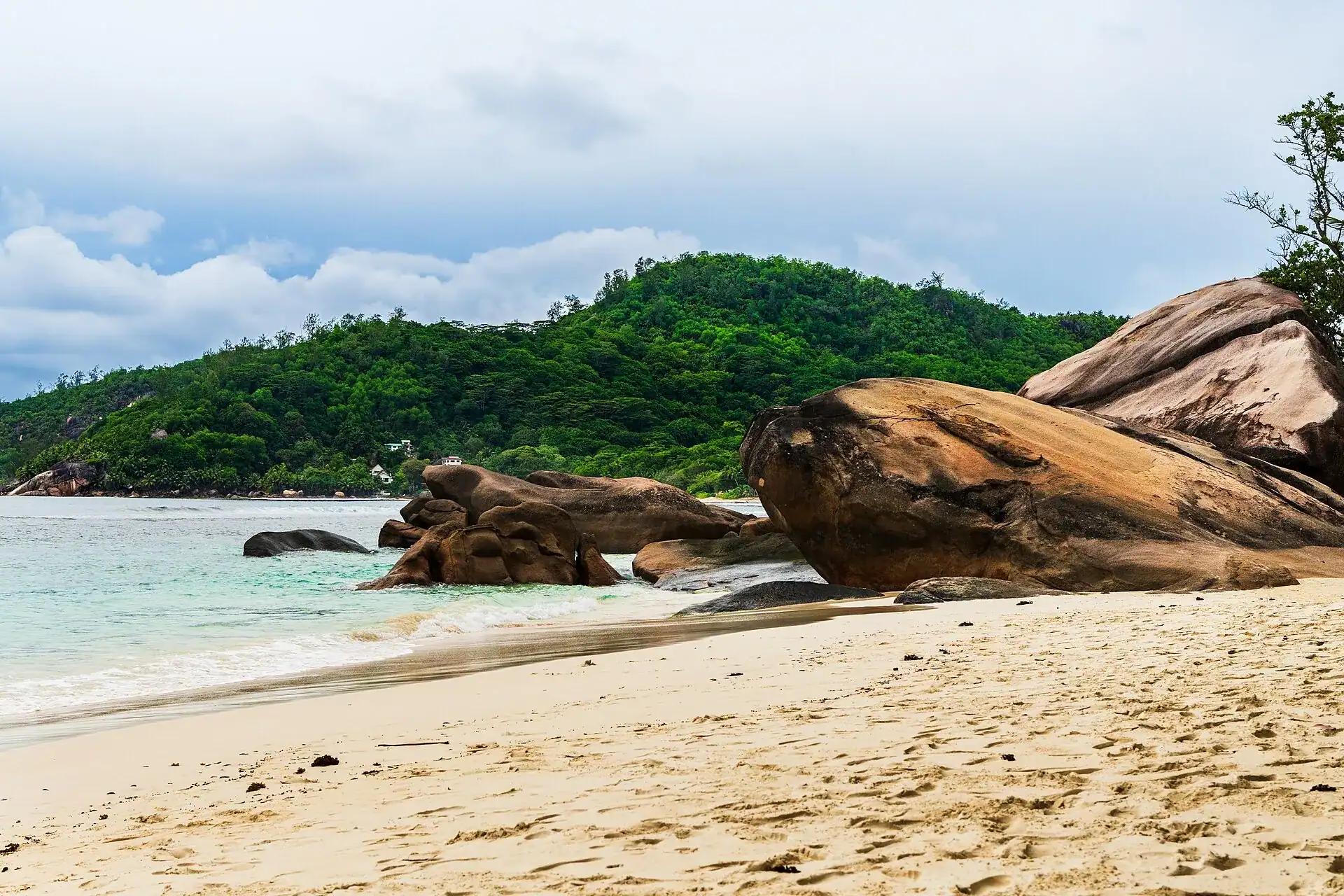 Photo: NorbertNagel / Wikimedia Commons (CC BY-SA 4.0)