Cost of Living in Besalú
Where this figure comes from. No cost survey covers Besalú, so the $950 a month above is our own estimate rather than a measurement. On 416 of our 999 city guides the figure is built from a published Numbeo basket, a one-bedroom rent in the centre plus one person's monthly costs without rent, converted to USD; this city is not one of them. How we source everything.
Besalú is small and touristy, which pushes prices above what you would expect for a rural Catalan town, though it is still far cheaper than Barcelona or coastal resort towns. A one-bedroom apartment, if you can find one to rent long-term (listings are scarce since most housing near the center is geared toward short-term tourist stays), runs roughly $575 to $865 a month. Groceries at the local Bonpreu or Girona supermarkets cost about what you would pay elsewhere in inland Catalonia, maybe $290 to $405 a month for one person. A menu del dia at a town restaurant is typically $16 to $21, and a coffee at one of the plazas near Pont Fortificat runs $1.50 to $3. Overall a modest single-person budget lands around $1,500 to $2,070 a month including rent, and that is before factoring in a car, which most residents consider close to essential here.
Where to Work in Besalú
Honestly, this is the weakest part of Besalú as a remote work base. There is no dedicated coworking space in town. Your options are a handful of cafes around Placa Llibertat and near the bridge that tolerate laptops during slow hours, plus whatever wifi your rental provides. A few small hotels and guesthouses have lounge areas where longer-staying guests can work, but nothing purpose-built. Fiber internet has reached most of the historic center and surrounding streets, so home connections from providers like Movistar or Vodafone are generally solid once you are set up. For a proper coworking desk, real cafe culture for all-day laptop work, or a wider talent and social pool, Girona is about 35 to 40 minutes away by car and has several coworking spaces plus a much bigger remote worker community. For errands a laptop cannot solve, Olot, the comarca capital about twenty minutes west, is the closer town, with bank branches, bigger supermarkets and a public library whose desks make a decent refuge on a wet afternoon.
Getting Around Besalú
The medieval center is entirely walkable, in fact a car cannot enter most of the old town at all, and you will park at the edge and walk in over cobblestones. For getting to and from Besalú, a car is genuinely useful, arguably necessary if you want to explore the Garrotxa region, visit nearby volcanic parks, or reach Girona and Figueres without waiting on limited bus schedules. Regular Teisa buses connect Besalú to Girona and Olot several times a day, and less frequently to Figueres, but timetables are sparse on weekends and holidays. There is no train station in Besalú itself; the nearest rail links are in Girona and Figueres, both reachable by bus or a 30 to 40 minute drive. Girona-Costa Brava Airport is about 35 minutes away by car, and Barcelona-El Prat is roughly 1 hour 45 minutes.
Sorting transport? Book an airport transfer, or compare car rental on Auto Europe and QEEQ.
Visas for Besalú
Spain follows the Schengen rules, so most non-EU visitors, including US, UK, Canadian, and Australian citizens, can stay up to 90 days within any 180-day period without a visa. Staying longer means the digital nomad visa that the 2023 startup law introduced for people whose employer or clients sit abroad: the first grant runs up to a year, renewals stretch it to five in all, and the income test is about $3,280 a month, pegged at 200% of the minimum wage so it climbs each time the wage does, plus a supplement per dependant and proof that the job genuinely works remotely. EU and EEA citizens can simply live and work here without a visa at all. Besalú itself has no immigration office, so any visa paperwork, residency registration (empadronamiento), or NIE processing means a trip to Girona or Figueres, which handle the surrounding comarca. The border that matters here is not the French one forty minutes north, which is open road inside Schengen, but passport control at the Costa Brava airport, where Ryanair's London Stansted passengers are registered by the EU Entry/Exit System on landing.
Best Time to Visit Besalú
Late spring (May, June) and early autumn (September, early October) are the sweet spot: warm, dry days in the low-to-mid 20s Celsius, manageable crowds, and the golden stone of the old town looks especially good in soft light. Summer (July, August) brings hot, sometimes muggy weather with highs in the low 30s, plus the heaviest day-tripper crowds, since Besalú is a popular stop on Costa Brava and Girona province itineraries. Winters are cool and often damp, with daytime highs around 8 to 12 degrees Celsius and occasional frosty mornings, since the town sits in a river valley within the volcanic Garrotxa zone that traps cold air. Winter is quiet, atmospheric, and cheap, but many small businesses reduce hours or close for stretches, and the nearby volcanic hiking trails around Olot and La Garrotxa Natural Park are at their best in spring and autumn rather than deep winter. Autumn has a particular draw: the Fageda d'en Jordà, a beech wood growing on an old lava flow near Olot, turns copper from late October, and it is an easy morning's walk to pair with a working week.
Pros and Cons of Besalú
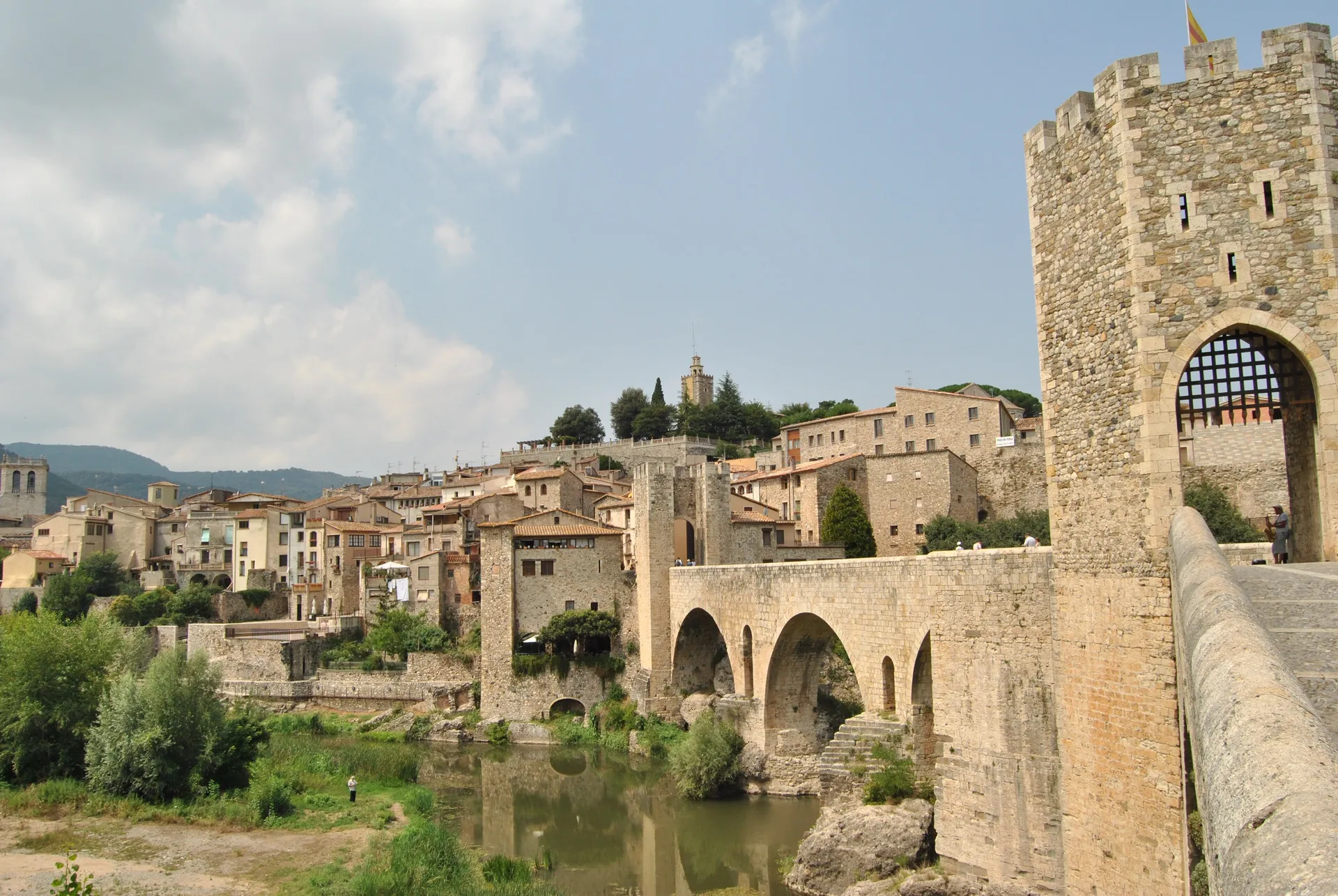
Pros: an extraordinarily well-preserved medieval town with a fortified stone bridge, a rare surviving Jewish mikveh, Romanesque churches, and golden-stone lanes that feel genuinely historic rather than reconstructed for tourists; a peaceful, low-crime setting; easy access to the volcanic landscapes of Garrotxa and to Girona and the Costa Brava; and a strong sense of place packed into a very small footprint. Cons: it is genuinely tiny, you will run out of new streets to explore within a day or two; day-tripper crowds during midday in high season can make the center feel more like a museum than a place to live; nightlife is minimal to nonexistent, most things close early; there is no coworking infrastructure; and long-term rental housing is limited because so much of the center is dedicated to tourism. The town's weight in history outruns its size, because Besalú was the capital of its own county from the ninth century until Barcelona absorbed it in 1111, which explains why a place of about 2,600 people has a monastery church, Sant Pere, consecrated in 1003.
Who Besalú Is For
Besalú suits remote workers who want a short, scenic, slow-paced base, think two to four weeks, rather than a long-term hub, ideally paired with a car and an appetite for day trips into the Garrotxa volcanic parks, Girona, or the Costa Brava. It works well for writers, researchers, or anyone who values quiet mornings and historic surroundings over a buzzing digital nomad scene. It is a poor fit if you need reliable coworking spaces, an active social or nightlife scene, or a larger English-speaking remote work community, all of which are readily available half an hour away in Girona. Think of Besalú as a beautiful, low-key satellite stay rather than a nomad base camp. Daily life runs in Catalan, at the town hall, in the school and at most shop counters, so anyone staying beyond a fortnight gets further with a few Catalan phrases than with polished Spanish. Swimmers and rowers have an extra reason to come: Banyoles, about fifteen minutes south, has the lake that hosted the rowing at the 1992 Barcelona Olympics, and people swim in it through the summer.