Cost of Living in Tuzla
Real market data
Source: Numbeo · August 2026
$710/moSolo nomad1-bed centre + living costs
$1,070/moCoupleshared 1-bed + costs
$650/moLean / localcheaper area + costs
- 1-bed rent, city centre$260BAM 450
- 1-bed rent, outside centre$200BAM 337
- Monthly costs excl. rent (1 person)$450BAM 763
- Meal, inexpensive restaurant$5BAM 9
- Monthly transit pass$49BAM 84
- Buy price, per m² (centre)$2,520BAM 4,280
Prices are from Numbeo (August 2026), converted to USD at $1 = 1.7 BAM (01 Aug 2026). The monthly living-costs figure is our transparent one-person basket, groceries, a few meals out, utilities, phone, internet, transport and essentials, priced from those figures. Solo adds central rent; couple and lean are estimates from the same numbers.
Budget around $710 a month, among the lowest in Europe. A one-bedroom runs roughly $180 to $320. Market produce is very cheap and the region grows a great deal of its own food. Eating out is inexpensive: cevapi and a drink run a few dollars and the coffee culture, which is a serious daily institution across Bosnia, costs almost nothing. Utilities are moderate and heating runs through a continental winter. Bosnia's convertible mark is pegged to the euro, which removes currency risk entirely. Anyone comparing with Sarajevo should note that Tuzla runs roughly twenty per cent lower for a comparable flat and considerably lower than the coast at Neum. Wages here are low even by Bosnian standards, which is the context that makes the prices meaningful rather than merely attractive, and the gap between a foreign income and a local one is wide enough to be worth holding in mind. Rents are agreed directly and often without an agency involved. The salt beneath the town has a practical consequence for renting as well: parts of the older centre subsided over decades of extraction, so the age and location of a building matter more here than the photographs suggest.
Where to Work in Tuzla
Connectivity is adequate. Bosnia has extensive fibre in the cities at low prices, comprehensive mobile coverage and generally reliable power, and Tuzla is well served. There is a small coworking presence and the University of Tuzla adds a student population. The time zone is central European. The practical friction is administration rather than technology: Bosnia's divided governmental structure means procedures vary between the two entities and Brcko district, and banking in particular requires patience. Opening a bank account is where that patience gets spent, and a non-resident should expect to be asked for more documents than the same bank would want in the next country. The University of Tuzla trains mining, chemical and medical graduates for industries that have mostly contracted, which is why so many of them leave, and the outflow of qualified young people is the single largest problem the city discusses. For a visitor the relevant consequence is that the professional network is thin and skews old. Cafes serve as offices without anybody minding, and the coffee habit means nobody is hurried out of a seat, which is more useful than it sounds when the alternative is a rented desk that does not exist.
Getting Around Tuzla
Tuzla is compact and walkable around the pedestrianised centre and the lakes, with buses covering the rest cheaply. Tuzla International Airport has budget flights to several European cities, which is unusual for a city this size and is genuinely useful. Buses reach Sarajevo in about three hours over the mountains and Belgrade in four. The road to the Konjuh mountains and the Sprecko valley is where the walking is, and Srebrenik castle is half an hour east. Anyone flying should check Tuzla's schedule carefully, since the budget routes have changed repeatedly and the airport can be quiet for weeks at a time. Bosnia is slower to cross than the map allows for, since the roads follow river valleys through mountains and overtaking is rare, so a journey quoted at three hours is three hours. The motorway network is short and mostly around Sarajevo. Winter closes some of the higher passes and the buses reroute rather than cancel. Within the city, walking covers almost everything, and the lakes sit close enough to the centre to reach on foot in summer.
Sorting transport? Book an airport transfer, or compare car rental on Auto Europe and QEEQ.
Visas for Tuzla
Bosnia and Herzegovina grants ninety days in any one hundred and eighty visa-free to citizens of the European Union, the United Kingdom, the United States, Canada, Australia and a long list of others. Bosnia is outside the European Union and Schengen, so time here does not count against a Schengen allowance, which makes it useful for anyone managing that limit. There is no digital nomad visa. Temporary residence is applied for locally and the process differs between the country's entities. The two entities in question are the Federation and Republika Srpska, and which one your address falls in decides which office your file goes to. Property purchase is worth mentioning because it is often misunderstood as a route in: foreigners can buy in Bosnia subject to reciprocity with their own country, but owning something confers no residence right whatever, and the two are entirely separate processes. Residence generally follows employment, study, family or company ownership with real activity behind it. Start that paperwork from outside the country, since converting a visitor stay into something longer after arrival is not how the system is built to work.
Best Time to Visit Tuzla
May to September is the comfortable window, with July around twenty six degrees and the salt lakes open for swimming, which is the town's main summer activity. Spring and autumn are short. Winter from December to February is cold and brings the Balkan air quality problem in an acute form: Tuzla sits in a valley with a large coal-fired power station nearby, and the combination of that, domestic heating and winter inversions produces some of the worst readings in Europe. Anyone swimming in the lakes should know that they are genuinely saline, filled with brine pumped from beneath the city, and that the salinity varies between the three. The lakes have a season and it is short: they open in early summer and close in September, and outside those months the town's main attraction is simply not available, which catches out anyone who booked on the strength of the photographs. Spring floods are a genuine risk in this valley, and the 2014 inundation that hit much of the country did serious damage here. Autumn is the most pleasant stretch, dry and clear before the inversions settle in.
Pros and Cons of Tuzla
The Pannonian lakes are the only saltwater lakes in the middle of a European city, created deliberately in the 2000s to use the brine that centuries of salt mining beneath the town had been pumping out, and which had already caused parts of the city to subside by several metres before they did it. Costs are among the lowest anywhere. The air in winter ranks with the worst on the continent, and it is a health consideration to plan a stay around rather than a nuisance to tolerate. Tuzla was also the one large Bosnian city that held together across ethnic lines through the war, and its 1995 shelling of the Kapija square is commemorated in the centre. Tuzla was where the 2014 protests started, when workers from privatised factories took to the streets and the movement spread across the country, producing citizens' assemblies that briefly rewrote how local politics was discussed. Almost nothing structural came of it and residents will tell you so bluntly, though the episode still shapes how the city sees itself. Healthcare centres on the university clinical centre, which is one of the larger hospitals in the country.
Who Tuzla Is For
Very low costs and ninety Schengen-free days, particularly in the summer half of the year when the lakes are open and the air is clean. Bosnia's postwar recovery reads differently in this town, because Tuzla was the one large city in the country that did not divide along ethnic lines during the war. December and January are the months to be somewhere else, because the air quality in this basin during those weeks is a serious health problem rather than an inconvenience to be endured. Salt mining shaped this town and then partly sank it, and the extraction has gone on here for several thousand years without a real break. Industrial heritage does not often get that literal. Among the Bosnian cities, Sarajevo has the history, the flights and whatever international community exists, Mostar has the tourists and the heat, Banja Luka has the smoother administration, and this one has the lowest prices and the least pretence. It rewards somebody with a specific reason to be here and will feel long to anyone without one, particularly across a winter when the valley closes in.
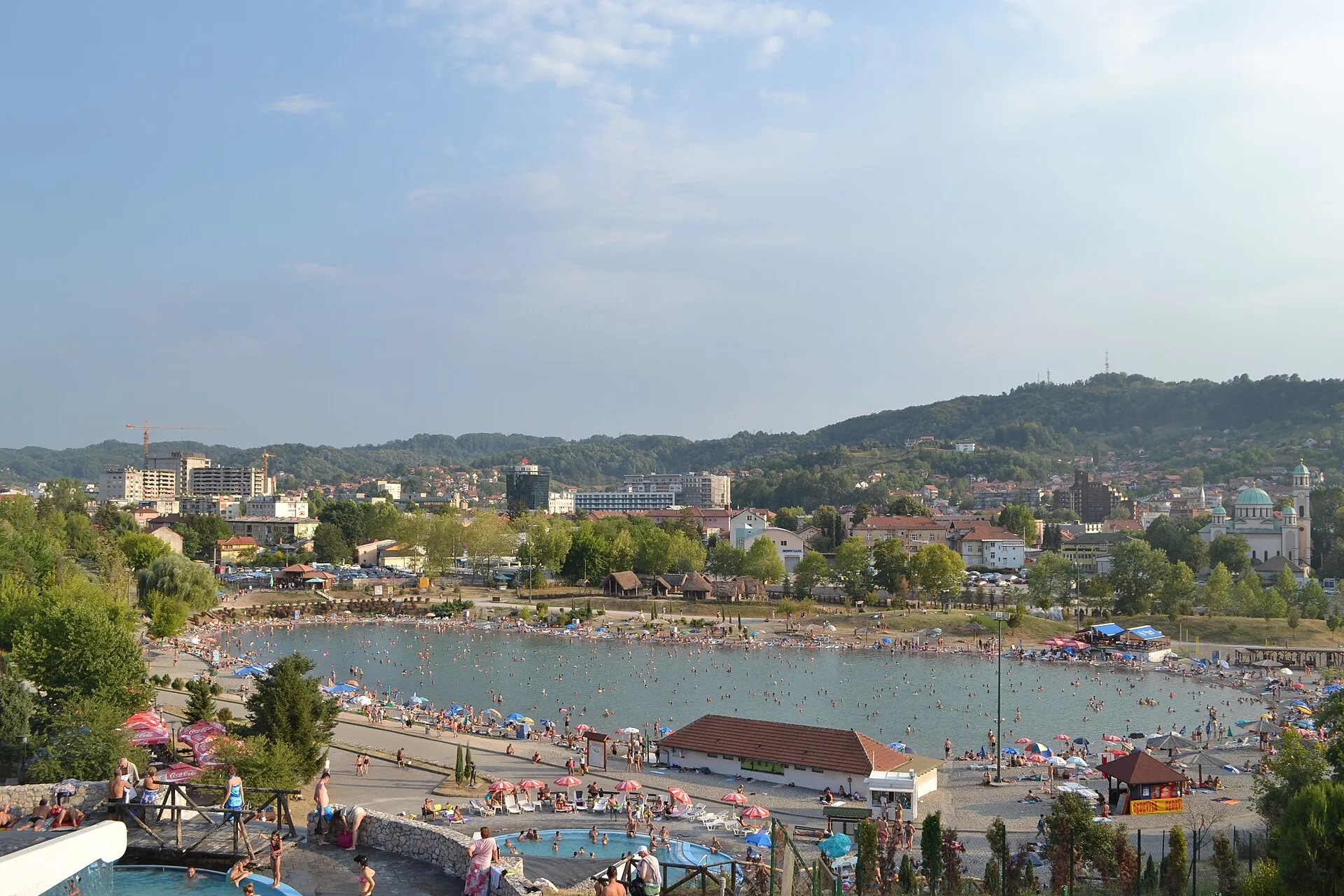 Photo: Edinwiki / Wikimedia Commons (CC BY-SA 3.0)