Cost of Living in Munich
Real market data
Source: Numbeo · Jul 2026
$3,000/moSolo nomad1-bed centre + living costs
$4,020/moCoupleshared 1-bed + costs
$2,600/moLean / localcheaper area + costs
- 1-bed rent, city centre$1,730€1,504
- 1-bed rent, outside centre$1,330€1,155
- Monthly costs excl. rent (1 person)$1,270€1,104
- Meal, inexpensive restaurant$20€17
- Monthly transit pass$73€63
- Buy price, per m² (centre)$13,100€11,381
Prices are from Numbeo (Jul 2026), converted to USD at $1 = €0.87 (01 Aug 2026). The monthly living-costs figure is our transparent one-person basket, groceries, a few meals out, utilities, phone, internet, transport and essentials, priced from those figures. Solo adds central rent; couple and lean are estimates from the same numbers.
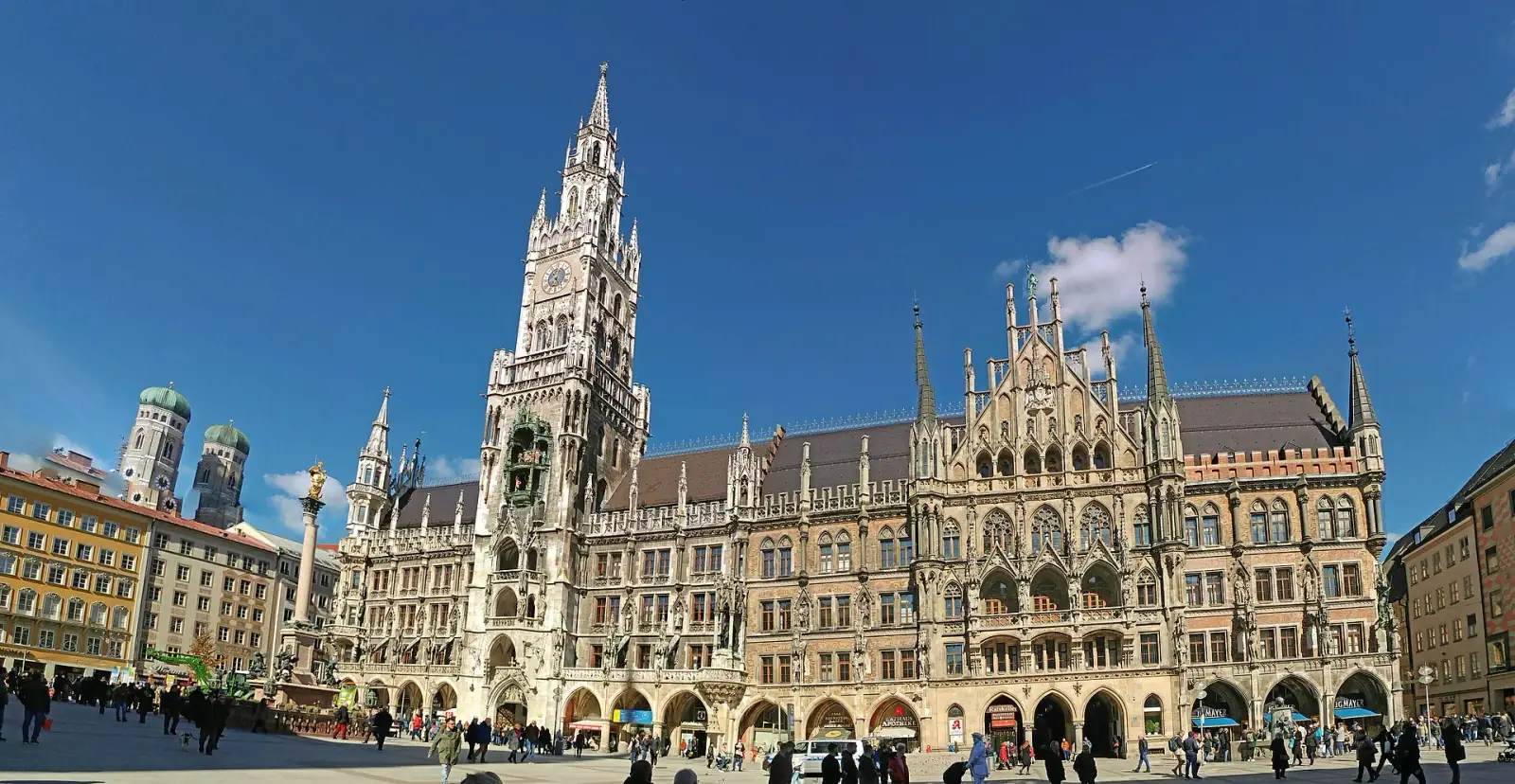
Munich (München) is one of Germany's most expensive cities, and its rental market is genuinely tight, so budget generously. Rent is where the money goes. A one-bedroom apartment in a central district (Altstadt-Lehel, Maxvorstadt, Schwabing) typically runs $1,730-2,070 per month, while a smaller or older one-bedroom in an outer district like Trudering-Riem or Feldmoching costs closer to $1,150-1,500. Furnished short-term rentals aimed at nomads sit higher, and competition for any decent listing is fierce.
Beyond rent, here is a rough monthly picture for one person:
- Groceries: $345-405. Discounters like Aldi and Lidl keep this manageable.
- Eating out: a meal at an inexpensive restaurant is $14-23; a mid-range dinner runs $29-40 per person.
- Coworking hot desk: day passes average $35-52; a monthly hot-desk membership starts around $320.
- Local transport: the Deutschlandticket at $73 per month covers all local and regional transit, and is the obvious choice.
Realistically, a single remote worker should plan for $2,530-3,680 per month all in, with rent and your lifestyle driving most of the spread. Munich is not a budget destination, and it does not pretend to be.
Where to Work
Munich has a mature coworking scene, though it is pricier and tighter than Berlin's. The major operators include WeWork (Maximilianstraße), Mindspace (Salvatorplatz and other central locations), Design Offices (multiple sites across the city), and Impact Hub München in the Westend, which has a community-driven, sustainability-focused feel. Smaller independent spaces in districts like Sendling and Pasing offer day passes from around $21-23 if you want to keep costs down.
Cafe-work culture exists but is more reserved than in some nomad hubs. Plenty of cafes are laptop-friendly for an hour or two, but sitting all day on one coffee is not really the local norm, especially at busy times. For reliable all-day focus, a coworking space or your own apartment is the safer bet. WiFi is fast and dependable in coworking spaces and most cafes, and German mobile data coverage is solid, so a local SIM or eSIM makes a good backup.
Getting Around
Munich's public transport is excellent and the main reason you may never need a car. The MVV network combines the U-Bahn (underground), S-Bahn (suburban rail), trams, and buses into one integrated system. A single Zone M ticket is $4.50 and a day ticket is $12, but if you are staying a month or more, the $73 Deutschlandticket is far better value and works nationwide.
The city is flat, compact, and genuinely bike-friendly, with extensive cycle lanes and public bike-share. Cycling is one of the nicest ways to get around in the warmer months, and central districts are very walkable. For the airport, Munich Airport (MUC) connects to the city by S-Bahn lines S1 and S8, running roughly every 10 minutes and taking about 40-45 minutes to the centre. A single fare to the airport (zone M-5) is around $16, or use the Airport-City Day Ticket at about $19.
Sorting transport? Book an airport transfer, or compare car rental on Auto Europe and QEEQ.
Visas and Staying Long-Term
Germany is in the Schengen Area, so many non-EU nationals (including US, UK, Canadian, and Australian citizens) can enter visa-free for up to 90 days within any 180-day period. That covers a lot of nomad trips without paperwork.
For longer stays, Germany does not have a dedicated digital nomad visa, but it does offer a freelance ("Freiberufler") residence permit for people in liberal professions such as writers, developers, designers, and consultants. The usual path is a two-step process: apply for a national D entry visa from a German mission in your home country (some nationalities can enter first and apply from within Germany), then apply for the residence permit at the local Ausländerbehörde. You will need proof of clients or projects, a projected earnings statement, health insurance, and enough funds to support yourself. Permits are commonly granted for one to three years.
Whatever your status, the Anmeldung (registering your address at a Bürgeramt after moving in) is mandatory and unlocks almost everything else: bank accounts, tax number, and permit applications.
Best Time to Visit
Munich has four distinct seasons. Summer (June to August) is warm, long-daylight, and lively, though it can see sudden rain. Winter (December to February) is cold and often grey, with short days, but the Christmas markets are a genuine highlight. Spring and early autumn are mild and pleasant.
The wild card is Oktoberfest (late September into early October), when the city fills with millions of visitors, accommodation prices spike, and short-term rentals vanish or double in price. It is fun to experience once, but a difficult time to settle in and work. For focused remote work, the best windows are May to mid-September for warm, active days, or the calmer stretch of October to November after the crowds leave, when the city returns to its steady rhythm.
Pros and Cons
The honest trade-offs:
- Excellent, reliable public transport and easy access to the Alps and the rest of Europe.
- Safe, clean, well-organised, and very high quality of life.
- Strong coworking options, fast internet, and a solid professional network.
- Flat, bike-friendly, and walkable central districts.
- Very high cost of living, with rent that rivals the most expensive cities in Europe.
- A tight, competitive rental market where finding housing takes real effort.
- A conservative, slower social pace: things are orderly but can feel formal and hard to break into.
- Heavy bureaucracy and paperwork, much of it in German.
Who Munich Is Best For
Munich suits established remote workers and higher-earning professionals who value quality of life, safety, and infrastructure over low costs, and who want a stable base with the Alps and the rest of Europe on the doorstep. It rewards people who enjoy order, cycling, and the outdoors, and who plan to stay long enough to justify the effort of finding housing and handling the admin.
You should probably skip Munich if you are on a tight budget, want a fast, spontaneous, party-forward nomad scene, or need cheap month-to-month flexibility. Budget-conscious nomads will stretch their money much further in Berlin, Leipzig, or plenty of cities further south and east in Europe.