Cost of Living in Bregenz
Where this figure comes from. No cost survey covers Bregenz, so the $1,900 a month above is our own estimate rather than a measurement. On 416 of our 999 city guides the figure is built from a published Numbeo basket, a one-bedroom rent in the centre plus one person's monthly costs without rent, converted to USD; this city is not one of them. How we source everything.
Budget around $1,900 a month, which makes Bregenz among the more expensive places on this site. A one-bedroom runs roughly $850 to $1,300, driven up by proximity to Switzerland: Vorarlberg has a large number of cross-border commuters earning Swiss francs and spending them here, which distorts the local market considerably. Groceries are Austrian prices. Eating out is expensive. Utilities run through an Alpine winter. The compensation is that wages in the region are among the highest in Austria for the same reason. Anyone comparing with Switzerland across the border should note that Bregenz is substantially cheaper than St Gallen or Zurich while being within commuting distance of both. Since 2023 the agency commission on a rental is paid by whoever hired the agent, which in practice means the landlord, and that removed a charge of up to two months from the tenant side of the deal. Operating costs are billed separately from the rent, estimated monthly and reconciled once a year, so the annual settlement lands as a rebate or as a bill, and which one is not obvious in advance. The public broadcasting contribution is charged per household whether or not anybody owns a television, and it starts automatically once an address is registered.
Where to Work in Bregenz
Connectivity is very good. Austria has extensive fibre and Vorarlberg is among the better-served regions, with comprehensive mobile coverage and entirely reliable power. There is a small coworking presence and the region has a substantial industrial and design sector for its size. The time zone is central European. The genuine advantage here is position: Zurich is ninety minutes by train, Munich two and a half hours, and Switzerland, Germany and Liechtenstein are all within half an hour, which makes this an unusually well connected small city. Anyone working across the border should be clear that Swiss employment needs its own permit and that the cross-border commuter arrangement has specific residence conditions. The industrial base behind this small city is deeper than the lakefront suggests: furniture fittings, lighting and packaging firms headquartered up the valleys sell worldwide from villages of a few thousand people, and they are the reason the local wage level is what it is. A craft association in the hinterland puts joiners, glassmakers and metalworkers on a shared register and opens their workshops to visitors, which is unusual and worth a day. English is workable inside those firms and in the design world around them, rather less so at a counter.
Getting Around Bregenz
Bregenz is compact and walkable along the lake, with the Oberstadt on the hill above and the Pfander cable car climbing a thousand metres from the edge of town to a summit with a view over the lake into three countries. Buses cover the rest and Vorarlberg's public transport is genuinely excellent, with a regional ticket covering the whole province. Trains reach Zurich in ninety minutes, Innsbruck in two and a half hours and Munich in two and a half. Lake ferries run to Germany and Switzerland. Lake Constance has no agreed border drawn across it. The sovereignty of the water was never settled between the three countries around it, which makes the ferries here a crossing between states over territory none of them formally owns.
Sorting transport? Book an airport transfer, or compare car rental on Auto Europe and QEEQ.
Visas for Bregenz
Austria is in the European Union and the Schengen area, so European Union and EEA citizens may live and work here without a permit, registering the Meldezettel within three days. Everyone else needs a Schengen visa or a residence permit, with the Red-White-Red Card the main skilled route. There is no digital nomad visa. Anyone considering commuting into Switzerland should understand that Swiss employment requires its own permit and that the cross-border arrangement is specific rather than automatic. Arrivals from outside Schengen are enrolled in the Entry/Exit System at Zurich or Munich airport, so the lake ferries to Lindau and the far shore register nothing. Everyone staying beyond six months also needs to register their residence with the district authority. Settlement permits outside the skilled categories are rationed by an annual quota set province by province, and this province gets a small share of a small national number, so the queue matters as much as the qualification does. A first permit goes in at a consulate outside the country and is collected in person once granted, which means one trip out and one trip back rather than a change of status in place. A German language requirement is attached to most family routes, tested at a basic level before arrival and again within the first couple of years.
Best Time to Visit Bregenz
June to September is the season, with July around twenty three degrees, the lake warm enough to swim in and the Bregenzer Festspiele filling the town from late July. The festival's floating stage on the lake, rebuilt for each two-year production, seats around seven thousand and is the reason most people have heard of the town. Winter from December to March is cold and often foggy on the lake, though the Bregenzerwald ski areas are twenty minutes inland and are excellent and uncrowded. Anyone coming for the Festspiele should book many months ahead, since the floating stage sells around two hundred thousand tickets across a short season. The lake runs on snowmelt, so the water stands highest in early summer and drops through the autumn, which moves the shoreline by several metres and occasionally leaves a jetty standing over gravel. The whole lake froze solid in 1963, the last time it has done so, and the crossing on foot between the shores is still talked about as though it were recent. November is the month the fog settles on the water and stays, and the trick is to go up the mountain, where the cloud often ends a few hundred metres above the town.
Pros and Cons of Bregenz
The Seebuhne, the floating opera stage out on Lake Constance, is genuinely one of the great performance settings anywhere in the world, and it comes with the Kunsthaus by Peter Zumthor, a Vorarlberg building tradition that architects travel to see, and a position where the borders of Austria, Germany, Switzerland and Liechtenstein all but touch. The cost is inflated by Swiss wages across the border, and a town of thirty thousand people is very quiet indeed outside the festival weeks. Vorarlberg also has the highest density of contemporary timber architecture anywhere, and the Bregenzerwald villages have made a deliberate regional policy of it since the 1990s.
Who Bregenz Is For
Architecture is the pull, since the contemporary timber building of Vorarlberg is internationally significant and the Bregenzerwald villages are full of it, and then opera and festival people for the summer. Alpine and lake access with Zurich ninety minutes down the road is most of why anybody looks at this town. Proximity to Switzerland pushes prices up in a way a modest budget will notice immediately. This is also a small town for eleven months of the year, briefly becoming an international one each July when the festival arrives, and then returning to what it was. It also suits cheesemakers and anyone interested in them, since the Bregenzerwald cheese road links dozens of small alpine dairies and most of them welcome visitors.
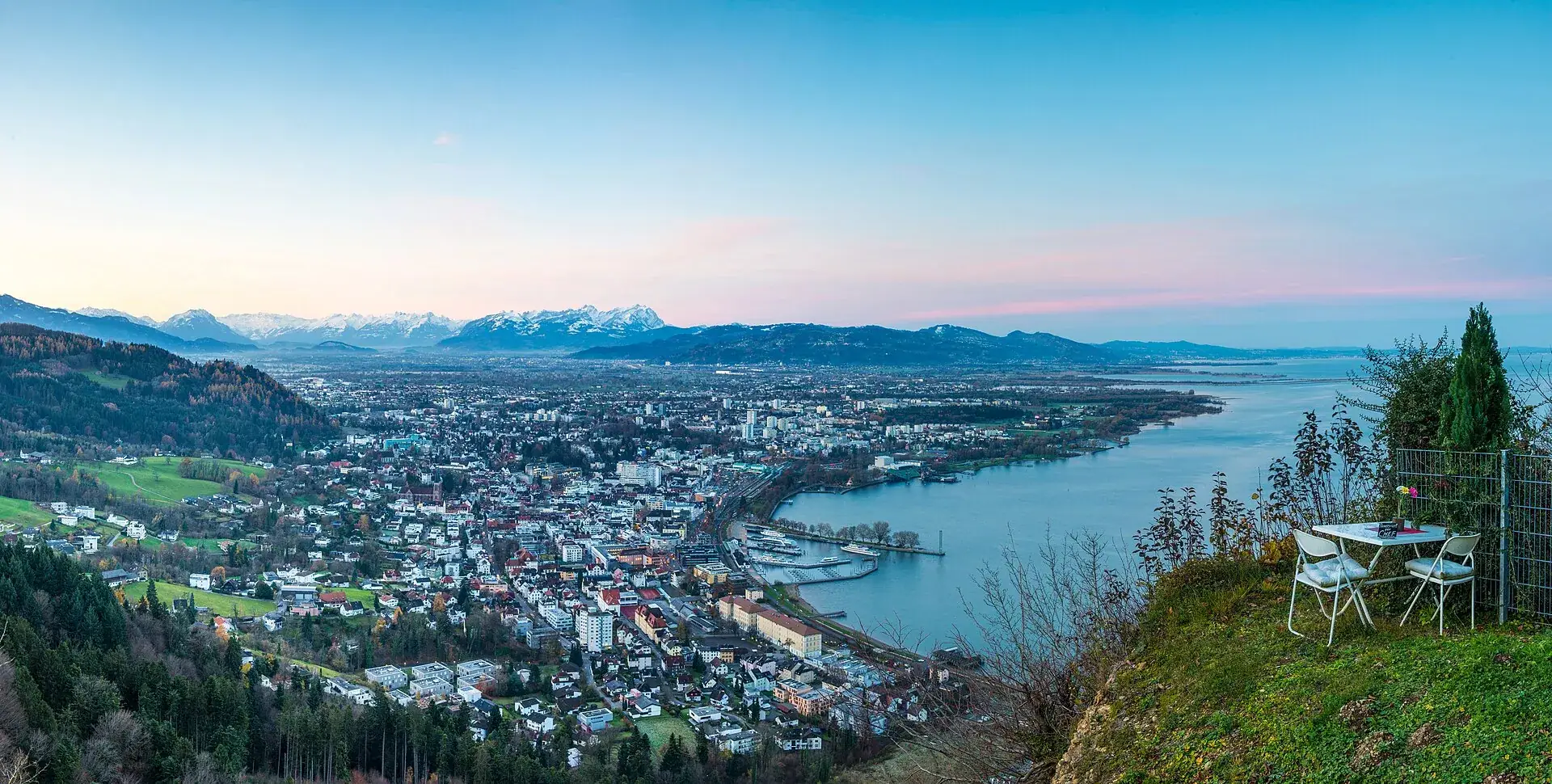 Photo: Feel free to use my photos, but please mention me as the author and if you want send me a message. or (rufre@lenz-nenning.at) / Wikimedia Commons (CC BY-SA 4.0)