Cost of Living in Hallstatt
Where this figure comes from. No cost survey covers Hallstatt, so the $1,500 a month above is our own estimate rather than a measurement. On 416 of our 999 city guides the figure is built from a published Numbeo basket, a one-bedroom rent in the centre plus one person's monthly costs without rent, converted to USD; this city is not one of them. How we source everything.
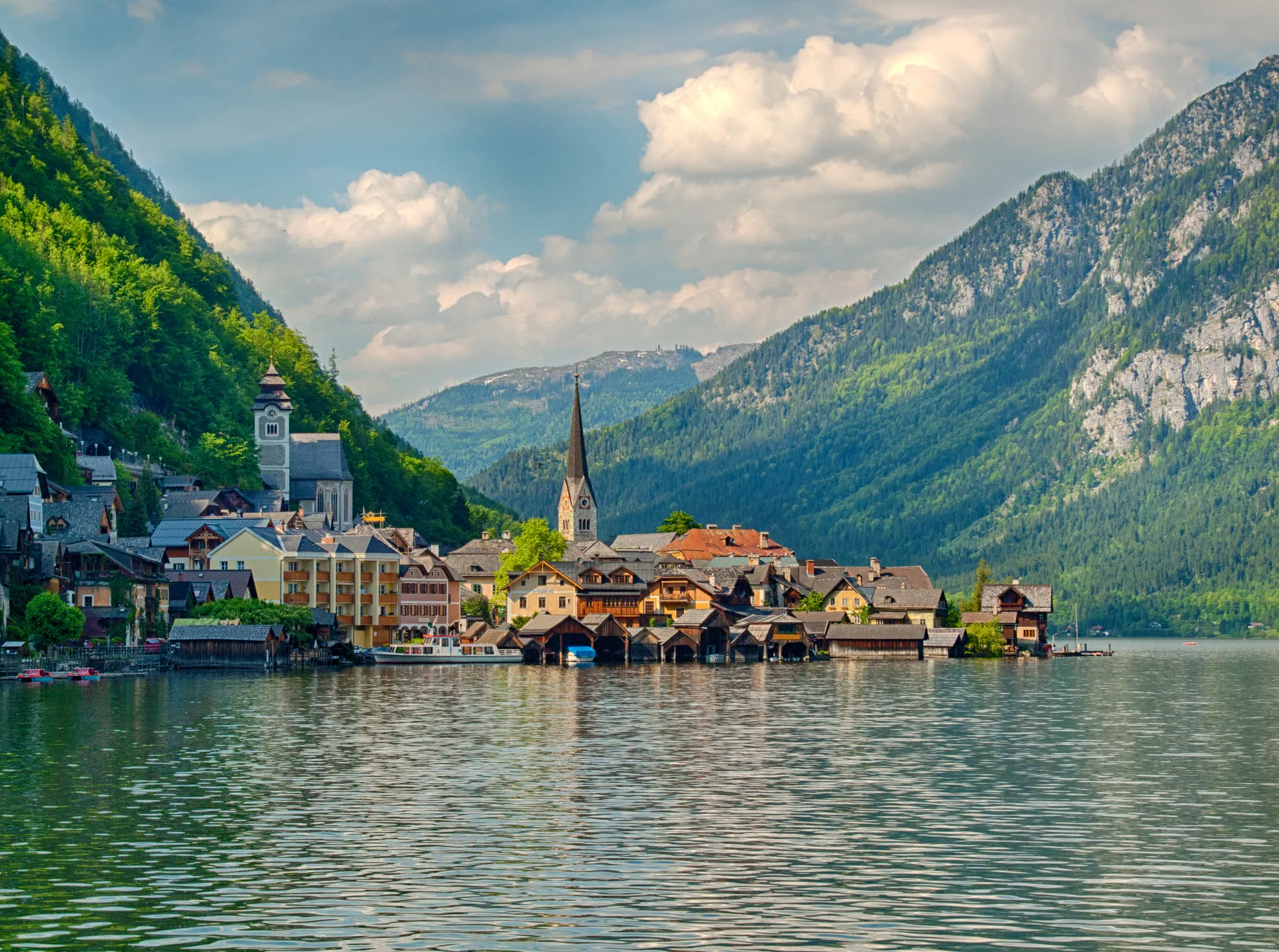
Hallstatt is small, scenic, and pricey. Because only a few hundred people live here and the village is squeezed between the lake and the mountains, lodging is genuinely limited and rarely cheap, especially in peak months. A realistic monthly budget for a solo slow-traveler runs roughly $1,700 to $2,800, driven almost entirely by accommodation. Guesthouses (Pensionen), holiday apartments, and the handful of small hotels dominate the market, and long-stay rentals are scarce, so many visitors pay near nightly-tourist rates. Restaurant meals lean tourist-priced too, though a well-stocked kitchen and the Konsum grocery help. Staying in Obertraun, Bad Goisern, or near the Bahnhof can trim costs noticeably.
- Accommodation: often $1,200 to $2,100+/month, the biggest line item
- Groceries: roughly $300 to $450/month at the local Konsum or nearby supermarkets
- Dining out: $18 to $35 for a sit-down lunch or dinner in the village
- Regional transport: budget for train, bus, and the lake ferry
Where to Work in Hallstatt
With neither a coworking space nor any nomad scene in the village, Hallstatt leaves you a single realistic office: whatever room, flat or guesthouse you happen to be sleeping in. The good news is that wifi in most guesthouses, apartments, and cafes is perfectly fine for calls, email, and normal remote tasks, and Austria's mobile coverage is reliable if you want a local SIM as backup. The catch is atmosphere. Village cafes are small, seasonal, and packed with day-trippers by mid-morning, so they are pleasant for an hour of coffee-shop work but not a dependable daily desk. Plan to base your workday at your accommodation, take video calls in the quiet early morning or evening, and treat cafe time as a change of scene rather than an office.
- Best desk: your own guesthouse or apartment, ideally lake-facing
- Cafes work for short stints, mainly before the tour buses arrive
- Bring a mobile hotspot as a backup for important calls
Getting Around Hallstatt
The village itself is tiny and almost entirely walkable, and the historic center is largely closed to cars, so you will not need a vehicle to explore the Marktplatz, the lakefront, or the climb up toward the salt mine funicular. Getting here is the interesting part: many arrive by train to Hallstatt Bahnhof, which sits across the water, then take the small passenger ferry over to the village, a genuinely lovely arrival. Regional buses connect Hallstatt with Obertraun, Bad Goisern, and Gosau, and trains and buses reach Salzburg in around 1.5 hours. A car is not needed inside the village but genuinely helps for exploring the wider Salzkammergut, the Dachstein caves, and lakeside day trips. Coaches are rationed: since autumn 2020 tour buses have needed a booked time slot to unload, which spread the daily surge more evenly without ending it.
- Walk everywhere in the village; the center restricts cars
- The lake ferry links Hallstatt Bahnhof to the village core
- Trains and buses reach Salzburg in roughly 1.5 hours
- A rental car opens up the Dachstein, salt mine, and other lakes
Sorting transport? Book an airport transfer, or compare car rental on Auto Europe and QEEQ.
Visas for Hallstatt
Hallstatt is in Austria, part of the EU and the Schengen Area, so the standard Schengen rule applies to most short stays: 90 days within any rolling 180-day period for visa-exempt travelers such as US, UK, Canadian, and Australian citizens. That window suits Hallstatt perfectly, since almost no one comes here to settle. If you want to stay in Austria longer, the country offers national residence permits, including routes for self-employment and remote or salaried work, but these involve real paperwork, income proof, and local registration, and are handled at the national level rather than in a tiny village. Where you land decides where you are registered. Fly into Salzburg from Britain, as many winter ski charters do, and its border desk is your first Schengen crossing, where the Entry/Exit System of the Schengen states now records fingerprints and a face image instead of stamping the passport; come by train from Munich and that frontier is internal, so the enrolment already happened at whichever airport first let you into the area.
- Schengen short stay: 90 days per 180 for many nationalities
- EU and EEA citizens can live and work without a visa
- Longer stays require an Austrian national residence permit
Best Time to Visit Hallstatt
Hallstatt is beautiful year-round, but timing changes the experience dramatically. Summer delivers warm lake days and long light, yet it also brings the heaviest crowds, with tour buses and day-trippers filling the narrow lanes from late morning until late afternoon. Late spring and autumn are the sweet spot: milder crowds, golden or fresh scenery, and a calmer village feel. Winter is quiet, often snowy, and genuinely magical around the lake, though some services run reduced hours and weather can complicate travel. Whenever you come, the single best trick is to be out early. Mornings before the buses arrive, and evenings after they leave, give you the postcard village almost to yourself. One date is worth planning around. At Corpus Christi, in late May or June, the village holds its procession on the lake itself, with decorated boats carrying the congregation across the water, a custom kept for centuries. Late autumn has its own catch, since the salt mine and its funicular close for the winter, so a November stay trades the crowds for some of the sights.
- Summer: gorgeous but the most crowded and expensive
- Late spring and autumn: calmer, scenic, and more comfortable
- Winter: quiet, snowy, and atmospheric, with reduced services
- Early mornings and evenings beat the day-tripper rush
Pros and Cons of Hallstatt
Hallstatt is one of Europe's most photographed villages for good reason: the setting, with pastel houses reflected in an alpine lake beneath the Dachstein, is close to perfect. For a short, restorative slow-travel stay, it is hard to beat. But it is emphatically not a work hub. The village is minuscule, overwhelmingly touristy, expensive, and has almost no nightlife and no nomad community. Daytime crowds can feel relentless in season, and practical amenities are limited by the sheer scale of the place. Come for beauty, calm mornings, hiking, and world-class scenery, and set your expectations accordingly rather than treating it as a base for productive months of remote work. There is substance beneath the prettiness, too. Its salt mine is the oldest still worked anywhere, the Iron Age culture archaeologists named after Hallstatt was identified in the graves above the village, and the charnel house beside the church keeps more than 600 painted skulls, a custom born of a churchyard with no room left.
- Pros: stunning scenery, superb safety, clean air, easy walking, great hiking
- Pros: peaceful early mornings and quiet off-season charm
- Cons: expensive, tiny, and heavily crowded with day-trippers
- Cons: almost no nightlife, no coworking, and no nomad scene
Who Hallstatt Is For
Hallstatt suits the traveler who wants a short, scenic pause rather than a productive base. It is ideal for couples on a slow romantic escape, photographers chasing that famous lakeside light, hikers drawn to the Dachstein and the Salzkammergut trails, and remote workers who can genuinely unplug for a week or two while working light hours from a quiet apartment. It is a poor fit for anyone seeking nightlife, a social nomad community, coworking, budget living, or a place to grind through a demanding work schedule. If your idea of a great stay is early-morning walks by a mirror-still lake, salt-mine history, and mountain views over long city nights, Hallstatt will reward you deeply.
- Great for: couples, photographers, hikers, and short slow-travel stays
- Great for: remote workers who can unplug and work light hours
- Poor fit for: nightlife seekers and social nomad communities
- Poor fit for: budget travelers and anyone needing a serious work hub