Cost of Living in Melbourne
Real market data
Source: Numbeo · August 2026
$2,740/moSolo nomad1-bed centre + living costs
$3,540/moCoupleshared 1-bed + costs
$2,410/moLean / localcheaper area + costs
- 1-bed rent, city centre$1,740A$2,473
- 1-bed rent, outside centre$1,400A$1,999
- Monthly costs excl. rent (1 person)$1,000A$1,428
- Meal, inexpensive restaurant$18A$25
- Monthly transit pass$140A$198
- Buy price, per m² (centre)$7,100A$10,115
Prices are from Numbeo (August 2026), converted to USD at $1 = A$1.42 (01 Aug 2026). The monthly living-costs figure is our transparent one-person basket, groceries, a few meals out, utilities, phone, internet, transport and essentials, priced from those figures. Solo adds central rent; couple and lean are estimates from the same numbers.
Melbourne is not cheap, but it is more affordable than Sydney. Your biggest cost by far is rent. Note that Australians quote rent per week, so multiply by roughly 4.3 for a monthly figure. At the June 2026 rate, 1 AUD is worth about 0.70 USD.
- Rent, central (CBD, Southbank, Docklands): new one-bedroom flat leases in the City of Melbourne had a median of about $400 per week in the September quarter of 2025, roughly $1,735 per month.
- Rent, cheaper inner suburbs (Brunswick, Footscray, Preston): the same Homes Victoria rental report puts new one-bedroom flat leases at medians of about $295 to $316 per week across the Darebin, Maribyrnong and Merri-bek council areas, roughly $1,280-1,370 per month.
- Groceries: budget $350-590 per month for one person, depending on how much you cook.
- Eating out: a meal at a casual restaurant is around $17-24, a flat white is $3.50-4.
- Coworking hot desk: $210-350 per month for a monthly pass, or $17-31 per day for a drop-in.
- Local transport: the Myki daily cap is $8, though a temporary state discount has halved fares through December 2026. Budget $84-110 per month at normal rates.
Realistically, a solo remote worker spends around $2,450-3,500 per month all in, with rent choice being the main lever. Share a house in an inner suburb and you can push the low end well under $2,100.
Where to Work
Melbourne has a deep coworking scene. In the CBD you will find WeWork (hot desks from about $240 per month), The Cluster near the river, JustCo, and Regus locations if you want a corporate feel. For a more creative, community vibe, look at Inspire9 in Richmond, The Commons in Collingwood, and Hub Australia, an Australian-owned brand with several premium sites.
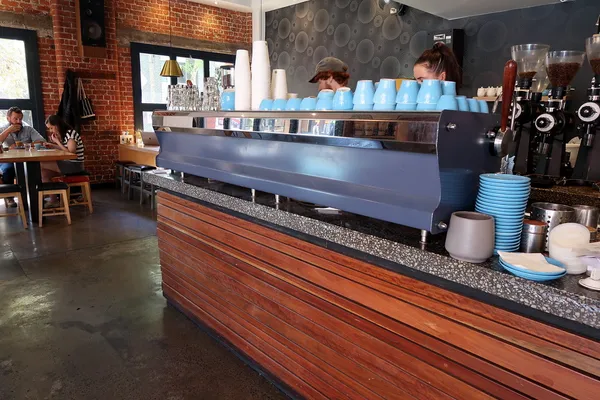
Cafe culture here is genuinely world-class, and working from a cafe over a long black is normal and welcomed at off-peak hours. Suburbs like Fitzroy, Brunswick, and Carlton are full of laptop-friendly spots, though the unspoken rule is to order regularly and free up your table over the lunch rush.
Connectivity is reliable. Fixed home internet (NBN) and cafe WiFi are solid across the inner city, and 4G and 5G mobile coverage from Telstra, Optus, and Vodafone is strong throughout the metro area. A prepaid SIM with a generous data allowance is cheap and easy to pick up on arrival.
Getting Around
Melbourne runs the largest tram network in the world, backed by trains and buses. You pay with a Myki card, which you can buy and top up at stations, convenience stores, and now via credit or debit card and phone tap on trains and trams. The standout perk is the Free Tram Zone: any tram trip that starts and ends inside the CBD and Docklands is completely free, with no need to tap on.
The inner city is flat and very walkable, and the grid layout makes it easy to navigate on foot. For the airport, be warned there is still no train line to Tullamarine. The SkyBus is the main option, running roughly every 10-15 minutes to Southern Cross Station for about $17 one way. A rideshare or taxi is faster but costs $42-56 into the city.
Sorting transport? Book an airport transfer, or compare car rental on Auto Europe and QEEQ.
Visas and Staying Long-Term
Australia has no dedicated digital nomad visa. Remote workers use standard visitor pathways instead. The ETA (subclass 601) suits many passports (including the US, Canada, Japan, and others), lets you visit repeatedly over 12 months, and allows stays of up to three months per visit. Europeans use the free eVisitor (subclass 651) on similar three-month terms, and the Visitor visa (subclass 600) can grant longer stays in some cases.
On these visas you may generally do limited remote work for an employer based outside Australia, provided tourism is your main purpose. Taking on Australian clients or local contracts breaches the conditions. If you want to stay longer, the Working Holiday visa (417 or 462) is an option for 18 to 30 year olds, or up to 35 on some passports for the subclass 417.
Best Time to Visit
Melbourne sits in the southern hemisphere, so the seasons are flipped: summer runs December to February and winter June to August. The city is famous for having four seasons in a day, and that reputation is earned, so always carry a layer and check the forecast. Winters are grey and cold rather than freezing, but they can be a slog if you are used to sun.
The sweet spot for remote work is autumn (March to May), with mild, stable days and thinner crowds. Spring (September to November) is also pleasant. Summer is warm and lively with festival season in full swing, though occasional heat spikes can be intense.
Pros and Cons
- Pro: outstanding coffee and food culture, and a genuinely creative city.
- Pro: excellent public transport with a free tram zone in the centre.
- Pro: reliable internet, safe streets, and a large community of remote workers.
- Pro: walkable, flat inner city packed with cafes and coworking.
- Con: high rent and overall costs compared with most nomad hubs.
- Con: unpredictable, often grey weather, especially in winter.
- Con: no easy visa built for long-term remote work.
- Con: a long flight from almost everywhere and a punishing time zone for working with Europe or the Americas.
Who Melbourne Is Best For
Melbourne suits remote workers who value a rich, walkable city with great food, strong infrastructure, and a big creative community, and who can absorb a higher cost of living. It is ideal if your work aligns with Asia-Pacific hours or if you are self-sufficient on schedule. It also rewards people who plan to stay a few months rather than years, given the visa limits.
Skip it if you are chasing a low budget, need warm weather to feel good, or need to overlap heavily with European or American colleagues. In those cases, cheaper and better-connected hubs will serve you better.