
Munich Vienna
Head to head
Munich vs Vienna

Munich vs Vienna: Which Is Better for Digital Nomads?

Overall: Munich edges ahead, 8.5 to 8.2

Everybody knows that Vienna solved housing. About half the city lives in subsidised flats, and the city itself owns around 220,000 of them. Set against Munich, famous for flats nobody can find, it sounds like the end of the discussion. For someone moving there with a laptop, that story is mostly wrong, at least for the first few years.

Who the cheap flats are for

To register for subsidised housing through the city's Wohnberatung, you need at least two years of main residence in Vienna. For a council flat in a Gemeindebau, the kind Vienna's Social Democrats began building after 1918, Wiener Wohnen asks for three. The income ceiling is the least of it, at about $70,000 a year after tax for a single person. Time is the barrier, and you cannot pay your way past it. On your first day in Vienna, you are on the private market with everyone else, looking for a furnished flat on a short lease.

What the gap comes to

So how much does Vienna really save you? Our estimate of a remote worker's month is around $3,200 there and around $3,800 in Munich. That $600 is real, and most of it is rent. But look at what local tenants pay on a new lease for a one-bedroom: about $720 in Vienna and $880 in Munich, on official figures from different years. Then look at everything else, from food to phone. That comes to about $960 in Vienna and $910 in Munich, so the cheaper city is slightly dearer once you leave the flat.

Transport does not break the tie. Vienna's celebrated one-euro-a-day pass has gone: the annual ticket now comes to about $530, still a bargain, while Munich's Deutschlandticket at about $73 a month costs more and takes you across all of Germany.

Two other stories worth checking

Vienna is also known as the world's most liveable city. It lost that title to Copenhagen in 2025 and did not get it back in 2026. Second place is nothing to apologise for, but the ranking compares cities on matters like healthcare and stability, and it will not find you a flat or a friend.

Munich's famous surfers on the Eisbach were nearly a myth themselves. The standing wave disappeared after riverbed cleaning in late 2025, activists tried to rebuild it with a beam, and the city removed the beam. Then the wave came back by itself, and surfing was allowed again from 8 May 2026, with a ban after 10 p.m. and mandatory quick-release leashes. You can still watch from the bridge at the edge of the 370 hectares of the English Garden on your lunch break.

Where the two cities send you on a Saturday

Here Munich's case is simple. It lies about 50 kilometres from the Alps, and regional trains run straight from the main station to the Tegernsee and the Schliersee, so you could be walking uphill by mid-morning. In the evening, you could take your own bread and cheese to one of the traditional beer gardens that still allow it, a custom that survives from a royal decree of 1812 and is protected by a Bavarian ordinance of 1999.

Vienna stays closer to home, and we think its version is the more interesting. The vineyards are inside the city limits, in Grinzing and Sievering and Neustift, where a bundle of fir twigs over a door tells you a winemaker is pouring. The Danube Island, 21 kilometres long and built as flood defence, has become a beach for the whole city. And the coffee houses, listed by UNESCO in Austria's heritage inventory since 2011, were always somewhere to go when your flat was small. A remote worker will understand that at once.

If you think you might stay

Nothing here makes the housing story false. It just has a waiting period. If mountains are what you came for, or your clients are at BMW, Siemens or Allianz, pay the extra and go to Munich. If you think you could still be around in three years, go to Vienna, and register your main residence the week you arrive. That is when the clock starts.

Munich vs Vienna: side by side

All 13 categories we rate, each out of 10. Green is strong, amber is middling, red is weak.

MunichVienna
5 Climate 5
3 Cost of living 4
7 WiFi 7
8 Nightlife 7
8 Nature 6
9 Safety 9
7 Food 8
7 Community 6
8 English 8
7 Visa 5
9 Culture 10
8 Cleanliness 9
7 Air quality 7

Munich and Vienna at a glance

355 kmapart in a straight line
Same timein January
$600a month less in Vienna
Population, urban areaMunich1,275,000Vienna2,400,000
ElevationMunich521 mVienna179 m
Time zoneUTC+1 in January, UTC+2 in Julyin both
Nearest airportMunichMunich Airport (MUC), 29 kmViennaVienna International Airport (VIE), 18 km
Main languageGermanin both
CurrencyEuro (€, EUR)in both
PlugsType C/F, 230V / 50Hzin both
Tap waterSafe to drinkin both
Emergency number112in both
TippingRound up or 5-10%in both
Ride-hailingMunichUber, Bolt, FreeNowViennaUber, Bolt
In the Schengen areaYesin both

Population is the Natural Earth figure for the urban area around each city, elevation from the Copernicus height model, airports from OurAirports.

Where they differ most

The three biggest gaps between the two, in the words of each city guide.

Nature

Munich

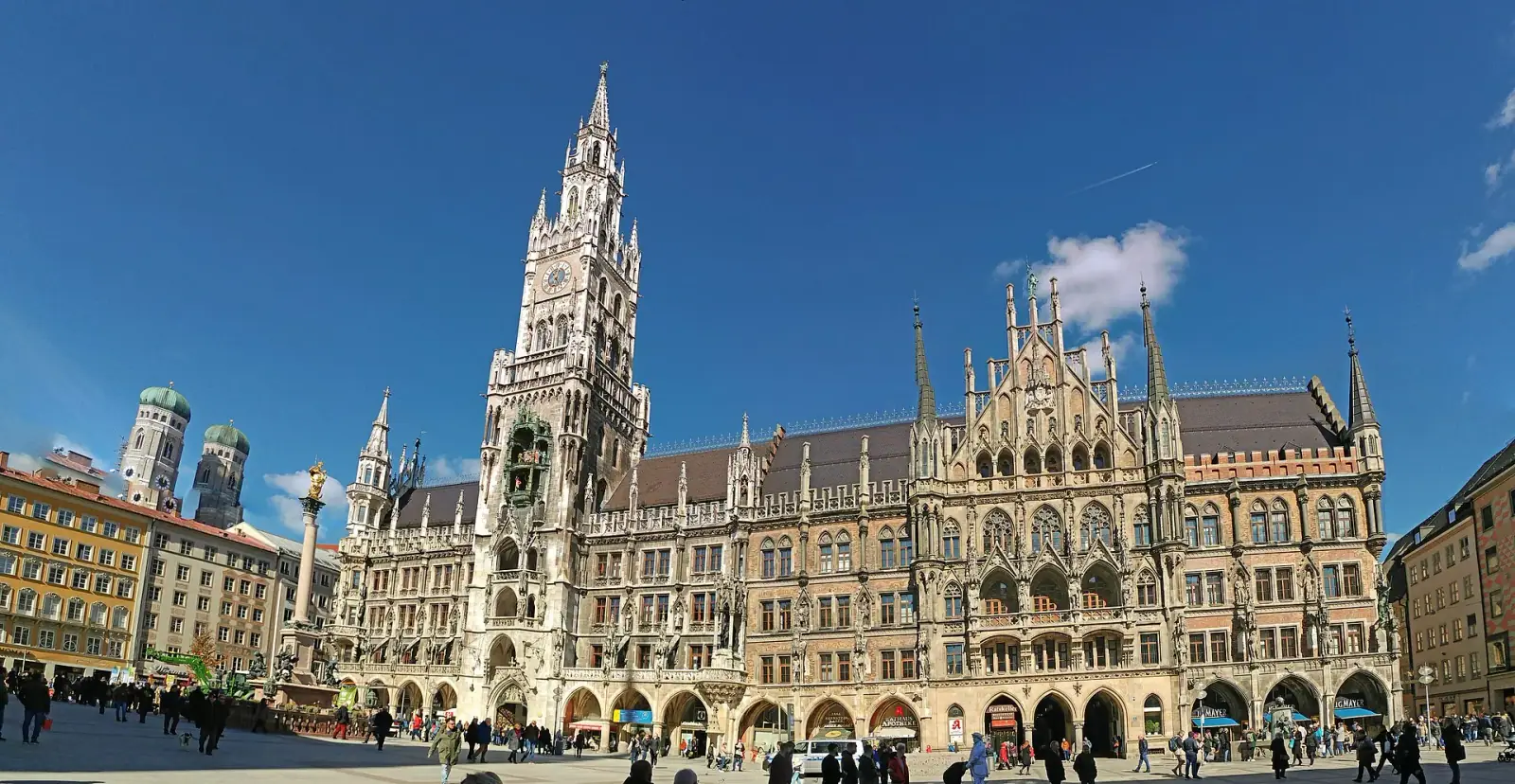
Munich punches above its weight for a major city when it comes to nature access. The English Garden, one of the world's largest urban parks, runs through the city center and includes river surfing, beer gardens, and meadows.

Vienna

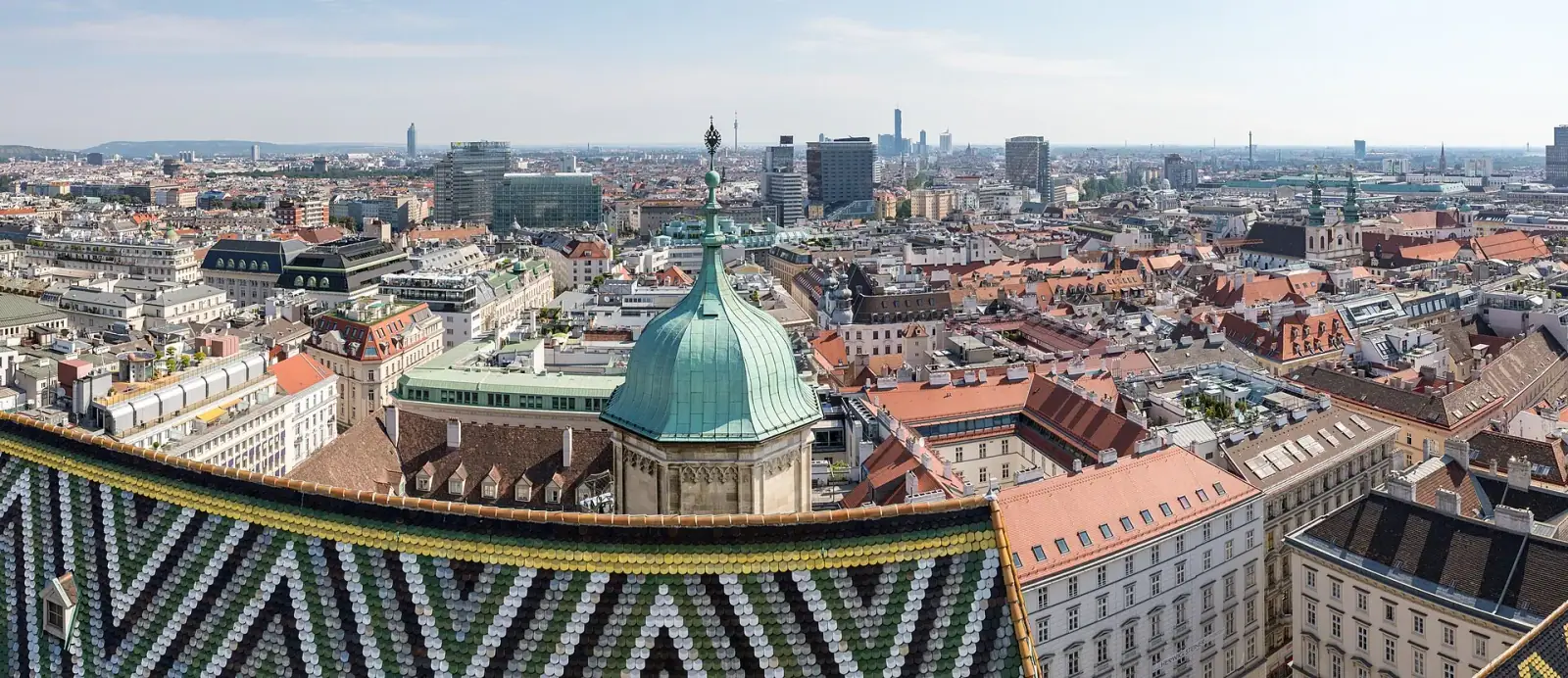
Vienna sits at the edge of the Vienna Woods (Wienerwald), offering hiking and cycling within 30 minutes of the city center. Prater park, with its iconic Ferris Wheel and vast meadows, is easily accessible by U-Bahn.

Visas

Munich

Germany does not offer a dedicated digital nomad visa, but non-EU nationals can apply for a Freelance Visa (Freiberufler) or Self-Employed Visa, valid for up to three years and renewable. Requirements include proof of income, health insurance, a local address, and client contracts. EU citizens need no visa.

Vienna

Austria has no dedicated digital nomad visa as of 2026. EU and EEA citizens can live and work freely. Non-EU nationals can stay up to 90 days under Schengen rules, which many nomads use for remote work, though it carries legal ambiguity.

Cost of living

Munich

Munich is one of Germany's most expensive cities. A digital nomad should budget roughly $3,680-5,180 per month, with a one-bedroom apartment in the center costing $2,070-2,760. Coworking day passes start around $22-29.

Vienna

Vienna is a relatively expensive European capital. A digital nomad can expect to spend $2,650-3,680 per month covering a one-bedroom apartment ($1,090-1,610 in popular districts like Neubau or Leopoldstadt), coworking desk around $290-405 per month, and meals averaging $12-23 per sitting.

From the score notes in the Munich and Vienna guides, where each one is explained in full.

Month by month: the weather

Each bar runs from the average daily low to the average daily high. Rain is below.

MunichViennaScale runs from -2C to 26C, rain up to 121 mm
See the numbers
MunichVienna
Jan4C / -2C, 52 mm4C / -1C, 42 mm
Feb6C / -1C, 46 mm7C / 0C, 38 mm
Mar10C / 2C, 61 mm11C / 3C, 52 mm
Apr15C / 5C, 56 mm17C / 7C, 42 mm
May19C / 9C, 107 mm21C / 11C, 79 mm
Jun23C / 13C, 121 mm25C / 15C, 70 mm
Jul25C / 15C, 119 mm26C / 16C, 78 mm
Aug25C / 15C, 117 mm26C / 16C, 69 mm
Sep20C / 10C, 78 mm21C / 12C, 64 mm
Oct15C / 7C, 67 mm14C / 7C, 47 mm
Nov8C / 2C, 58 mm9C / 4C, 46 mm
Dec5C / -1C, 59 mm4C / 0C, 47 mm

Munich: weather-station averages for 1991-2020. Vienna: weather-station averages for 1991-2020.

What a month costs

Munich$3,800
Vienna$3,200

What residents pay

MunichVienna
$878 One-bedroom rent $720
$298 Groceries $324
$198 Eating out $194
$161 Utilities $176
$102 Local transport $107
$37 Home internet $34
$39 Phone $36

Our own estimate for a comfortable month for one remote worker, the same figure the city guides use. The lower lines are local prices: rent from the official statistics office named on each city guide, the rest from World Bank price levels.

Entry rules for common passports

Tourist entry on arrival. Every passport is in the visa finder, and remote-work visas are on the nomad visa page.

United States
Visa-free, 90 daysin both
United Kingdom
Visa-free, 90 daysin both
Germany
CitizenMunich
Visa-freeVienna
Canada
Visa-free, 90 daysin both
Australia
Visa-free, 90 daysin both
India
Visa requiredin both

Where you would live and work

The areas people choose in each city, and some of the places they work from.

Munich

Neighbourhoods

  • SchwabingMunich's bohemian heart turned upscale
  • MaxvorstadtMuseum quarter with student energy
  • GlockenbachviertelMunich's LGBTQ+ neighborhood with nightlife
  • HaidhausenMunich's French quarter with village feel
  • Neuhausen-NymphenburgPalace gardens and local Munich life

Places to work

Impact Hub MunichWERK1Mindspace SalvatorplatzMan Versus Machine Coffee RoastersRosi Coffee & Bar
More on the Munich guide →
Vienna

Neighbourhoods

  • Neubau (7th District)Vienna's hipster heart with coffee house culture
  • Mariahilf (6th District)Shopping street vibes with local character
  • Leopoldstadt (2nd District)Vienna's diverse district with Prater park
  • Innere Stadt (1st District)Imperial grandeur in Vienna's UNESCO center
  • Josefstadt (8th District)Vienna's smallest district with village charm

Places to work

Impact Hub ViennaZI8 CoworkingStockwerk CoworkingCocoquadratBalthasar Kaffee Bar
More on the Vienna guide →

Services in a language you speak

Providers in our directory who work in a language other than the local one, from official registers, consular lists and the providers’ own websites.

Where each city wins

Munich is stronger on

NatureVisaNightlifeCommunity
Munich guide →

Vienna is stronger on

Cost of LivingFoodCultureCleanliness
Vienna guide →

Add a third city in the comparison tool →

Frequently asked questions

Is Munich or Vienna cheaper for digital nomads?

Vienna is the cheaper base, around $3,200 a month versus $3,800 in Munich, a difference of about $600.

Which has better WiFi, Munich or Vienna?

Both score 7/10 for WiFi, so connectivity is comparable.

Which is safer, Munich or Vienna?

Both rate 9/10 on safety.

Munich or Vienna: which is better overall for remote work?

Munich takes the overall Nomad Score (8.5/10 versus 8.2/10), though the right pick depends on what you value most.



