Cost of Living in Nuremberg
Real market data
Source: Numbeo · August 2026
$1,840/moSolo nomad1-bed centre + living costs
$2,590/moCoupleshared 1-bed + costs
$1,590/moLean / localcheaper area + costs
- 1-bed rent, city centre$900€784
- 1-bed rent, outside centre$650€567
- Monthly costs excl. rent (1 person)$940€816
- Meal, inexpensive restaurant$18€16
- Monthly transit pass$70€61
- Buy price, per m² (centre)$7,300€6,342
Prices are from Numbeo (August 2026), converted to USD at $1 = €0.87 (01 Aug 2026). The monthly living-costs figure is our transparent one-person basket, groceries, a few meals out, utilities, phone, internet, transport and essentials, priced from those figures. Solo adds central rent; couple and lean are estimates from the same numbers. The guide below quotes its own monthly range, which is a different measurement rather than a competing one: this table prices a defined basket at the figures above, while that range is a judgement about how somebody actually lives here.
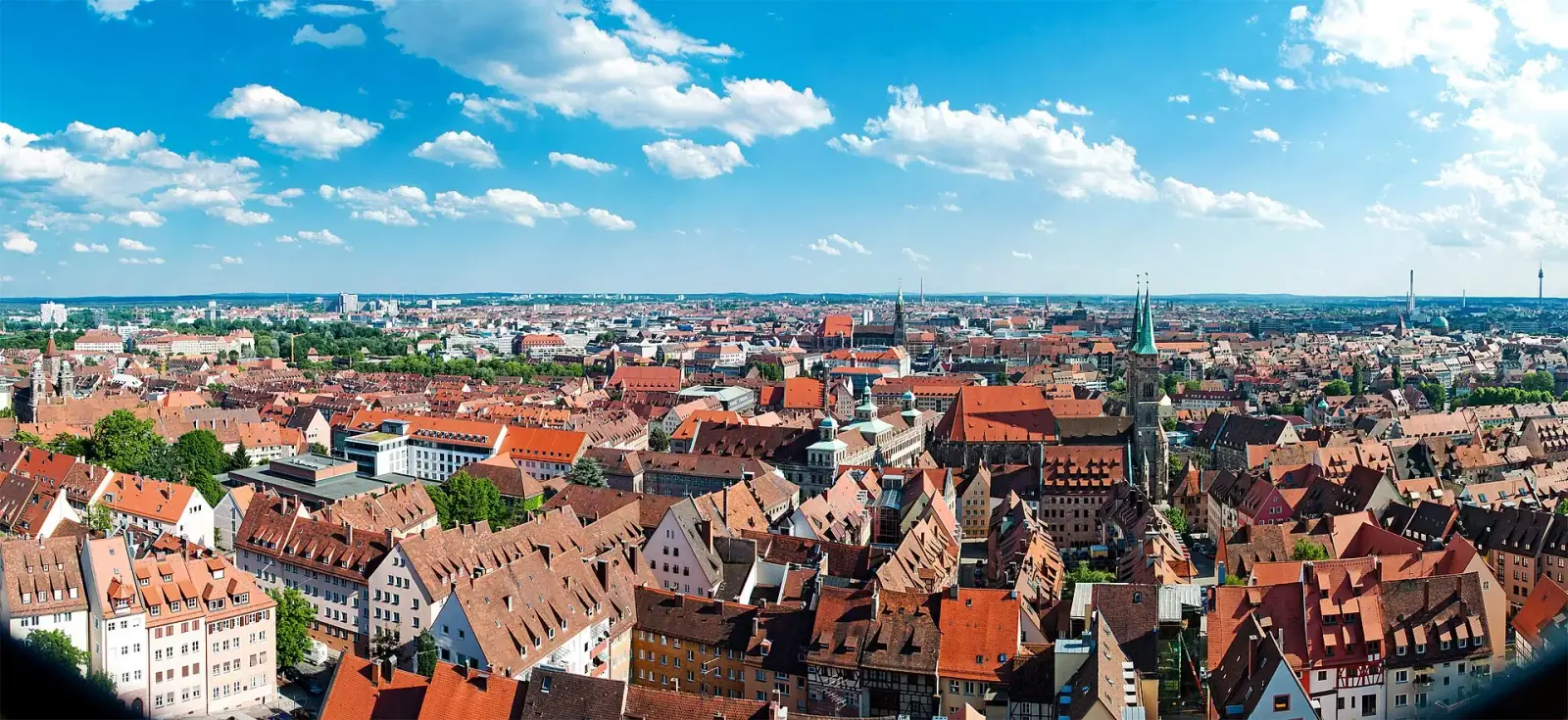
Nuremberg sits comfortably below Munich and Berlin in price, making it one of the more accessible German cities for remote workers. Here is a realistic monthly breakdown for a single person:
- Rent, 1-bedroom central (Altstadt, Gostenhof, St. Johannis): $910-1,150
- Rent, 1-bedroom outer districts (Langwasser, Schweinau, Ziegelstein): $630-850
- Groceries (cooking most meals): $230-320
- Eating out (mix of lunch specials and occasional sit-down dinners): $230-400
- Coworking hot-desk (workspaceIn day pass): from $28/day; monthly flex memberships run roughly $170-280
- Local transport (Deutschlandticket): $66/month, valid on all regional and city transit
- Utilities and internet (apartment): $110-170
- Total realistic range: $1,500-2,400/month depending on how centrally you live and how often you dine out
Nuremberg is roughly 20-25% cheaper than Munich and about 30% cheaper than Zurich for equivalent accommodation. Groceries and eating out track other Bavarian cities closely.
Where to Work
Nuremberg has a solid coworking infrastructure for a city its size. workspaceIn operates three locations including a Stadtpark site with outdoor terraces; day passes start at $28 and monthly hot-desk memberships are available. Office Club Nuremberg offers 24/7 access with gigabit fiber. Regus has a city-centre location at ZeltnerEck with views over the Old Town.
Cafe-working culture exists but is selective. Machhörndl Kaffee (Breite Gasse, Innenstadt) is a specialty roaster with communal tables and reliable wifi, popular with freelancers during weekday mornings. Café Kraft (Fürther Strasse, west of centre) has a large industrial interior and strong wifi but requires a short tram ride. Café Bar Katz (near Hauptmarkt) is bohemian and welcoming to laptops, though it fills up in the evenings.
In general, German cafe culture is less explicitly laptop-friendly than, say, Lisbon or Chiang Mai. Expect to buy regularly, keep your footprint small at busy times, and not assume every place wants you settled in for four hours. The coworking options are better value and less socially ambiguous if you need a full working day.
Getting Around
Nuremberg's U-Bahn has three lines (U1, U2, U3) connecting the city centre to outer districts reliably and frequently. Trams and buses fill in the gaps. The Deutschlandticket at $66/month covers all of this plus regional trains, which makes it genuinely useful if you want to day-trip to Bamberg (20 minutes) or Regensburg (60 minutes).
The city centre is very walkable. The Altstadt is compact enough that you can cross it in 20 minutes on foot, and most of the interesting food and cultural spots cluster within a small radius of Hauptmarkt. A bicycle is a practical choice for getting between neighbourhoods; cycling infrastructure is decent by German standards.
Airport: Nuremberg Airport (NUE) is directly connected to the city by U-Bahn line U2. The ride from the airport to Hauptbahnhof takes about 12 minutes and costs roughly $3.50-4.50 for a standard ticket. This is one of the most convenient airport connections in Germany for a mid-sized city.
Sorting transport? Book an airport transfer, or compare car rental on Auto Europe and QEEQ.
Visas and Staying Long-Term
EU and EEA citizens can live and work in Germany indefinitely. US, Canadian, Australian, and most other OECD passport holders can enter Germany visa-free for up to 90 days within any 180-day period under the Schengen rules.
Germany does not have a visa explicitly labelled "digital nomad visa." The closest equivalent is the Freiberufler (freelance) visa, which covers professionals in recognised liberal fields such as design, software development, writing, and consulting. It requires a German consulate application before entry, proof of clients or contracts, health insurance, and a demonstrated income sufficient to cover living costs. Approved holders can typically stay for one to three years with renewal options. Processing takes four to twelve weeks.
Best Time to Visit
Nuremberg has a slightly continental climate: real winters with snow (December through February, often below 0°C), warm summers, and shoulders that can swing either way.
Best window for remote work: May through September. Temperatures are 18-25°C, daylight runs long, beer gardens open, and the city is at its most liveable. June and July are the warmest months. September is often the sweet spot: warm enough, fewer tourists than July-August, and the city returns to a more ordinary rhythm.
April and October are viable if you pack for variable weather. November and February are the grimmest months, though the city remains fully functional. December brings the famous Christkindlesmarkt on Hauptmarkt, which is genuinely beautiful but extremely crowded; short stays in December are worthwhile, long working stints less so.
Pros and Cons
Pros
- Significantly cheaper than Munich with similar quality of life
- Compact, walkable Old Town with strong cultural infrastructure
- Direct 12-minute U-Bahn connection to the airport
- Germany-wide rail access makes weekend trips easy
- Low crime rate; consistently ranks among Germany's safest larger cities
- Good coworking options at reasonable prices
- Strong local food identity: Franconian bratwurst, schäufele, red Rotbier, and local gingerbread
Cons
- No dedicated digital nomad visa; bureaucratic bar to stay beyond 90 days
- English fluency is patchier than in Berlin or Hamburg; German is genuinely useful here
- Nomad community is thin compared to major hubs; fewer co-living options and meetups
- Winters are cold, grey, and long
- Slower pace of life can feel limiting if you want a large, active international social scene
- Some coworking spaces require advance booking; drop-in culture is limited
Who Nuremberg Is Best For
Nuremberg works well for freelancers and remote workers who want a functional, affordable German base without Munich prices or Berlin noise. If you are interested in history, medieval architecture, and a strong regional food culture, the city rewards longer stays. It suits people who self-direct their social life rather than relying on a ready-made nomad scene, and those who appreciate quiet streets, good transit, and easy rail access to the rest of Germany and Central Europe.
Skip Nuremberg if you need a buzzing international nomad community, if your work depends on constant English-language networking, or if you want the lifestyle infrastructure of a capital city. It is also a harder choice in winter unless you are comfortable working through months of overcast cold with limited outdoor appeal. Those doing a German base-camp who want value and livability without the premium of Munich will find Nuremberg a genuinely underrated option.