Cost of Living in Marseille
Real market data
Source: Numbeo · August 2026
$1,780/moSolo nomad1-bed centre + living costs
$2,460/moCoupleshared 1-bed + costs
$1,520/moLean / localcheaper area + costs
- 1-bed rent, city centre$930€804
- 1-bed rent, outside centre$670€579
- Monthly costs excl. rent (1 person)$850€738
- Meal, inexpensive restaurant$20€17
- Monthly transit pass$46€40
- Buy price, per m² (centre)$5,310€4,615
Prices are from Numbeo (August 2026), converted to USD at $1 = €0.87 (01 Aug 2026). The monthly living-costs figure is our transparent one-person basket, groceries, a few meals out, utilities, phone, internet, transport and essentials, priced from those figures. Solo adds central rent; couple and lean are estimates from the same numbers. The guide below quotes its own monthly range, which is a different measurement rather than a competing one: this table prices a defined basket at the figures above, while that range is a judgement about how somebody actually lives here.
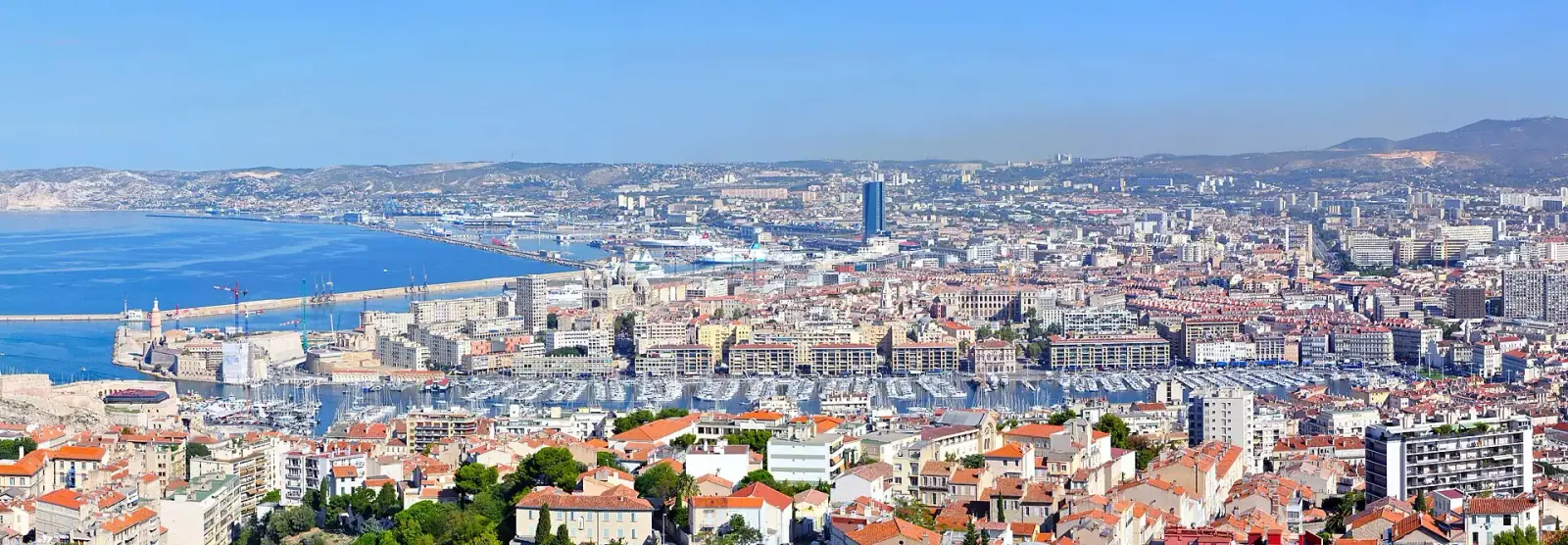
Marseille is one of France's more affordable major cities, though costs have risen in recent years. Here is a realistic monthly breakdown for a solo remote worker:
- Rent (1-bed, central areas like Vieux-Port or Cours Julien): $910-1,350
- Rent (1-bed, outer or northern arrondissements): $570-800
- Groceries: $230-340 per month cooking at home
- Eating out (mid-range restaurant): $17-28 per meal; budget lunch menus from $14
- Coworking hot desk: $170-280 per month
- Local transport (monthly pass): $57
- Total realistic range: $1,600-2,500 per month depending on lifestyle
Dining out on traditional Marseillais food, like panisse or a market lunch, keeps costs very low. Bouillabaisse at a proper restaurant runs $57-91 per person and is more of a splurge.
Where to Work
Marseille has a solid and growing coworking scene. Dedicated spaces are your most reliable option for strong, consistent connectivity.
- La Fabulerie (10 Boulevard Garibaldi, 1st arrondissement): a creative and digital-focused coworking hub with regular events and a community atmosphere.
- Le Mangrove (154 Rue de Rome, 6th arrondissement): a smaller, professional space popular with freelancers and young entrepreneurs, open Monday to Friday.
- NOW Coworking (Quai de Rive Neuve, 7th arrondissement): housed in a former sail loft on the Old Port with over 80 private offices and open coworking floors, with sea views and a terrace.
- Ruby Yani Workspaces (49 Boulevard des Dames, 2nd arrondissement): design-forward space between Le Panier and La Joliette, with barista coffee and fast WiFi included.
- Wojo (near Gare Saint-Charles, 1st arrondissement): part of the Accor network, reliable WiFi, flexible hourly or monthly pricing, useful if you travel between French cities.
Cafe work culture exists but is uneven. Some cafes near Cours Julien welcome laptops; others move you along after one coffee. Do not count on public WiFi for critical calls. Mobile data (SIM or eSIM) as a backup is strongly recommended. Overall connectivity at coworking spaces is reliable; average speeds are well above what most remote work requires.
Getting Around
Marseille has two metro lines (M1 and M2), a tram network, and an extensive bus system. The metro covers the center and connects to the main station, Gare Saint-Charles. A monthly transit pass (RTM) costs around $57 and covers all metro, tram, and bus routes.
Walkability varies sharply by neighborhood. The area around Vieux-Port, Noailles, and Cours Julien is very walkable and dense. Further north or on the periphery, you will want transit or a scooter. The city is quite hilly in parts, so cycling is possible but demanding.
Getting to and from Marseille Provence Airport (MRS): the L91 express bus runs directly to Gare Saint-Charles roughly every 10 minutes during peak hours and takes about 30 minutes. A one-way ticket is $11 for adults. Alternatively, a regional train from Vitrolles station (connected to the airport by a free shuttle) reaches Gare Saint-Charles in about 18 minutes. Taxis cost $40-63 depending on traffic.
Sorting transport? Book an airport transfer, or compare car rental on Auto Europe and QEEQ.
Visas and Staying Long-Term
France has no dedicated digital nomad visa. EU and Schengen-area citizens can live and work in Marseille without restriction.
For non-EU passport holders, the standard visa-free stay in the Schengen Area is 90 days within any 180-day period. Americans, Canadians, Australians, and most other nationalities fall under this rule.
For stays beyond 90 days, your main options are:
- Long-Stay Visitor Visa (VLS-TS): Requires proof of sufficient funds (roughly $1,600 per month minimum), proof you will not work for French clients, and private health insurance. This covers you for up to one year and is renewable.
- Profession Liberale Visa: For self-employed freelancers who register as a micro-entrepreneur in France. Minimum income requirement is approximately $2,000 per month.
As of 2025, French tax authorities clarified that working remotely for a foreign employer while on a visitor visa is not permitted.
Best Time to Visit
Marseille is the sunniest city in France with over 300 days of sunshine per year, which makes it pleasant for most of the year.
Spring (April to June) is the sweet spot for remote workers. Temperatures are comfortable (16-24°C / 61-75°F), crowds are manageable, accommodation is easier to find, and the city's outdoor life is in full swing without summer prices.
Early autumn (September to October) is a close second. The sea remains warm, the Calanques reopen for hiking after summer fire restrictions, and crowds thin out noticeably from August. October brings more rain.
Summer (July to August) is peak tourist season. Temperatures regularly exceed 30°C (86°F), accommodation is expensive and competitive, and the city's character shifts toward visitors. The mistral, a strong northwest wind, can arrive any time of year but is most common in winter and spring.
Winter (December to February) is quiet and cheap, with temperatures averaging 8-13°C (46-55°F). Many visitors find it charmingly low-key, though some restaurants reduce hours and outdoor life shrinks.
Pros and Cons
- Authentic, non-touristy French city with a distinct identity and a diverse, multicultural population
- Lower cost than Paris or Nice with a better quality of life than the price suggests
- Mediterranean food scene that is genuinely excellent, from seafood markets to neo-bistros
- Incredible natural access: the Calanques National Park is reachable by bus from the city center
- Good coworking infrastructure with a growing remote work community
- Fast TGV connections to Paris (3 hours), Lyon (1.5 hours), and Barcelona (4.5 hours)
- Safety concerns in certain areas, particularly north of the center; petty theft around the train station and Vieux-Port is common
- French is essential: English is less widely spoken than in Paris or other tourist-heavy cities
- Uneven cleanliness in some neighborhoods, which surprises visitors expecting a manicured French city
- Visa complexity for stays over 90 days with no easy digital nomad path
- Coworking cafe culture is inconsistent; you cannot always settle in a cafe for hours without friction
- Mistral wind can be brutal in winter and spring, making outdoor work or open terraces difficult
Who Marseille Is Best For
Marseille suits remote workers who want a real city experience rather than a curated expat bubble. If you appreciate rough edges, a genuinely diverse food scene, access to nature, and lower rent than other Mediterranean alternatives, Marseille rewards you generously. It works particularly well for people who have at least basic French, are comfortable navigating a city that requires some vigilance, and want to be productive during the week while exploring the Calanques or the coast on weekends.
It is a strong fit for: creative professionals, freelancers wanting an affordable EU base, anyone who values authentic neighborhood life over tourist infrastructure, and long-stay visitors on a budget.
Skip Marseille if you need English-first environments for daily life, want a polished and tidy city experience, have a very tight safety comfort zone, or are looking for a large established English-speaking nomad community. For a more immediately comfortable French Mediterranean base, Montpellier or Nice may suit you better.