Cost of Living in Oranjestad
Where this figure comes from. No cost survey covers Oranjestad, so the $2,000 a month above is our own estimate rather than a measurement. On 416 of our 999 city guides the figure is built from a published Numbeo basket, a one-bedroom rent in the centre plus one person's monthly costs without rent, converted to USD; this city is not one of them. How we source everything.
Budget around $2,000 a month as a solo remote worker in Oranjestad, which sits between Curacao and Barbados on price and reflects an island whose economy is tourism from end to end. A one-bedroom flat runs roughly $800 to $1,300, with anything near Palm Beach or Eagle Beach at the top of that and the inland neighbourhoods considerably cheaper. Groceries are imported and the markup is real, though the Dutch supply chain keeps the choice wide. Eating where Arubans eat, at a local snack or the fish shacks, costs a fraction of the resort strip. The florin is pegged at around 1.79 to the dollar and dollars circulate freely. This is our own estimate rather than measured data. Fibre runs about $50 to $80 a month at good speeds and coworking $150 to $250. The single largest variable is where you eat: a resort dinner on Palm Beach costs three or four times a plate at a roadside snack in Santa Cruz, and the difference is a fifteen-minute drive rather than a compromise in quality. Utilities are high because desalinated water and air conditioning both run on imported fuel. Medical insurance with at least $15,000 of cover is an entry requirement, and a stay beyond thirty days needs travel insurance for its full length, so it should be priced before the flights rather than after.
Where to Work in Oranjestad
Aruba's connectivity is good and its power supply reliable, both underwritten by a tourism industry that cannot afford otherwise. Fibre reaches the developed western side of the island and mobile data is inexpensive with complete coverage. Coworking exists in a modest way around Oranjestad, though most remote workers here use apartments and hotel business centres. English is spoken universally alongside Papiamento, Dutch and Spanish, and Arubans switching between four languages in one conversation is entirely normal. The island runs four hours behind central European time, which puts a European afternoon at the start of the Aruban day. Papiamento is the first language of most Arubans and a creole with Portuguese, Spanish, Dutch and African roots, and while nothing requires you to learn it, a few phrases change how you are received considerably. Aruba runs four hours behind GMT with no daylight saving, so it sits level with New York in summer and an hour ahead in winter. Aruba's tourism board markets long working stays under the One Happy Workation name, with package rates at participating hotels when they are offered, which is worth checking when looking for a base.
Getting Around Oranjestad
Aruba is small, flat and easy. Oranjestad's centre is walkable and a free streetcar loops through it, and the Arubus network runs frequently up the western coast past the hotel strips to Palm Beach and down towards San Nicolas. That corridor is where almost everything is. A car is needed only for Arikok National Park, which covers nearly a fifth of the island on the wild windward side, and for the Natural Pool and the north coast, where the tracks demand four-wheel drive. Queen Beatrix airport is minutes from town with direct flights to Amsterdam, Miami and much of the eastern United States. Arikok covers about eighteen per cent of the island and its tracks genuinely require high clearance rather than merely rewarding it, so the standard small rental will not get to the Natural Pool. The windward coast beyond it is rough water with strong currents and is not for swimming, which is a distinction the resort side gives no hint of. The Arubus day pass costs a few dollars and covers the whole western corridor, which makes a car unnecessary for anyone staying on that side of the island.
Sorting transport? Book an airport transfer, or compare car rental on Auto Europe and QEEQ.
Visas for Oranjestad
Aruba has no digital nomad visa. One Happy Workation, the name in the island's tourism marketing, is not a permit: it is a purpose of visit that US citizens select on the online ED card, the embarkation form every visitor completes, with no separate application, fee or approval, and it covers the ninety days US citizens may stay without asking for an extension. The standard admission for a visitor is thirty days, and within that first month a guest can ask the immigration service for an extension to a total of ninety days. Stays of up to 180 days in a year are open to people who own property on the island or have a resident acting as guarantor, and Dutch nationals can ask for up to 180 consecutive days. The UK government's travel advice gives British visitors up to three months. Anyone staying beyond thirty days needs medical and liability travel insurance for the whole stay and enough money to cover it. Like Curacao, Aruba is part of the Kingdom of the Netherlands but not of the European Union, so Schengen rules do not apply. Aruba, Curacao and Sint Maarten each run separate immigration systems despite the shared Kingdom, so a permit for one grants nothing on the others.
Best Time to Visit Oranjestad
Aruba has the most consistent weather in the Caribbean and it is genuinely a selling point rather than a slogan: the island lies below the hurricane belt, averages under 450 millimetres of rain a year, and sits around thirty-one degrees every month with trade winds that never stop. There is no bad season. The busy and expensive window runs from mid-December to April, when North America arrives, and the quieter, cheaper months are May, June, September and October, with weather that is essentially identical. Carnival, which runs through January and February, is the island's largest event. Those winds run at about twenty knots, which is why the windsurfing at Fisherman's Huts is world class and why the heat reads cooler on the skin than the thermometer says it should. Hadicurari hosts an international competition most Junes. Aruba's position at twelve degrees north and outside the hurricane belt means insurance and flights hold their price through the season that empties other islands.
Pros and Cons of Oranjestad
Aruba offers the most reliable weather of anywhere in the Caribbean, wide white beaches, constant wind that makes it one of the world's best windsurfing and kitesurfing spots, a desert interior protected as a national park, safety that is genuinely high, and direct flights to Amsterdam and the eastern United States. It is heavily and visibly built for package tourism alone, a visitor stay tops out at ninety days for most people, the island is small and largely developed along one coast, and there is very little nature outside the park. It is polished rather than characterful. San Nicolas at the southern end has become an unexpected counterweight to the resort strip: a former oil refinery town now covered in large-scale street murals commissioned through an annual art festival, and it is the one part of Aruba that reads as a real place rather than a destination. The divi-divi trees leaning permanently southwest are the island's emblem and a fair illustration of how constantly the wind blows here.
Who Oranjestad Is For
Guaranteed weather, real safety and easy logistics, on a small, developed island that works better for a season than a year. Windsurfers and kitesurfers get more from Aruba than from almost anywhere, since the wind is dependable in a way it is nowhere else in the region. The ninety-day visitor limit puts a hard ceiling on a long stay, and jungle, rivers and mountains are three things a flat desert island simply does not have to offer. The eastern coastline is where the island stops looking like a resort. Dutch administration with Caribbean weather is a specific and unusual combination. Hospitals, tarmac and the machinery of local government all work to a European standard here, which the rest of the region cannot generally claim, and the difference is noticed on ordinary days rather than dramatic ones. Families have an easier time here than almost anywhere else in the Caribbean. Calm leeward beaches, a low crime rate and short flights from North America combine into something genuinely straightforward to manage with children.
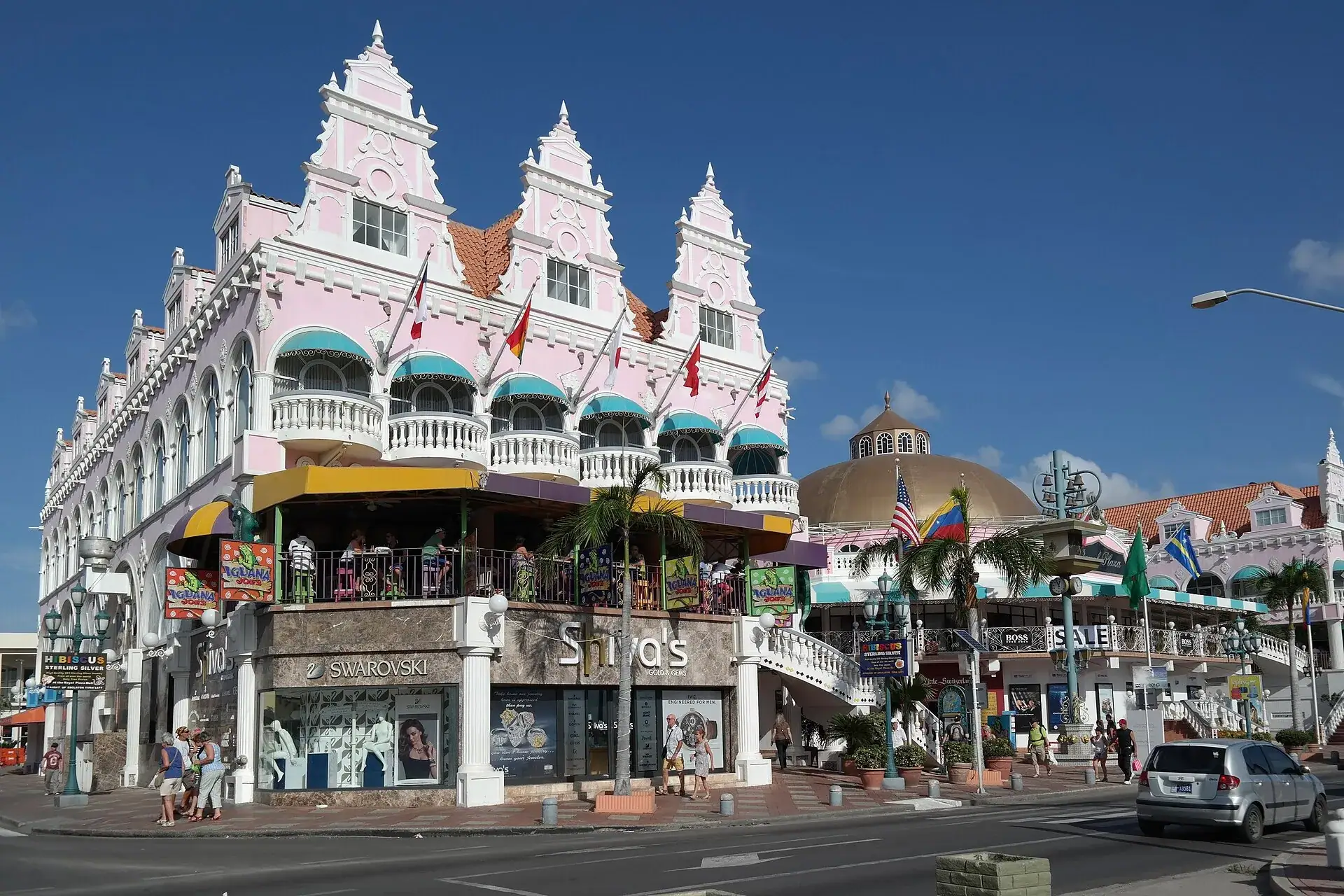 Photo: Choinowski / Wikimedia Commons (CC BY-SA 4.0)