Cost of Living in Luxembourg City
Where this figure comes from. No cost survey covers Luxembourg City, so the $5,500 a month above is our own estimate rather than a measurement. On 416 of our 999 city guides the figure is built from a published Numbeo basket, a one-bedroom rent in the centre plus one person's monthly costs without rent, converted to USD; this city is not one of them. How we source everything.
Luxembourg City is one of the most expensive cities in Europe, and that reputation is earned. Your largest cost will always be housing. A one-bedroom apartment in central neighborhoods like Ville-Haute or Limpertsberg runs $1,730 to $2,530 per month (roughly USD 1,650 to USD 2,420). Further out toward Kirchberg or Belair you can find similar apartments for $1,380 to $1,840 (USD 1,320 to USD 1,760), though these areas are still well within the city.
Below housing, costs are high but not shocking for a Western European capital:
- Groceries: $345 to $460 per month for one person shopping at Cactus or Auchan. Imported produce and quality meat push this up quickly.
- Eating out: A casual lunch costs $17 to $29; a sit-down dinner without wine runs $35 to $69 per person. Budget bistros near the Gare can trim this modestly.
- Coworking hot desk: $220 to $460 per month depending on the space.
- Local transport: Free. All buses, trams, and trains within Luxembourg have been free nationwide since 2020.
A realistic monthly total, including a cheaper apartment outside the historic centre, runs $3,220 to $4,600 (roughly USD 3,100 to USD 4,400). If you want to live centrally and eat well, budget $5,180 or above.
Where to Work
The coworking scene is well-developed for a city of this size. The Office, with locations in the Ville-Haute and near the Gare, offers hot desks from around $220 per month and day passes for $29, making it one of the most accessible options. Silversquare Liberté near the central station positions itself as a premium community space, with flex desks around $455 per month. Paladium, a bit further from the centre, offers day passes for $23 and monthly memberships at $345, with 24/7 access for members.
Cafe working is viable but not as embedded in the culture as in, say, Lisbon or Berlin. Intense Coffee in Limpertsberg is the standout option: specialty coffee, vegan menu, solid WiFi, and power sockets available. Most restaurants and traditional cafes do not actively encourage laptops, especially during lunch hours when tables turn over quickly.
WiFi quality in coworking spaces and hotels is reliably fast. The national train network and buses carry free WiFi too. Mobile data coverage is excellent throughout the city.
Getting Around
Public transport is free for everyone in second class, and the network covers the whole country; only first class on trains and journeys across the border still need a ticket. Within Luxembourg City, trams and buses connect the main areas efficiently. A tram extension completed in early 2025 now links the airport directly to Kirchberg, the city centre, and the central station, making the airport connection seamless and free.
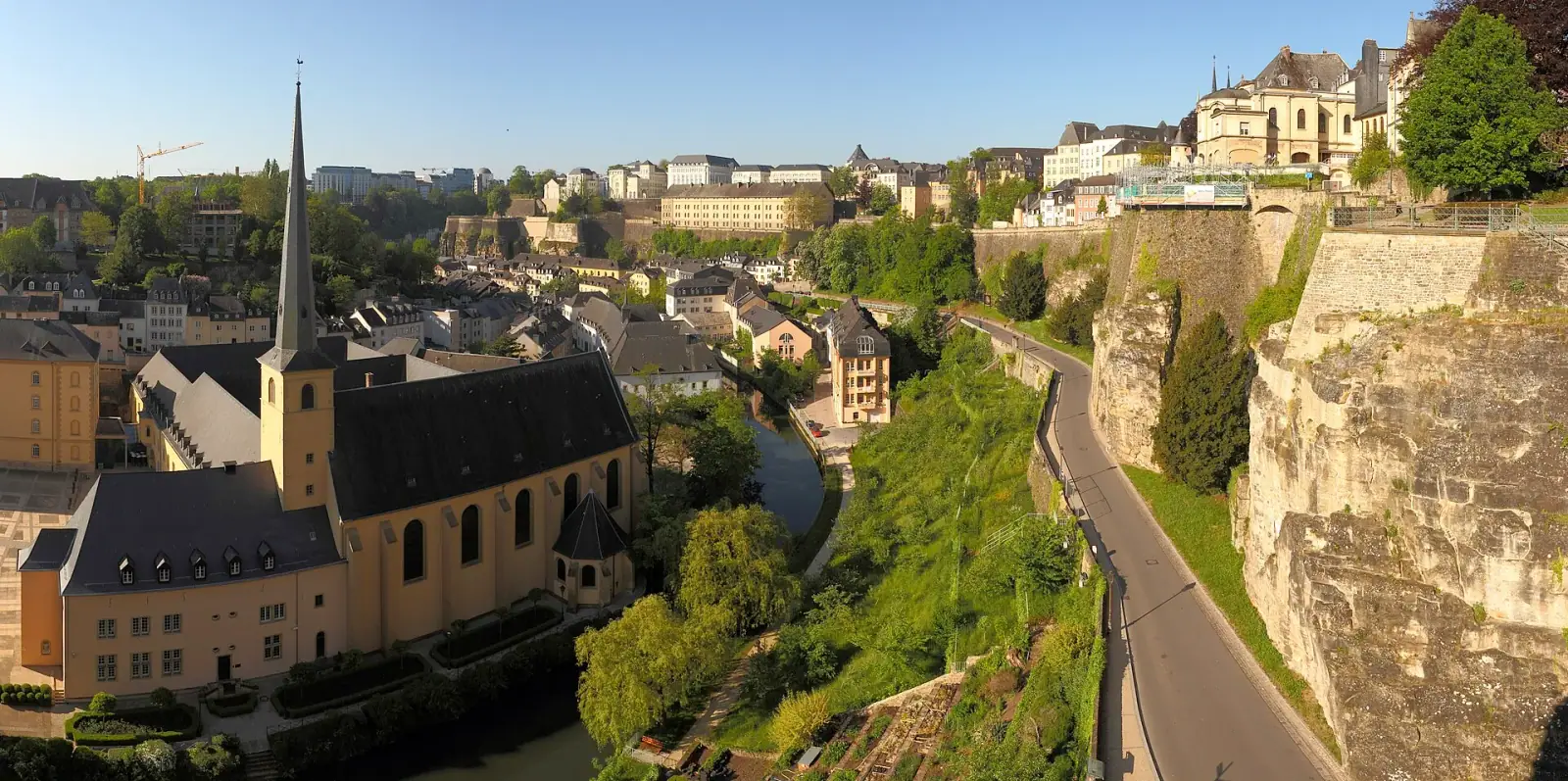
The city is walkable in its core: the historic Ville-Haute, the Grund valley below, and nearby Clausen are all reachable on foot from each other, though the steep ravines between the upper and lower city mean some walks involve real elevation changes. Cycling infrastructure exists but the hills make it less universal.
Luxembourg Airport (LUX) sits about 6 km from the city centre. The new tram connection takes around 25 minutes and costs nothing. A taxi runs $29 to $40. The airport is small and efficient, with direct connections to most major European hubs, and Ryanair, Luxair, and Lufthansa among the main carriers.
Sorting transport? Book an airport transfer, or compare car rental on Auto Europe and QEEQ.
Visas and Staying Long-Term
Luxembourg is a Schengen member. Citizens of the US, UK, Canada, Australia, New Zealand, Japan, and most Latin American countries can enter visa-free and stay up to 90 days within any 180-day period across the entire Schengen area. That 90-day clock resets based on your Schengen entry and exit history, not Luxembourg specifically.
Luxembourg does not offer a dedicated digital nomad or freelancer visa. For stays longer than 90 days, you would need a Type D long-stay visa tied to an employment contract, self-employment registration, or family reunification. There is no straightforward path for remote workers employed abroad to legally extend their stay beyond the Schengen 90-day window. Some nomads base themselves in Luxembourg for a short sprint and continue their Schengen rotation into neighboring Belgium, France, or Germany.
Best Time to Visit
The sweet spot is late April through September. Summers are mild rather than hot, with daytime highs of 20 to 25 degrees Celsius (68 to 77 F), long evenings, and the city's outdoor terraces and festivals in full swing. June is particularly good: settled weather, the longest days of the year, and the city feels alive without the August peak crowds.
September into early October extends the good window, with cooler temperatures, the Alzette valley turning golden, and noticeably fewer tourists. For remote work purposes, this shoulder period also comes with easier cafe seating and slightly better accommodation rates.
Winter (December through February) brings cold, grey, damp days with temperatures near or below freezing. The Christmas market on Place d'Armes is a genuine attraction in December, but January and February are bleak for outdoor life and best suited to those who can afford to be indoors all day, which the coworking scene accommodates well.
Pros and Cons
- Exceptionally safe, with one of the lowest violent crime rates in Europe
- Free public transport nationwide, including the new airport tram link
- English widely spoken in a city where French, German, and Luxembourgish are all common
- Central location for day trips to Brussels, Trier, Metz, and Cologne
- High quality of life with excellent infrastructure, clean streets, and significant green space
- Strong expat and international community driven by EU institutions and financial sector
- Very high cost of living, especially rent, making it prohibitive on modest remote salaries
- No nomad visa and no easy legal route to extend beyond 90 Schengen days
- Small city, around 138,000 residents, which limits variety in nightlife and social scenes
- Cafe work culture is thin compared to Southern and Eastern European nomad hubs
- Grey winters with limited daylight and frequent overcast skies from November through March
Who Luxembourg City Is Best For
Luxembourg City suits remote workers who earn well in stronger currencies, particularly those on US or UK salaries where the EUR exchange rate works in their favor. If you value safety, cleanliness, and efficient infrastructure above all else, this city delivers those without compromise. It works especially well as a short sprint destination: two to four weeks of productive work with excellent day-trip range across three countries.
The city is also a natural fit if you have existing connections to the EU institutions or the financial sector here, or if you are already rotating through Western Europe and want a calm, organized base that contrasts with busier capitals.
Skip it if your monthly budget is under $3,450, if you want a large nomad social scene with constant meetups and coworking communities, or if long warm summers and outdoor cafe culture are central to how you work. For those needs, Lisbon, Tallinn, or Valencia will treat you better for less.