Cost of Living in Manaus
Where this figure comes from. No cost survey covers Manaus, so the $900 a month above is our own estimate rather than a measurement. On 416 of our 999 city guides the figure is built from a published Numbeo basket, a one-bedroom rent in the centre plus one person's monthly costs without rent, converted to USD; this city is not one of them. How we source everything.
Manaus runs close to $900 a month for a single nomad, though isolation inflates certain lines. A furnished one-bedroom on a monthly lease in Adrianópolis, Nossa Senhora das Graças or Ponta Negra costs $300 to $550; Centro is cheaper at $200 to $350 but noisier and less safe. Groceries are the weak spot: almost everything arrives by river barge or air, so a supermarket run costs $220 to $330, above the Brazilian norm, while river fish, açaí and tropical fruit at the Mercado Adolpho Lisboa are cheap. A prato feito lunch is $5 to $8. A Vivo, Claro or TIM prepaid SIM with generous data is $8 to $15. Coworking hot desks run $80 to $160. Utilities hit $70 to $130 because air conditioning runs constantly, and fibre internet is $25 to $50. Transport is $35 to $70. Value verdict: reasonable, but the humidity tax on electricity is unavoidable. The free trade zone works in a visitor's favour on exactly one line of the budget: electronics and appliances are cheaper here than they are anywhere south of the river, which is why people fly up to buy them. Everything else that arrives by barge costs more.
Where to Work in Manaus
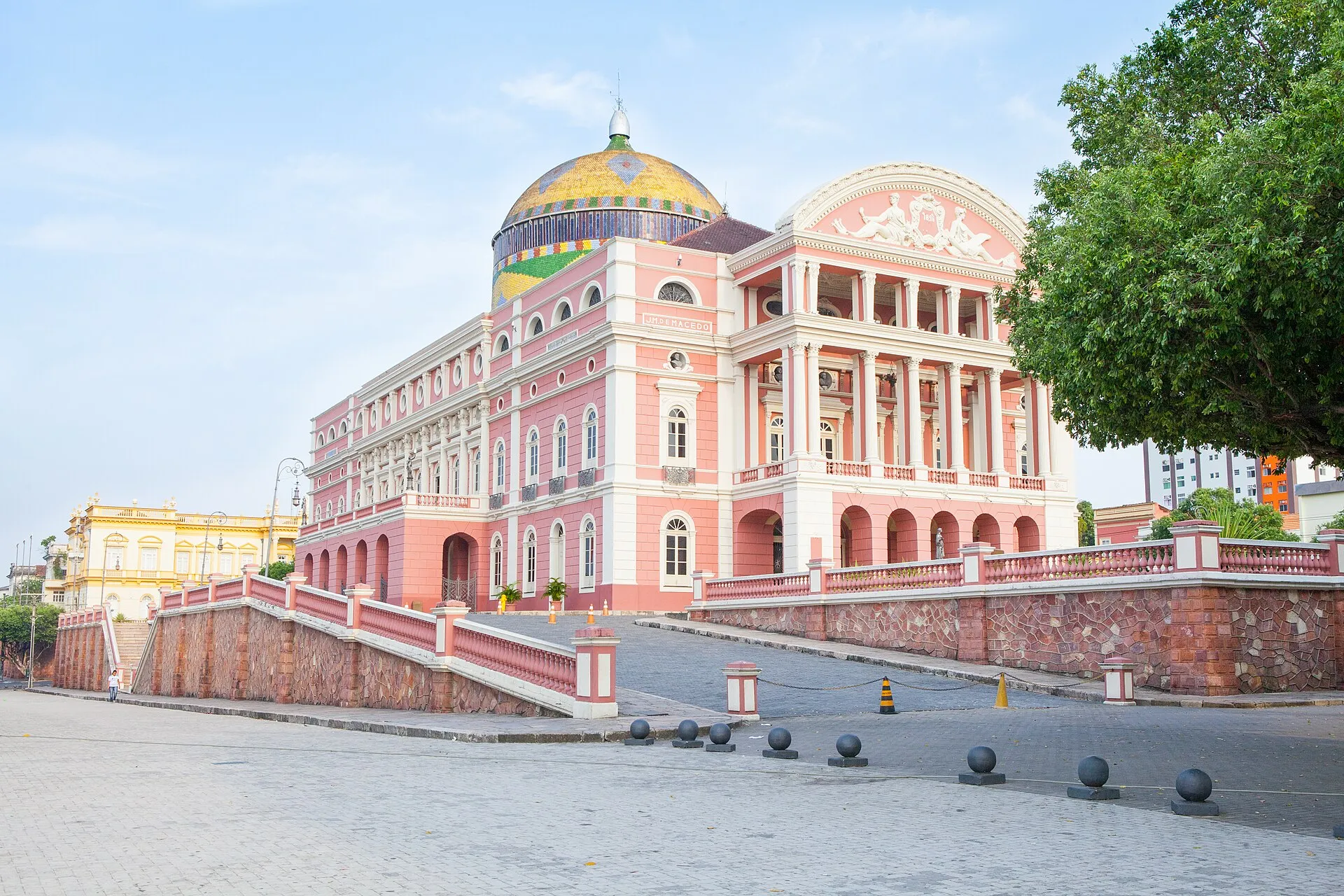
Adrianópolis is the practical base: central, relatively safe, full of restaurants, gyms and serviced apartments, and close to the Ponta Negra corridor. Ponta Negra itself sits on the Rio Negro waterfront and offers newer towers, a promenade and beach-adjacent evenings, at the cost of a longer trip into town. Centro holds the Teatro Amazonas, the Mercado Adolpho Lisboa and the historic port architecture, and is worth visiting daily but rarely worth living in. Coworking exists but is thin compared with southern Brazil; spaces cluster around Adrianópolis and the Vieiralves district, supported by the professional class working in the Manaus Free Trade Zone, the tax-incentive industrial park that anchors the local economy. Fibre is common and more reliable than the city's isolation suggests. The caveats are heat, near-constant 80 percent humidity, aggressive air conditioning indoors and frequent afternoon storm outages. The national institute for Amazon research has been based here since the nineteen fifties, which makes the city a genuine centre for tropical biology and puts a scientific population alongside the industrial one. Researchers and the visitors they bring are a large share of the foreigners you will meet. Portuguese carries both of those worlds, and arriving without it closes off most of the conversation.
Getting Around Manaus
Manaus has no metro and no rail. City buses cover the sprawl for roughly $1 with a rechargeable card, but routes are slow, crowded and hard to parse without Portuguese. Uber and 99 both operate well and are the default for visitors, with typical fares of $2.50 to $8 within the central and Ponta Negra areas. Traffic on Avenida Djalma Batista and Avenida Torquato Tapajós clogs badly at peak. Walkability is limited to Centro and the Ponta Negra promenade; the heat alone discourages long walks. The defining fact is that Manaus is unreachable by road from the rest of Brazil: there is no highway link south across the Amazon, so arrival is by air or by multi-day riverboat from Belém, Santarém or Tabatinga. Eduardo Gomes International sits about 14 km north, with Uber at $6 to $12. A car is unnecessary but useful for the Ponta Negra commute.
Sorting transport? Book an airport transfer, or compare car rental on Auto Europe and QEEQ.
Visas for Manaus
Brazil reinstated visa requirements for US, Canadian and Australian citizens in April 2025; those nationals must obtain an eVisa online before travel, costing around $81, valid for multiple entries over ten years with stays of up to 90 days. UK, EU, New Zealand and most other Western passport holders still enter visa free for 90 days. In both cases the stay can be extended once at a Polícia Federal office, including the one in Manaus, for a further 90 days, capping the total at 180 days within any twelve-month period before departure is required. Brazil's digital nomad visa, introduced in 2022, grants one year renewable for a second, and requires proof of remote work for a non-Brazilian employer or clients plus monthly income of at least $1,500 or bank savings of at least $18,000, together with valid health insurance. Applications go to a Brazilian consulate abroad or, for someone already in the country, to the Ministry of Justice online.
Best Time to Visit Manaus
Manaus is equatorial: highs of 31C to 34C every month, lows around 24C, and humidity that rarely drops below 75 percent. The variation is rainfall, not temperature. The drier season runs June to October and is the best window, with September and October the least wet and the easiest for jungle excursions, though river levels fall and some igarapé routes become impassable. The wet season runs December to May, peaking in March and April, when daily downpours are heavy and prolonged. Peak river levels arrive in June, which is the classic time to see the Meeting of the Waters and to reach flooded forest by boat. There is no hurricane or cyclone risk this close to the equator. Key dates include the Boi Bumbá festival at nearby Parintins in late June, one of Brazil's largest folk celebrations, the opera and classical season at the Teatro Amazonas in April and May, and Carnival in February.
Pros and Cons of Manaus
Manaus is unlike anywhere else in Brazil. The Teatro Amazonas, a belle époque opera house built on rubber money and still hosting a genuine festival season, anchors a Centro of extraordinary faded grandeur. The Amazon itself is the draw: jungle lodges, the Meeting of the Waters, river trips and wildlife are all within reach of a working week. Costs are moderate, fibre is faster than expected, the Free Trade Zone gives the city a real professional middle class, and the river-fish and tambaqui food culture is distinctive. The drawbacks are heavy. Humidity and heat are relentless year round with no relief season, and air conditioning becomes a dependency and an expense. The city is isolated, reachable only by air or multi-day boat, so flights are expensive and regional travel is not casual. Crime is a genuine concern in Centro, the port area and outer zones after dark. Almost no English is spoken and the foreign nomad community is negligible.
Who Manaus Is For
A real interest in the Amazon is the entry requirement, and what you get is a base rather than a nomad hub, and who will use weekends for river trips, lodges and wildlife rather than city nightlife. It fits biologists, photographers, journalists and researchers whose subject matter is the rainforest, plus anyone working with the Free Trade Zone's industrial and logistics sector. Portuguese is close to essential; the city rewards people who speak it and frustrates those who do not. Nomads who tolerate constant heat well, and who value a genuinely unusual place over comfort and convenience, get the most from it. It is wrong for anyone who wants a walkable temperate city, a social scene of foreigners, cheap onward travel or a break from humidity. Skip it if heat and 80 percent humidity sap productivity, if crime vigilance is draining, or if isolation from the rest of Brazil is a dealbreaker.