Cost of Living in Manizales
Where this figure comes from. No cost survey covers Manizales, so the $1,300 a month above is our own estimate rather than a measurement. On 416 of our 999 city guides the figure is built from a published Numbeo basket, a one-bedroom rent in the centre plus one person's monthly costs without rent, converted to USD; this city is not one of them. How we source everything.
Manizales sits in the coffee-growing Caldas department and is one of Colombia's most affordable mid-size cities. A one-bedroom apartment in a central area like El Cable or Milán runs roughly $220-345 per month. In quieter residential zones such as Ayacucho or Fátima you can find the same for $170-235. Groceries from a local market cost around $155-205 per month if you cook most meals. A set lunch (menú del día) at a neighborhood place runs $4.50-6; a sit-down dinner for two at a decent restaurant lands around $25-34. A hot-desk at a coworking space costs $110-250 monthly depending on the space. Local bus or cable-car rides are around $1 each, and a monthly transit pass is roughly $39. Utility bills follow the estrato, the stratum from 1 to 6 attached to every Colombian address. A flat on an estrato 5 street in a district like Palermo pays a surcharge that subsidises the bills of the lower strata, so ask a landlord for the stratum before you compare two rents.
- Total monthly range, solo nomad: roughly $875-1,400 covering rent, food, coworking, and transport
- Budget end: shared housing, cooking at home, local buses, around $600-700
- Comfortable end: private apartment in a safe zone, occasional eating out, dedicated coworking desk, around $900-1,100
Where to Work
Manizales has a small but functional coworking scene. GoToWork (Carrera 23, near El Cable) is the most established space, with 24-hour access, fast fiber internet, standing desks, meeting rooms, and an outdoor terrace. Hot-desk pricing starts around $155 per month. Cabuya Cowork (Calle 69) is a more affordable option at around $110 per month, with solid amenities and free parking. Centro GEN (Calle 65a) offers private offices and a receptionist service, suited to those who need a more professional setup. Al Café Coworking (Carrera 24) bridges the gap between cafe and coworking: 25 desks, high-speed WiFi, a full food menu, and weekend hours.
Cafe-working culture exists but is thinner than in Bogotá or Medellín. You will find cafes with outlets in the Milán and El Cable neighborhoods, but dedicated laptop-friendly spots are fewer than in larger Colombian cities. WiFi quality in coworking spaces is generally reliable and fast thanks to fiber infrastructure; residential internet (about $36/$29 per month) is also solid. Public cafe WiFi can be inconsistent, so budget for a local SIM with data as a backup. Claro and Tigo both have good coverage in the city.
Getting Around
Manizales is a hilly city and not particularly walkable between neighborhoods, though within a flat neighborhood you can get around on foot. The Cable Aéreo urban gondola is the city's standout transit feature: three lines now connect key areas including El Cable, Universidades, Fátima, and the main transport terminal, carrying up to 8,000 passengers per day and offering fast, scenic rides for around $1. Regular city buses cover most areas and are very cheap. Taxis are regulated, safe, and inexpensive; always confirm the meter is running. Ride-hail apps InDriver and Uber also operate here.
The main airport is La Nubia Airport, close to the city limits. A taxi from the airport to the center takes about 20 minutes and costs around $5. Note that La Nubia has a short runway and limited flights; many travelers route through Pereira's Matecaña Airport (about 1.5 hours by bus or taxi), which has more frequent connections and lower fares.
Sorting transport? Book an airport transfer, or compare car rental on Auto Europe and QEEQ.
Visas and Staying Long-Term
Citizens of the United States, Canada, the UK, the EU, Australia, and most other Western passports enter Colombia visa-free and receive a stamp for 90 days, extendable once for a total of 180 days per calendar year. You can request the extension at a Migración Colombia office before your initial stamp expires.
Colombia introduced a Digital Nomad Visa (Visa de Nómada Digital) that allows remote workers to live in the country for up to two years. To qualify you need to demonstrate monthly income of at least three times the Colombian minimum wage (about $1,640 a month in 2026, rising whenever the wage does), work remotely for foreign companies or clients, and hold valid private health insurance. The application costs approximately $231 in fees and takes 2-4 weeks to process.
Best Time to Visit
Manizales sits at around 2,150 meters (7,050 feet) in the Andes, giving it a consistently mild climate: daytime highs typically reach 21-24°C (70-75°F) year-round, with cooler evenings around 14-16°C (57-61°F). This is a genuine advantage for focus work, since you never have the oppressive heat that affects lower Colombian cities.
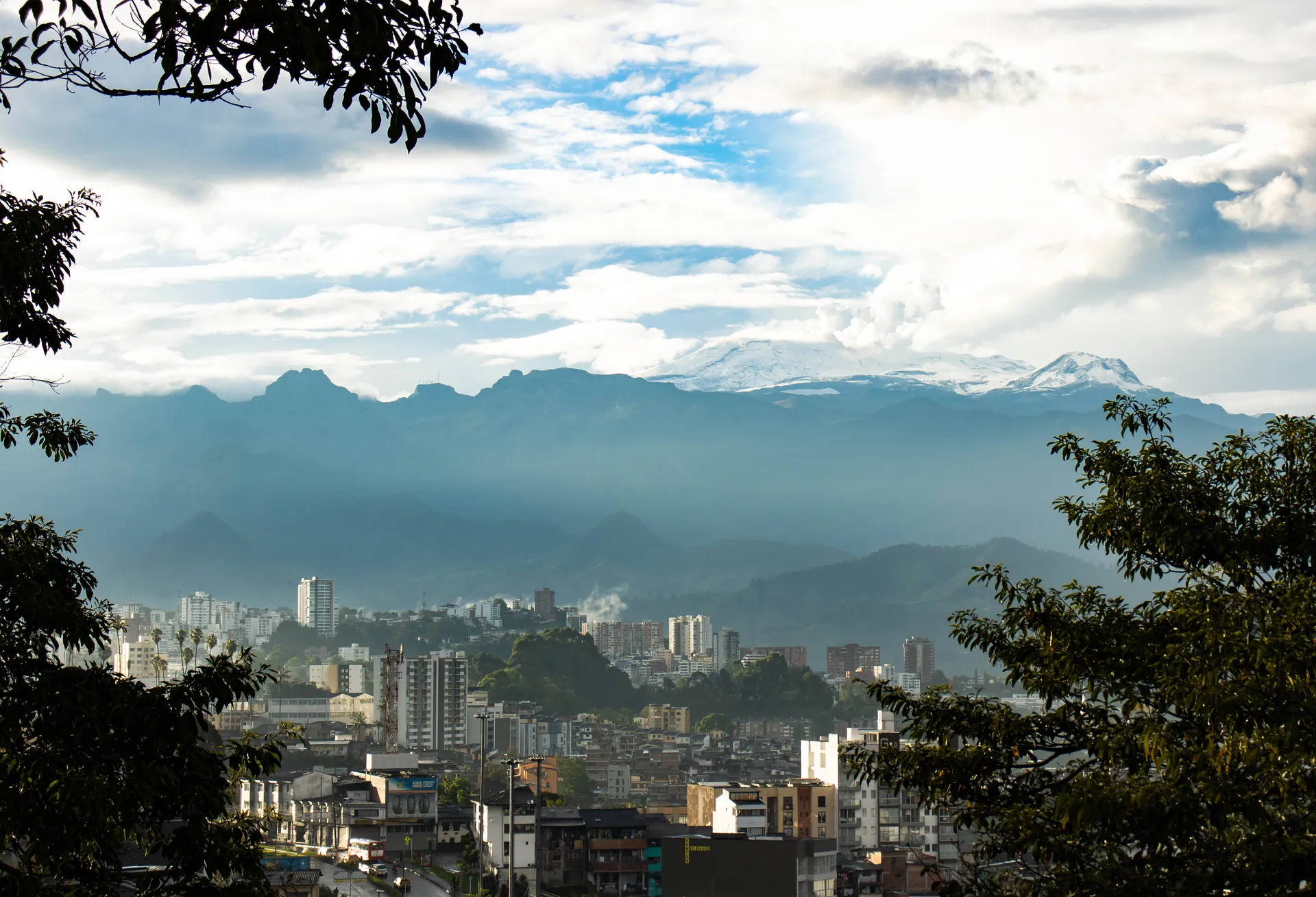
The honest caveat is that Manizales is rainy almost year-round. The driest months are December through February and again in June through August, with January and July being the clearest. Even in the drier windows expect occasional afternoon showers. The wettest periods are April-May and October-November, when overcast skies and persistent mist are the norm. For remote work this matters less than for sightseeing, but if you want to day-trip to the coffee farms or Nevado del Ruiz, aim for the drier windows. January also hosts the Feria de Manizales, which brings energy to the city but raises accommodation prices. The glaciated volcano on the city's skyline is active, and the Servicio Geológico Colombiano publishes its alert level. When that level rises, the upper national park closes to visitors and ash can shut La Nubia, so read the bulletin before you book a summit day.
Pros and Cons
Pros
- Significantly cheaper than Medellín or Bogotá, with low rent and affordable food
- Cool, spring-like climate year-round: no heat fatigue, no air-conditioning bills
- Strong university town energy with young locals and a coffee-culture identity
- The Cable Aéreo gondola is a genuinely useful and scenic way to get around
- Easy access to coffee farm day trips, Nevado del Ruiz national park, and Termales del Otoño hot springs
- No tourist inflation: prices reflect local Colombian life, not expat premiums
- Relatively safe if you stick to recommended neighborhoods
Cons
- Fewer coworking spaces and nomad meetups than Medellín, Bogotá, or even Pereira
- Very little English spoken outside hotels; daily life requires basic Spanish
- La Nubia Airport has limited routes; getting here often involves a connection through Pereira or Bogotá
- Rainy and misty for much of the year, which can feel monotonous over a long stay
- Hilly terrain makes walking between areas tiring; you rely on transit or taxis
- Slower pace and smaller city means fewer restaurant, nightlife, and entertainment options than in Colombia's larger hubs
Who Manizales Is Best For
Manizales suits nomads who prioritize low cost and mild climate over a buzzing social scene. If you want to put your head down, work productively, and spend evenings at a good local restaurant without the distractions and expense of a larger city, this is a strong choice. It also rewards anyone who wants to be based in Colombia's coffee region: the surrounding landscape is beautiful, and weekend trips to fincas and coffee farms are easy and cheap.
You need at least basic conversational Spanish. Daily transactions (markets, buses, landlords, repair shops) happen almost entirely in Spanish, and this is not a city where you can coast on English. Manizales is also a better fit for solo workers who are self-directed about building a social life than for people who depend on a built-in nomad community to stay motivated.
Skip Manizales if you need a large English-speaking network, frequent flights in and out, a dense coworking scene, or want a city with consistent warm sunshine. Medellín, several hours north by bus over the mountains, handles all of those needs better, at a higher price point.