Cost of Living in Xalapa
Real market data
Source: Numbeo · September 2026
$630/moSolo nomad1-bed centre + living costs
$940/moCoupleshared 1-bed + costs
$560/moLean / localcheaper area + costs
- 1-bed rent, city centre$240MX$4,224
- 1-bed rent, outside centre$170MX$2,958
- Monthly costs excl. rent (1 person)$390MX$6,725
- Meal, inexpensive restaurant$6MX$108
- Monthly transit pass$15MX$266
- Buy price, per m² (centre)$2,040MX$35,421
Prices are from Numbeo (September 2026), converted to USD at $1 = MX$17.34 (01 Aug 2026). The monthly living-costs figure is our transparent one-person basket, groceries, a few meals out, utilities, phone, internet, transport and essentials, priced from those figures. Solo adds central rent; couple and lean are estimates from the same numbers.
Budget roughly $630 a month as a solo remote worker in Xalapa, which is well below the Mexican cities foreigners usually pick. A one-bedroom apartment near the centre or in Ánimas runs about $260 to $400, and the outer colonias drop that to $200 to $280. Xalapa has around 60,000 university students, so small flats turn over constantly. Groceries land around $170 to $230, with the Mercado Jáuregui far cheaper than the supermarkets. A comida corrida is $3 to $5, a restaurant dinner $10 to $18, and the coffee, grown on the slopes around the city, is excellent and about $2. A monthly transit budget is roughly $25. Utilities add $40 to $90; the climate needs neither heating nor cooling.
Where to Work in Xalapa
Xalapa is the capital of Veracruz state and the seat of the Universidad Veracruzana, and between the government and the university it has a large professional and student population. Coworking exists modestly at roughly $70 to $120 a month. The city's real asset for remote work is its cafe culture: this is a coffee-growing region with a serious cafe scene and long stays are entirely normal. Mexican internet is reasonable in the cities, with fibre available and decent speeds, though it is worth testing a specific address. Mobile data is cheap. English is limited outside the university, and Spanish carries daily life comfortably here. A national ecology research institute is based here, which follows from the cloud forest on the doorstep and gives the town a scientific population alongside the students and the civil servants. State government is the largest employer by some distance, and the working day it keeps, an early start and a long middle of the day, is what the cafes and the traffic are organised around. Anyone freelancing for clients abroad should know that invoicing from inside the country means registering with the tax authority and issuing every invoice electronically, which is stricter here than in most of the region.
Getting Around Xalapa
Xalapa is built on hills and is compact but steep, with the centre around Parque Juárez and the cathedral walkable if you accept the gradients. Buses and colectivos cover the city cheaply. Most residents walk in the centre and take a bus or a ride-hailing car beyond it; taxis and apps are inexpensive. There is no metro or tram. The city sits about 90 minutes inland from the port of Veracruz on a road that drops 1,400 metres to the coast, and buses run frequently. Mexico City is about five hours by comfortable ADO coach. The nearest airports are Veracruz at 90 minutes and Mexico City at five hours. The descent to the coast is the drive that catches people out: the road loses more than a kilometre of altitude in under an hour, fog sits on the middle section most mornings, and the trucks going down use the whole width of it. A bypass takes through traffic around the north of the city, and using it rather than the centre saves half an hour at the wrong time of day. Going the other way the road climbs to the high plain and into genuine cold, which is a different climate within forty minutes of the front door.
Sorting transport? Book an airport transfer, or compare car rental on Auto Europe and QEEQ.
Visas for Xalapa
Mexico grants most Western passports up to 180 days on arrival as a visitor, though officers have discretion and shorter stamps have become more common, so do not assume the full period. For longer stays the temporary resident visa is the standard route, requiring proof of income or savings above published thresholds and applied for at a Mexican consulate abroad rather than in-country; it grants one year initially and is renewable up to four, after which permanent residency becomes available. Mexico has no dedicated digital nomad visa, but the temporary resident route is well trodden by remote workers and the thresholds are moderate by international standards. The visa granted at the consulate is only half the process: it has to be exchanged for a residence card at an immigration office within thirty days of entering, and missing that window voids the whole application. Permission to earn from a local employer is a separate endorsement on the card rather than something residence confers by itself. A household goods allowance lets a new resident bring furniture in once without duty, which is worth knowing before selling everything ahead of the move. Renewal appointments are released online in bursts, so the slot is chased rather than scheduled.
Best Time to Visit Xalapa
Xalapa sits at about 1,400 metres in the cloud forest belt and has a mild, damp climate quite unlike the Veracruz coast below it. Daytime temperatures sit between 18 and 25 degrees for most of the year, and the city is known within Mexico for its chipi-chipi, a fine persistent drizzle that can settle in for days. The driest and clearest months are roughly November to April, which is the best time to be here and when Cofre de Perote and the Pico de Orizaba are visible from the city. The rains run May to October and are heavy in the afternoons. It is never hot and never cold, which is the point. The nortes are the seasonal event nobody warns you about: cold fronts that come in off the Gulf through the winter, dropping the temperature ten degrees in an afternoon and driving wind and rain up the slope for two or three days at a time. They are what makes a mild place feel raw. The coffee harvest runs through the same stretch of the calendar, so the lanes above the city fill with pickers and trucks. February and the weeks after it are the likeliest to give a clear run of bright dry days.
Pros and Cons of Xalapa
Xalapa is green, cool, cheap and cultured: a university city with one of the best anthropology museums in the world, a serious orchestra, a coffee-growing hinterland and cloud forest at the edge of town. It costs a fraction of San Miguel de Allende or Playa del Carmen and has almost none of their foreign population, which for some people is the entire appeal. Mexico City and the coast are both reachable. Rain and drizzle are near-constant in this town and the light can be grey for weeks on end. Veracruz state has had significant security problems, though Xalapa itself is calmer than much of it. English is limited and there is no nomad scene.
Who Xalapa Is For
Mexico without the foreign enclaves, cool and green rather than hot and dry, and Spanish either spoken already or learned on arrival. Mesoamerican archaeology is the strongest single argument, between the museum in the city and the Gulf coast sites beyond it. Birders and hikers have the cloud forest and Cofre de Perote nearby, and anybody who takes coffee seriously is in the right part of Mexico entirely. This is a place for couples and for work that needs concentration. The chipi-chipi drizzle settles over this town for days at a time, the coast is a descent away, Spanish is required, and the nomad community is somewhere else entirely. Mexico City is five hours away, and Oaxaca and Mérida are where the foreign crowd actually is.
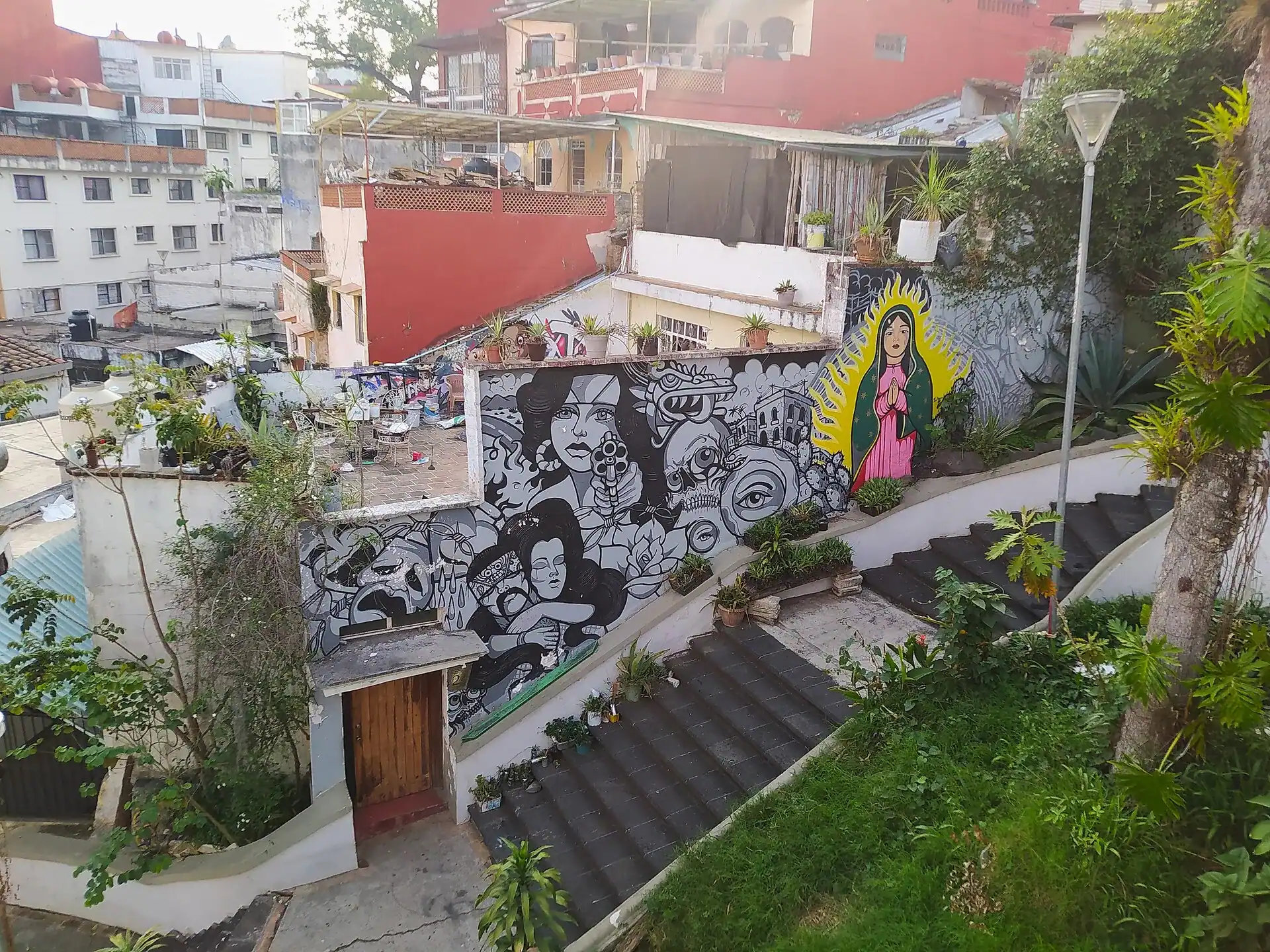 Photo: Pequeño mar / Wikimedia Commons (CC BY-SA 4.0)