Cost of Living in Catania
Real market data
Source: Numbeo · August 2026
$1,420/moSolo nomad1-bed centre + living costs
$2,060/moCoupleshared 1-bed + costs
$1,190/moLean / localcheaper area + costs
- 1-bed rent, city centre$620€540
- 1-bed rent, outside centre$390€338
- Monthly costs excl. rent (1 person)$800€695
- Meal, inexpensive restaurant$17€15
- Monthly transit pass$37€33
- Buy price, per m² (centre)$2,340€2,030
Prices are from Numbeo (August 2026), converted to USD at $1 = €0.87 (01 Aug 2026). The monthly living-costs figure is our transparent one-person basket, groceries, a few meals out, utilities, phone, internet, transport and essentials, priced from those figures. Solo adds central rent; couple and lean are estimates from the same numbers.
Catania is one of southern Italy's most affordable cities for remote workers. A comfortable monthly budget runs between $1,610 and $2,300 (roughly USD 1,500 to USD 2,200), depending on your lifestyle.
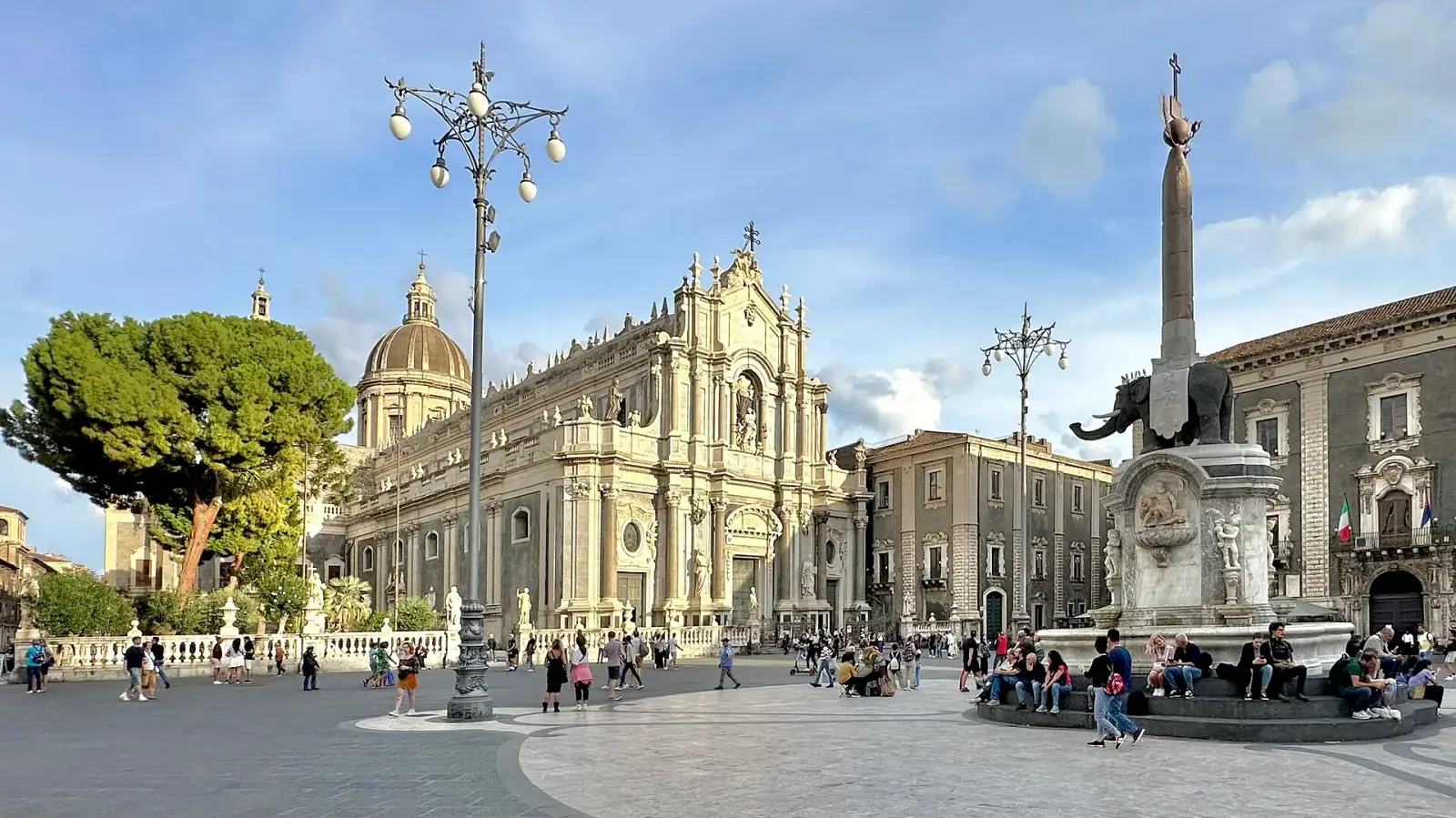
- Rent, central (Centro Storico, Piazza Duomo area): $690 to $980 for a one-bedroom
- Rent, cheaper areas (Picanello, Borgo-Sanzio): $520 to $750 for a one-bedroom
- Groceries: $175 to $290 per month for one person, shopping at local markets like La Pescheria and Lidl
- Eating out: $9 to $16 for a sit-down lunch, $17 to $29 at a mid-range restaurant in the evening
- Coworking hot-desk: $115 to $230 per month at a dedicated space
- Local transport: $35 to $46 for an AMT monthly pass covering buses and the metro
Total realistic range: $1,610 to $2,300 per month ($1,500 to $2,200). Budget travelers staying in cheaper neighborhoods and cooking at home can manage closer to $1,270. This is roughly 50% less than Rome or Milan for a comparable quality of life.
Where to Work
Catania has a small but growing coworking scene, and a handful of cafe-style work spots have become reliable fixtures for remote workers.
Dedicated coworking spaces
@localhost on Via dei Piccioni is the most nomad-friendly option: focused atmosphere, good fiber WiFi, community events around tech and startups. Isola, housed in the baroque Palazzo Biscari near the harbor, blends innovation hub with coworking desks. CoWonderful on Via Vincenzo Giuffrida offers private offices, shared desks, and meeting rooms in a modern fit-out with reliable connectivity. Monthly hot-desk memberships at all three sit in the $115 to $230 range.
Cafe work culture
Verso Coffice on Via Monserrato is the standout: it was designed as a coffice (coffee plus office), with plenty of power outlets, strong WiFi, a reservable quiet work room, and quality espresso. Punto Concept Store on Via Etnea has solid WiFi, good coffee, and a calm gallery-like atmosphere. Both are genuinely laptop-welcoming rather than merely tolerant.
The WiFi situation
Home fiber is cheap and widely available if you rent for a month or more. Coworking spaces have dependable connections. In standard cafes WiFi is hit-or-miss, so keep a local SIM with data as backup. TIM, Vodafone, and Iliad all have stores in the city center.
Getting Around
Catania's historic center is compact and walkable. Via Etnea, the main boulevard, runs north for about 3 km from Piazza Duomo and covers most of what you will need day-to-day.
The AMT bus network is extensive and single tickets cost $1 for 90 minutes; a monthly pass costs $35 to $46. The metro has one line connecting the center to the university and northern neighborhoods, though it is limited in scope. Taxis and ride-hailing (itTaxi) are available but moderately priced; agree on a fare or insist on the meter.
Getting to and from Catania Fontanarossa Airport is straightforward. The Alibus shuttle runs every 25 minutes, costs $4.50, and takes around 20 to 28 minutes to reach the center. Alternatively, an AMT bus ($1) connects the airport to Fontanarossa train station, from where a regional train reaches Catania Centrale in about 8 minutes.
If you plan to explore the rest of Sicily, renting a car is worth it. Traffic in Catania itself is congested and parking is frustrating, so most residents leave their car outside the center for daily life.
Sorting transport? Book an airport transfer, or compare car rental on Auto Europe and QEEQ.
Visas and Staying Long-Term
As part of the Schengen Area, Italy allows US, Canadian, Australian, and UK passport holders to enter visa-free for up to 90 days in any 180-day period. EU and EEA citizens can stay and work indefinitely.
Italy launched a Digital Nomad Visa in April 2024, specifically for non-EU remote workers. It is valid for 12 months and renewable annually. Requirements include proof of a foreign employer or foreign clients, a minimum annual income of $28,540, comprehensive health insurance, and proof of accommodation. That floor is three times Italy's income threshold for exemption from health charges, so it moves when that threshold does. The application fee is $135, and processing takes 30 to 120 days. You apply through the Italian consulate in your home country before arriving.
If you stay beyond 90 days without the nomad visa, you need a standard long-stay visa (D visa) with supporting documentation.
Best Time to Visit
Catania has a classic Mediterranean climate: hot, dry summers and mild, occasionally rainy winters. For remote work, the sweet spots are April to mid-June and mid-September to October.
Spring brings temperatures in the 18 to 25 C range (64 to 77 F), low humidity, and far fewer tourists. It is ideal for combining focused work with weekend trips to Etna, the Baroque towns of the Val di Noto, and the coast. Autumn is similarly comfortable and the sea stays warm through September.
July and August are genuinely hot, often reaching 34 C (93 F), with high humidity near the coast. The city empties somewhat as locals head to the beaches, but the tourist influx and heat make sustained work uncomfortable unless you have air conditioning. Winter (December to February) is mild by northern European standards, around 12 to 15 C (54 to 59 F), with periodic rain, but it is quiet, very affordable, and perfectly functional for remote work if heat is not your priority.
Pros and Cons
Pros
- Low cost of living compared to northern Italy and most of western Europe
- Exceptional food scene anchored in authentic Sicilian cuisine and a legendary fish market
- UNESCO-listed baroque city center that is genuinely beautiful to live in
- Quick access to Mount Etna, beaches, and several of Europe's finest ancient Greek sites
- International airport with direct connections to many European hubs
- Growing nomad and startup community with regular events
- Warm, sociable culture and slower pace of life once you settle in
Cons
- Petty theft (bag snatching, pickpocketing) is a real risk in parts of the center and near the train station
- English is limited outside of tourist areas and coworking spaces; Italian is a genuine necessity for daily life
- Coworking options are fewer than in larger Italian cities; the scene is still maturing
- Summer heat can make working without air conditioning impractical for months on end
- Traffic congestion and chaotic driving are constant friction if you use a car
- Occasional ash fall from Mount Etna can affect air quality for a few days per year
- Bureaucracy for visas and residence registration moves slowly
Who Catania Is Best For
Catania suits remote workers who want to live well on a modest budget without sacrificing culture, food, or urban energy. If you are drawn to southern European pace, enjoy exploring on foot, and are happy to pick up some basic Italian, you will feel at home quickly. It works especially well for solo nomads and couples who plan to stay at least one to three months, long enough to build local routines and get past the initial friction.
It is a strong fit for food-obsessed travelers, people who want easy access to outdoor adventures (Etna hikes, coastal swimming, Val di Noto day trips), and those priced out of Rome, Milan, or Barcelona who still want a city with real cultural depth.
Consider skipping Catania if you need a large, established nomad community around you at all times, rely entirely on English for daily errands, find intense summer heat debilitating, or want cutting-edge coworking infrastructure. It is also not the best choice if personal safety anxiety would be heightened by a visibly gritty urban environment, even a relatively safe one.