Cost of Living in Cayenne
Where this figure comes from. No cost survey covers Cayenne, so the $2,000 a month above is our own estimate rather than a measurement. On 416 of our 999 city guides the figure is built from a published Numbeo basket, a one-bedroom rent in the centre plus one person's monthly costs without rent, converted to USD; this city is not one of them. How we source everything.
Budget around $2,000 a month as a solo remote worker in Cayenne, which is expensive for South America and reflects a French department where almost everything is imported from Europe. A one-bedroom place runs roughly $700 to $1,200. Groceries cost substantially more than in mainland France, and the cost of living has driven serious social movements here. The markets, particularly the Hmong market at Cacao and the Saturday market in Cayenne, are the exception and are genuinely good. The euro is the currency. This is our own estimate rather than measured data. The same dock duty that inflates prices across the French overseas departments applies here, which is why a European product costs more in Cayenne than in Paris despite the shared currency and supply chain. Crossing to Suriname or to Brazil, where the same shopping costs a fraction, is an escape mainland France does not have, and many residents make the trip periodically. Housing is genuinely short in the city, and the gap between what is advertised and what is actually available is wider than the figures suggest. Healthcare and schooling come through the French system.
Where to Work in Cayenne
French Guiana has European infrastructure in a South American setting: fibre reaches Cayenne and Kourou at workable speeds, mobile coverage is good along the coastal strip and effectively absent inland, and French plans roam here without charge. Power is reliable in the towns. There is a small amount of coworking, much of it connected to the space industry at Kourou. French is the language of everything, with Guianese Creole widely spoken; English is rare. The territory sits four hours behind Paris. Anyone working with mainland France should note the four-hour offset, which is the smallest of any French overseas territory and makes a full working overlap possible. The professional world is narrower than European infrastructure suggests and it has two poles: the space centre at Kourou, with the engineering and logistics economy around it, and the research institutions working on the forest, from the field stations in the interior to the agricultural and health institutes. Almost everything technical connects to one or the other. Anyone outside those will find the local network thin and is better off treating the territory as somewhere to work from rather than somewhere to work in.
Getting Around Cayenne
Cayenne is compact around the Place des Palmistes with its royal palms, and the centre is walkable. Buses are limited and most residents drive. The single coastal road runs west to Kourou and Saint-Laurent-du-Maroni and east towards the Brazilian border at Saint-Georges, and that road is essentially the whole road network: the interior is rainforest reached by river, and there is no road to Brazil's interior or to Suriname except a ferry across the Maroni. Kourou, with the European spaceport, is about an hour west along that road, and launches are visible from Cayenne on a clear night. A car is close to essential and the road itself is good, though the distances are longer than they look: Saint-Laurent is around three hours west and Saint-Georges about the same going east. Beyond the tarmac, travel is by pirogue, the motorised dugout that serves the Maroni and Oyapock rivers and every settlement along them, and a trip upriver is measured in days and arranged through the communities rather than booked. The Iles du Salut are reached by boat from Kourou.
Sorting transport? Book an airport transfer, or compare car rental on Auto Europe and QEEQ.
Visas for Cayenne
French Guiana is an overseas department of France and part of the European Union, outside the Schengen area. European Union citizens have full freedom of movement and can live and work here without a permit. Most other Western nationalities receive ninety days visa-free. Non-EU citizens wanting longer need a French long-stay visa obtained before travel. Yellow fever vaccination is mandatory for entry, which is unusual for European Union territory and is enforced. The land borders with Brazil and Suriname have their own procedures. Anyone crossing to Suriname takes a pirogue across the Maroni at Saint-Laurent, and anyone crossing to Brazil uses the bridge at Saint-Georges, each with its own hours. Both land crossings need the neighbour's paperwork sorted in advance rather than at the river. Suriname operates an online tourist card or visa, and Brazil reinstated visa requirements for several Western nationalities in 2025, so a day trip across is no longer the casual thing it once was. Inland, gendarmerie checkpoints on the coastal road are routine and identity documents are checked, which follows from the mining and border situation rather than being aimed at visitors.
Best Time to Visit Cayenne
French Guiana is equatorial and hot all year at around thirty-one degrees with high humidity. The calendar turns on rain: the long dry season from July to November is the practical window, with a short drier spell in March. The heavy rains from December to June make interior travel difficult. Leatherback turtles nest on the beaches near Cayenne and at Awala-Yalimapo between March and July, which is one of the great wildlife spectacles in the Americas and the reason to time a visit. Anyone hoping to watch a rocket launch should check the schedule well in advance, since dates move and the viewing sites are allocated rather than open. Carnival here is longer and stranger than most. It runs every weekend from Epiphany to Ash Wednesday, with the touloulous, masked women who invite men to dance and can be neither refused nor identified, at the centre of it, and it is the territory's biggest cultural event by a distance. Practically, mosquito-borne illness including dengue is a real and recurring risk on the coast, so repellent and covered evenings are ordinary precautions rather than fussiness.
Pros and Cons of Cayenne
French Guiana is the European Union on the edge of the Amazon: rainforest covering ninety-eight per cent of the territory, Europe's spaceport at Kourou launching Ariane rockets over the Atlantic, the penal colony ruins on the Iles du Salut where Papillon was set, and leatherback turtles nesting on the beaches. The infrastructure is French and the euro is the currency. It is expensive, French is essential here, the crime rate in Cayenne is high by any European standard, and the interior is genuinely hard to reach. Illegal gold mining in the interior is also a serious environmental and security problem that shapes what is possible outside the coastal strip. The population is among the most varied anywhere for its size, with Creole, Maroon, Amerindian, Hmong, Brazilian, Haitian and metropolitan French communities living alongside one another, and that shows in the food more vividly than in anything else. And the gold mining that damages the forest also releases mercury into the rivers, which has contaminated fish stocks that upriver communities depend on, making it a public health problem as much as an environmental one.
Who Cayenne Is For
French, plus a serious interest in the rainforest or in space, and a wish for European institutions on a South American frontier. Anyone able to watch an Ariane launch from Kourou will remember it. French runs everything, South American prices do not apply in a European department, and overland travel is close to impossible: the road network ends at the coast and the interior is rainforest and river. Read current safety guidance for Cayenne rather than assuming European territory means European crime rates. Amazon research is easier to run from here than from almost anywhere else in the basin, because the forest is among the least disturbed on the continent and the institutional support behind it is French. The most rewarding version of a visit for most people is short and built around one thing: a launch, the turtles, or a river trip, each of which justifies the fare on its own and none of which needs a month. Anyone drawn to the Guianas more broadly should know that Suriname next door is far cheaper, that English is useful there, and that Paramaribo is one of the more interesting small capitals in the Americas, so a trip taking in both makes better sense than either alone.
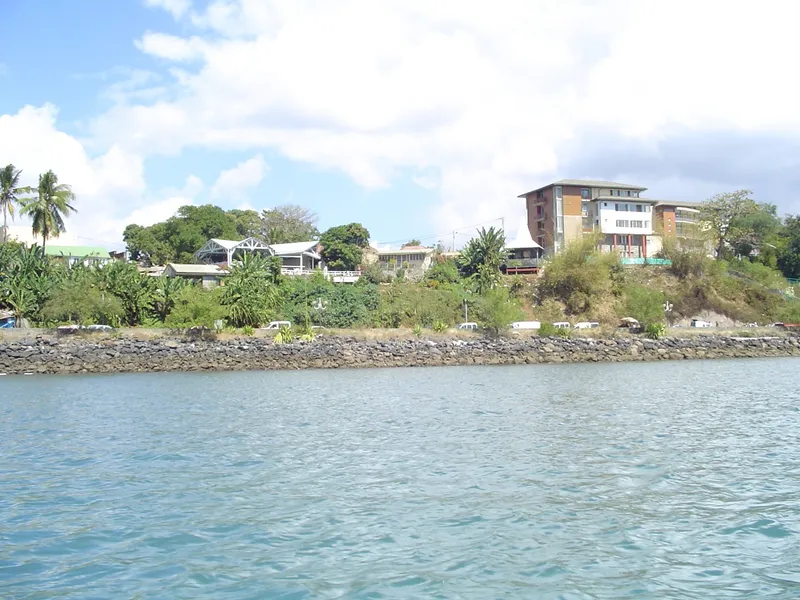
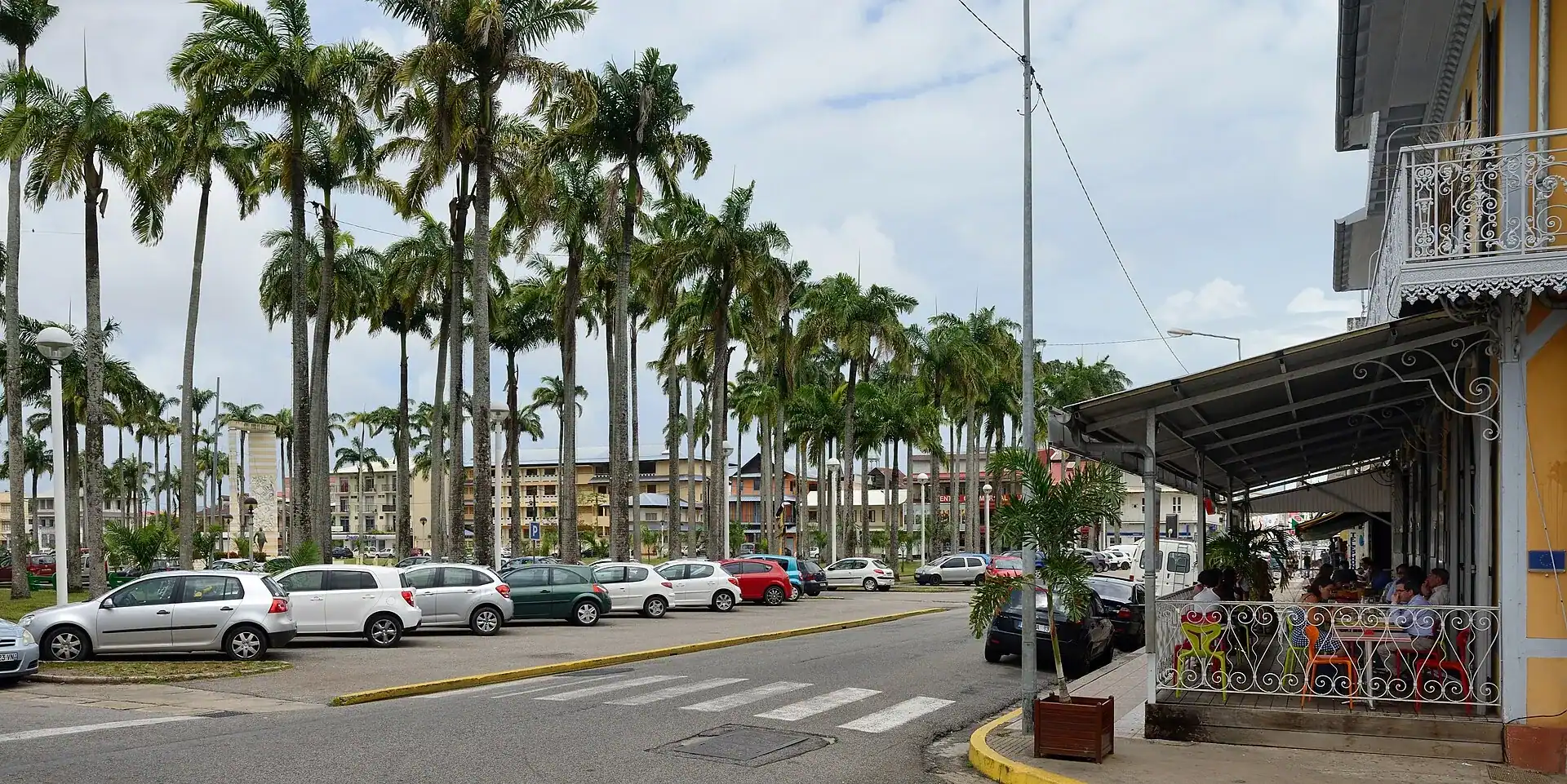 Photo: Cayambe / Wikimedia Commons (CC BY-SA 3.0)