Cost of Living in Port of Spain
Where this figure comes from. No cost survey covers Port of Spain, so the $1,400 a month above is our own estimate rather than a measurement. On 416 of our 999 city guides the figure is built from a published Numbeo basket, a one-bedroom rent in the centre plus one person's monthly costs without rent, converted to USD; this city is not one of them. How we source everything.
Budget around $1,400 a month as a solo remote worker in Port of Spain, which is cheap for the Caribbean and reflects an economy built on oil and gas rather than tourism. A one-bedroom flat runs roughly $500 to $900, with Woodbrook, St Clair and Newtown at the top of that and the areas east of the city considerably cheaper. Food is inexpensive and Trinidad's is the best in the Caribbean by a distance, with doubles from a street cart costing almost nothing. Fuel is subsidised. The Trinidad and Tobago dollar floats within a managed band and foreign exchange can be hard to obtain locally. This is our own estimate rather than measured data. Fibre runs about $40 to $70 a month and a coworking desk $120 to $200. The foreign exchange constraint is the practical oddity here: the central bank rations hard currency, so buying dollars locally can mean a wait or a premium, and anyone paid from abroad should think about how money comes in before arriving. Fuel is subsidised heavily enough that running a car is cheap by Caribbean standards. Rents east of the city towards San Juan and Barataria run at half the Woodbrook rate, with the trade being the highway at peak.
Where to Work in Port of Spain
Trinidad's connectivity is good by regional standards, underwritten by an energy sector that needs it: fibre from Flow and Digicel reaches most of the developed western corridor at solid speeds and mobile coverage is comprehensive. There is a small coworking scene around Port of Spain, serving local startups rather than visitors. Power is reliable. The island runs four hours behind central European time. English is the only language required. The professional network here is real but concentrated in energy, finance and government, and it is not one a visiting remote worker plugs into easily. Trinidad sits four hours behind GMT with no daylight saving, level with New York in winter and an hour ahead in summer, which gives a workable European afternoon and a full American day. The energy sector's bandwidth requirements are why the connectivity here beats most of the Caribbean rather than matching it. Coworking here serves Trinidadian founders rather than visitors, so it is a place to meet locals rather than other foreigners.
Getting Around Port of Spain
Port of Spain is compact around Independence Square and the Queen's Park Savannah, the largest roundabout in the world and the city's green centre, and that core is walkable by day. Maxi taxis, the colour-coded minibuses, and route taxis cover the city and the corridor east towards Arima cheaply. Traffic on the Churchill Roosevelt and Beetham highways is severe at peak. Most residents drive, on the left. Piarco airport is forty minutes east. The ferry to Tobago takes around three hours and is how most people reach the quieter island, which is where the beaches are. The Queen's Park Savannah is about three and a half kilometres around and is where the city walks and runs in the early morning and evening. Maracas Bay on the north coast, reached over the mountain road, is where Trinidadians go for bake and shark, and it is about forty minutes from the city. Route taxis run fixed routes and are hailed from the roadside, and the colour of the band on the number plate tells you where a maxi is going.
Sorting transport? Book an airport transfer, or compare car rental on Auto Europe and QEEQ.
Visas for Port of Spain
Trinidad and Tobago has no remote work visa. Most Western nationalities enter visa-free for up to ninety days, and Commonwealth citizens generally receive the same, with extensions applied for at the immigration division in Port of Spain. The process is bureaucratic rather than difficult. Anyone planning to stay longer needs a work permit tied to an employer, or a residence permit through marriage or descent. The country is not organised around long-stay visitors and the immigration system reflects that; plan around ninety days rather than assuming an extension. Anyone coming for Carnival should apply well ahead if a visa is needed at all, since the weeks around it are the busiest the immigration system sees. The immigration division extends stays in person at Port of Spain and the process takes a morning rather than a week, but it is discretionary and a clear reason plus proof of funds and onward travel matter more than the paperwork. Tobago is the same jurisdiction, so no separate entry applies.
Best Time to Visit Port of Spain
January to May is the dry season, with daytime temperatures around thirty-one and the lowest rainfall, and it contains the event that defines the calendar. Trinidad Carnival, on the Monday and Tuesday before Ash Wednesday, is the largest in the Caribbean and the reason a great many people come at all; the season of fetes and panyard rehearsals runs for weeks before it and the city is fully booked. June to December is the wet season, with heavy afternoon rain. Trinidad sits south of the hurricane belt and is rarely struck, which is a genuine advantage over the rest of the region. The panyards open for rehearsal in the weeks before Carnival and are free to walk into, which is the best way to hear steelpan properly and is something the Carnival itself does not really offer. Accommodation for Carnival is booked a year ahead and prices multiply rather than rise.
Pros and Cons of Port of Spain
Trinidad invented the steelpan, calypso, soca and limbo, and its Carnival is the one every other Caribbean carnival is modelled on. The food is the best in the region, mixing African, Indian, Chinese, Creole and Syrian traditions on the same street. The Northern Range has rainforest and the Caroni swamp fills with scarlet ibis at dusk. It is cheap and outside the hurricane belt. The crime rate is the serious qualification here: Trinidad has one of the higher murder rates anywhere in the Americas, and both residents and foreign governments treat parts of Port of Spain as no-go areas. The Pitch Lake at La Brea in the south is the largest natural asphalt deposit in the world and has been mined continuously since the sixteenth century, and it is one of only a handful anywhere. Tobago sits outside the belt too.
Who Port of Spain Is For
Music, food and Carnival are the draw, and the price of admission is taking the security situation seriously and organising your movements around it rather than ignoring it. It is culturally the richest place in the Caribbean and almost no remote workers go there. Anybody after a beach city is on the wrong island, since Trinidad's coast is not what it is for and Tobago is a separate flight and a separate trip. There is also no long-stay visa route to build a year around. Read current government travel advice for Trinidad specifically, and take local advice on neighbourhoods seriously. Energy is the industry that makes this island a career rather than a stop. Trinidad is a major LNG and petrochemical producer, and the people working in it here are connected outward to Houston and Aberdeen rather than inward to the Caribbean. Put it beside Tobago and Trinidad has the culture and the food and Tobago has the beaches, and the ferry between them takes three hours.
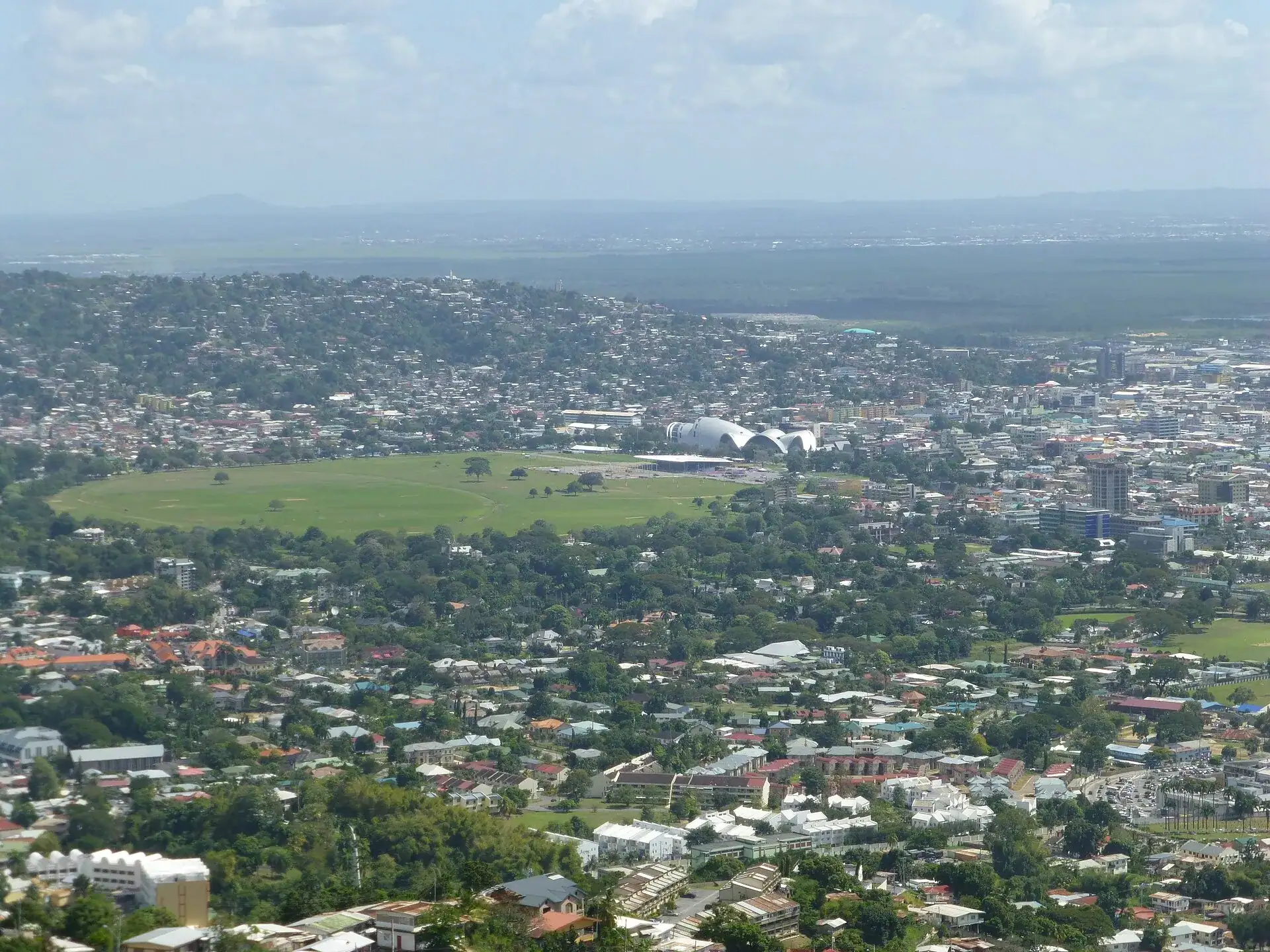 Photo: Grueslayer / Wikimedia Commons (CC BY-SA 4.0)