Cost of Living in Maceio
Where this figure comes from. No cost survey covers Maceio, so the $780 a month above is our own estimate rather than a measurement. On 416 of our 999 city guides the figure is built from a published Numbeo basket, a one-bedroom rent in the centre plus one person's monthly costs without rent, converted to USD; this city is not one of them. How we source everything.
Maceio runs about $780 a month for one person, cheap for a Brazilian state capital with beaches this good. A furnished one-bedroom in Ponta Verde or Jatiuca, the two safest and most walkable beach neighbourhoods, is $280 to $500; further from the water it drops sharply. A prato feito lunch is $4 to $6, a churrascaria dinner $12 to $20, and a caipirinha on the beach $2 to $3. Coworking is available at $80 to $150 a month. Fibre internet is $20 to $35 a month. An Uber across town is $3 to $7, and air conditioning adds $30 to $60 to the power bill. The lagoon behind the city is where the cheap food comes from: Lagoa Mundau produces sururu, a small mussel that is the state dish, sold by the kilo already shelled and cooked into a stew that costs a couple of dollars to make at home. That fishery supports thousands of families and has been badly hit by the ground subsidence and the pollution that came with it, which is one reason a plate of sururu is no longer as cheap as older guides claim.
Where to Work in Maceio
Maceio has a handful of coworking spaces, mostly in Jatiuca, Ponta Verde and Farol, priced at $80 to $150 a month, serving a local startup scene rather than visitors. Brazilian fibre is the real advantage: it costs $20 to $35 a month from Claro, Vivo or one of the many regional providers, and it is fast, cheap and widely available in the beach neighbourhoods. Mobile 4G and 5G are good and inexpensive. Cafes along the beachfront work for a couple of hours. Power is reliable. The practical constraint is choosing a neighbourhood you are comfortable walking home in after dark rather than anything technical. Alagoas is Brazil's second smallest state and one of its poorest, and the technology scene is small enough that the same twenty people appear at everything, which cuts both ways: a foreigner who makes an effort is known within a month, and there is nowhere to be anonymous afterwards. The state has run programmes to stop its graduates leaving for Recife and Sao Paulo, with mixed results, and the ones who stayed are the network.
Getting Around Maceio
Maceio stretches along the coast, and the beachfront avenue running through Pajucara, Ponta Verde and Jatiuca is the walkable spine where most visitors stay. Buses cover the city cheaply but are slow and crowded. Uber and 99 both work well and are the default for most people at $3 to $7 a trip. The jangada sailing rafts take you out to the natural pools on the reef at low tide, which is the classic Maceio outing. Zumbi dos Palmares airport is 25km north with flights across Brazil and some international routes. Praia do Frances is 25km south and the beaches of Sao Miguel dos Milagres about 100km north. The airport's name is not decorative. Zumbi dos Palmares led the quilombo in the Serra da Barriga ninety kilometres inland, the largest and longest-lived community of escaped slaves in the Americas, which held out for most of a century before Portuguese forces destroyed it in 1694. The site is a national park now and can be visited in a day from the city. The date of Zumbi's death, the twentieth of November, is Brazil's Black Consciousness Day.
Sorting transport? Book an airport transfer, or compare car rental on Auto Europe and QEEQ.
Visas for Maceio
Brazil gives most European nationalities 90 days visa free on arrival, extendable once by another 90 days through the Policia Federal, for a maximum of 180 days in any 12-month period. US, Canadian and Australian citizens now need an e-visa, applied for online, following the reintroduction of reciprocity. Brazil also operates a digital nomad visa, valid for one year and renewable once, requiring proof of remote employment with a foreign company and a minimum monthly income, currently set at $1,500 or savings of $18,000. It is applied for at a consulate or after arrival, and it is one of the more accessible nomad visas available. The document that actually governs a stay is the CPF rather than the visa. It is Brazil's taxpayer number, issued to foreigners on request, and without one you cannot open a bank account, hold a phone line, sign a lease or buy much online. It can be obtained at a Receita Federal office or, for some nationalities, at a Brazilian consulate before travelling, and doing it in advance removes the single most common source of delay in a first month.
Best Time to Visit Maceio
Maceio is nine degrees south and warm all year, with highs between 28C and 31C in every month. The distinction that matters is rain: the wet season runs from April to July and is genuinely heavy, with May and June the wettest, and it is when the sea gets churned up and the natural pools lose their clarity. September to February is the dry half, with lower humidity, calm water and the best conditions for the reef pools, which are only accessible at low tide so it is worth checking the tide tables before booking a jangada. Carnival in February fills the city. Sea temperature never drops below about 26C. Alagoas runs on sugarcane, and the harvest from September to March fills the interior roads with cane trucks and the air with smoke where fields are still burned before cutting. It does not reach the coast in any serious way, but it changes an inland drive. The other seasonal marker is the closed season on the lagoon fishery, when the sururu is left to spawn and the state's signature plate thins out on menus for a stretch.
Pros and Cons of Maceio
Maceio is about the water before anything else. The sea here is a startling green over white sand, the reef creates natural pools you can walk out to at low tide, and the coast north and south of the city is among the best in Brazil. Costs are low, fibre is fast and cheap, and Brazil's digital nomad visa is one of the easier ones to obtain. The qualification is a serious one: Alagoas has among the highest homicide rates of any Brazilian state, and Maceio requires real care about which neighbourhoods and which hours. Little English is spoken. The Pinheiro district was evacuated after salt mining collapsed the ground beneath it, and parts of the city are permanently emptied. The subsidence deserves stating precisely, because it is the largest urban evacuation in Brazil's history and it is not finished. Rock salt mining beneath five neighbourhoods left the ground sinking, around sixty thousand people were moved out, and a mine cavity collapsed in December 2023. Whole districts stand empty and fenced inside the city, and the company responsible has been paying compensation for years without the ground having stopped moving.
Who Maceio Is For
Somebody who already knows Brazil or speaks reasonable Portuguese, wants a beach base with fast cheap internet, and is comfortable exercising the ordinary caution a Brazilian capital requires: keep to Ponta Verde and Jatiuca, use Uber after dark, do not walk the beach at night. On the digital nomad visa it can be a very good year. This is not the place to meet Latin America for the first time. A solo traveller cannot wander freely at any hour here, and arriving without any Portuguese at all makes every part of it harder. Florianopolis and Fortaleza offer Brazilian beach life with a larger foreign community and a calmer safety picture. It suits somebody researching Afro-Brazilian history with a reason to be in the northeast specifically, since Palmares is here and the state's sugar economy is the context that produced it. It suits a diver or a kitesurfer, because the reef and the wind both work and neither is crowded. A first month in Brazil should not be spent here, and the reason is not squeamishness: the safety picture asks for judgements about neighbourhoods and hours that are hard to make well without some feel for the country, and getting them wrong carries consequences a guide cannot soften.
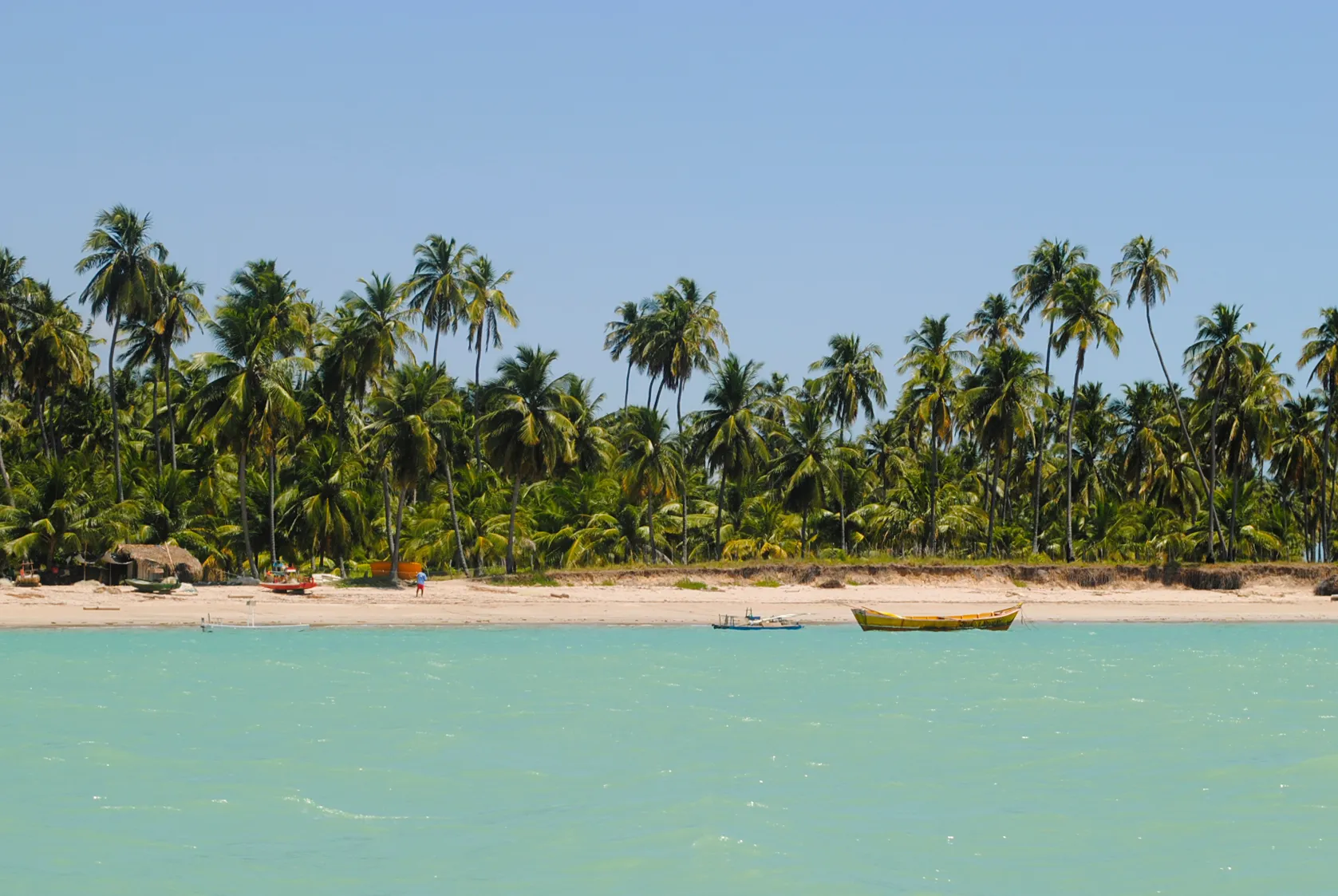 Photo: Cícero R. C. Omena / Wikimedia Commons (CC BY 2.0)