Cost of Living in Moroni
Where this figure comes from. No cost survey covers Moroni, so the $1,000 a month above is our own estimate rather than a measurement. On 416 of our 999 city guides the figure is built from a published Numbeo basket, a one-bedroom rent in the centre plus one person's monthly costs without rent, converted to USD; this city is not one of them. How we source everything.
Budget around $1,000 a month. A one-bedroom runs roughly $250 to $500. Market produce is cheap and the islands grow their own cassava, banana and coconut, along with the vanilla, ylang-ylang and cloves that are the country's main exports. Imported goods carry a heavy markup because the shipping is infrequent. Fish is cheap and good. Utilities are unreliable rather than expensive, with power cuts a daily fact. Eating out is limited and inexpensive. The Comorian franc is pegged to the euro through an arrangement with France, which removes currency risk. Remittances are the economy's quiet foundation. A very large Comorian community in France sends money home continuously, much of the better housing in Moroni was built with it, and the flow shapes prices in ways a visitor notices without being able to explain. The grand mariage, the traditional wedding that confers social standing, is the other force: families save for years or decades for one, and it is a serious financial institution rather than a colourful custom.
Where to Work in Moroni
Connectivity is weak. The Comoros are served by a submarine cable and fibre reaches parts of Moroni, but capacity is limited, prices are high and outages are common. Mobile data from Comores Telecom and Telma covers the populated areas. Power cuts are frequent and prolonged, and generators are essential for any serious work. There is no coworking. The time zone is three hours ahead of GMT, which gives a workable European overlap in the afternoon and an early start with Asia. Anyone planning to work here should assume the power will fail at some point in every working day, and should treat a charged laptop battery as the actual infrastructure. French is the language of business and administration alongside Comorian, with Arabic used in religious and some official contexts, and English is genuinely rare. The week runs to Friday prayers rather than a Western weekend, which reshapes when anything official can be done. For a European client base the afternoons here line up neatly, and most people who work remotely from the islands structure the day around that and around whatever hours the electricity happens to cooperate.
Getting Around Moroni
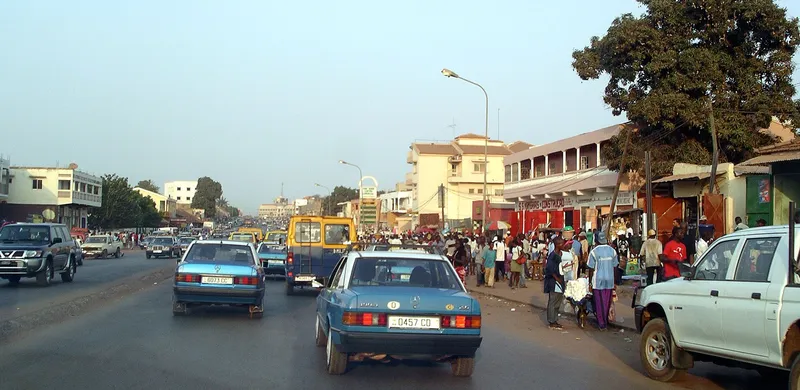
Shared taxis run the roads on Grande Comore for a low fixed fare and are the normal way to move. Moroni's medina is walkable and genuinely medieval in layout, with narrow lanes and carved doors. A car is useful for the road around the island and the climb towards Mount Karthala. Prince Said Ibrahim International Airport is about twenty kilometres north with connections to Dar es Salaam, Nairobi, Addis Ababa, Paris and Mayotte, and inter-island flights and boats reach Anjouan and Moheli. Anyone travelling between the islands should allow generous margins, since the inter-island flights and boats are both unreliable and the sea crossing can be rough. The road that rings Grande Comore is surfaced in stretches and broken in others, and the drive around the island takes far longer than the distance implies. Getting between the three islands is the real constraint: the small aircraft and the boats both run to schedules that bend, and a missed connection can cost days rather than hours. Mayotte is visible from Anjouan on a clear day, which makes the political division of the archipelago feel closer than any map conveys.
Sorting transport? Book an airport transfer, or compare car rental on Auto Europe and QEEQ.
Visas for Moroni
The Comoros are straightforward. Almost every nationality receives a visa on arrival at Moroni airport, valid for forty five days and issued for a modest fee payable in euros, with extensions available in-country. There is no remote work visa. A yellow fever certificate is required from travellers arriving from endemic countries. Anyone travelling on to Mayotte should understand that it is French territory with entirely different requirements, and the Comoros dispute its status, which makes that route politically loaded. Anyone arriving should carry euros in cash for the visa fee, since card payment is not available at the airport and the amount is fixed rather than negotiable. The country's recent history bears on any dealing with its institutions. The Comoros ran an economic citizenship programme in the late 2000s, selling passports in bulk to Gulf states as documentation for stateless residents, and the resulting scandal reached the presidency and still colours how Comorian travel documents are received elsewhere. Extensions of the arrival permit are handled in Moroni and are routine, though the process is unhurried and best begun well before the forty five days run out.
Best Time to Visit Moroni
May to October is the cool dry season and the practical window, warm at around twenty six degrees with lower humidity and calmer seas. November to April is the hot wet season and the cyclone season, and Cyclone Kenneth caused severe damage in 2019. Whale season runs roughly July to October, when humpbacks pass through the Mozambique Channel, and turtle nesting on Moheli runs through much of the year. Climbing Mount Karthala, one of the largest active craters in the world, is a dry season undertaking. Anyone climbing Karthala should also budget two days and a guide, since the ascent starts near sea level and the crater rim is above two thousand metres. Ramadan is observed strictly across the islands and the daytime economy contracts to match, with restaurants outside the hotels closed and official business slowed to a crawl; the dates shift earlier against the Western calendar every year. Wedding season concentrates in the dry months, and a grand mariage in the neighbourhood means several days of drumming, feasting and closed streets, which is better understood as an invitation than an obstruction. Cyclone risk runs from January to March, and the channel between the islands is at its roughest then.
Pros and Cons of Moroni
The Comoros get fewer visitors than almost any country on earth, and they have better reasons to be seen than that record suggests: Mount Karthala's crater, the Swahili stone town of Moroni with its old Friday mosque on the water, whale watching, and Moheli's marine park. Costs are low. The infrastructure barely functions, the power cuts are frequent, connectivity is weak, medical care is limited, and the political history runs to roughly twenty coups and attempted coups since independence in 1975. The Comoros also produce most of the world's ylang-ylang, the flower distilled for perfume, and the small distilleries on Grande Comore can be visited. Separatism is the political thread that runs through everything here. Anjouan and Moheli have both attempted secession, foreign troops have intervened more than once, and the rotating presidency between the three islands exists precisely to hold the union together. Medical provision is thin enough that residents with means travel to Réunion or Tanzania for anything serious, and that is the assumption to plan around rather than the exception.
Who Moroni Is For
The Comoros suit divers, anyone drawn to Swahili coast culture, and travellers who genuinely want somewhere unvisited. They suit French speakers, since French is the working language alongside Comorian and Arabic. They do not suit anyone needing reliable power or internet, anyone on a schedule, or anyone expecting tourist infrastructure, because outside a handful of hotels there is essentially none. The coelacanth is this archipelago's strangest claim. A fish believed extinct for sixty million years was landed off these islands in the twentieth century, and preserved specimens are held in the capital to prove it. The country is also among the least visited on earth, which for some travellers is the entire argument. The trip that works best is a fortnight built around one thing, the volcano, the diving off Moheli, or the stone towns, with generous slack for the inter-island transport to misbehave. Anyone drawn to the wider region should know that Zanzibar offers the Swahili coast with infrastructure attached and Madagascar offers the wildlife, while this archipelago offers the version of both that almost nobody has seen, at the cost of everything working. Researchers and conservation staff are the foreigners who mostly end up staying.
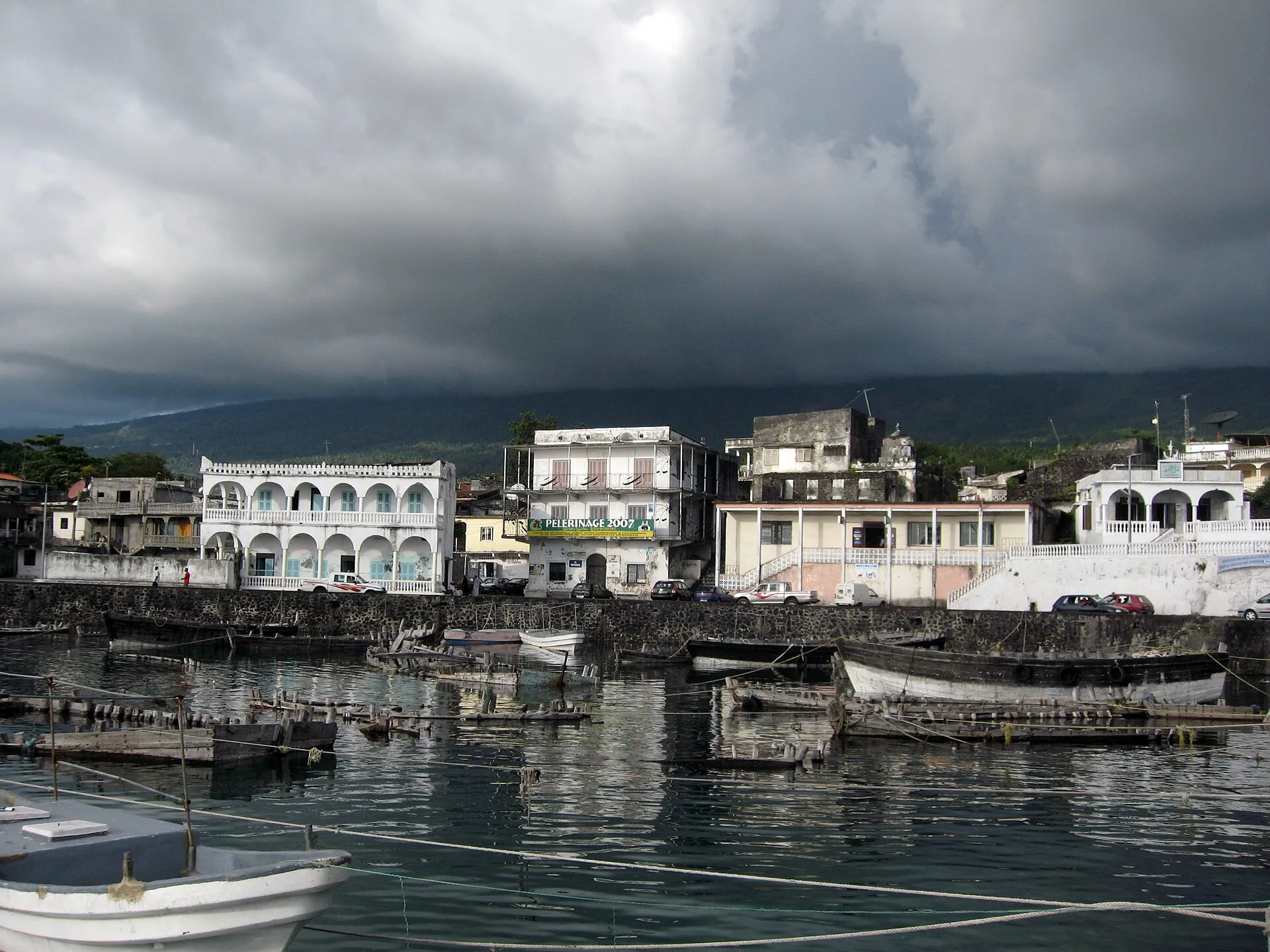 Photo: Woodlouse / Wikimedia Commons (CC BY-SA 2.0)