Cost of Living in Nosy Be
Where this figure comes from. No cost survey covers Nosy Be, so the $900 a month above is our own estimate rather than a measurement. On 416 of our 999 city guides the figure is built from a published Numbeo basket, a one-bedroom rent in the centre plus one person's monthly costs without rent, converted to USD; this city is not one of them. How we source everything.
Budget around $900 a month as a solo remote worker on Nosy Be, which is cheap by international standards though noticeably more expensive than mainland Madagascar, because the island runs on tourism. A one-bedroom place runs roughly $250 to $500, with Ambatoloaka and the west coast beaches at the top of that and Hell-Ville, the main town, below it. Food from the market is very cheap and the seafood is excellent. Imported goods carry a heavy markup on an island this remote. The ariary has been weak for years, which helps a visitor and hurts everyone living here. This is our own estimate rather than measured data. Mobile data bundles run $15 to $40 a month depending on how much you need, and that is the connection most people actually use rather than a fixed line. A scooter is around $12 a day or $200 a month. Boat trips to the surrounding islands are the discretionary line that adds up, at $30 to $70 a day depending on how far you go and whether the trip is shared. Rents in Hell-Ville run well below the beach strip and put you in the working town rather than the resort one.
Where to Work in Nosy Be
Nosy Be's connectivity is poor and it is the main constraint on working here. Mobile data from Telma, Orange and Airtel is the primary connection for most people and speeds vary by hour and location; fixed lines exist in a few hotels and better guesthouses. Power cuts are routine across Madagascar and the island is no exception, so an inverter or a generator is standard in anything aimed at visitors. There is no coworking. French is the language of business and administration, Malagasy of daily life, and English is limited to the tourism trade. Madagascar sits three hours ahead of GMT, which gives a full European working day and no useful American window at all. Starlink was licensed in Madagascar in 2023 and a few of the better lodges now have it, which is the single thing most likely to make a longer stay workable and is worth asking about by name rather than accepting a general assurance about wifi.
Getting Around Nosy Be
Nosy Be is about twenty-five kilometres across and Hell-Ville, properly Andoany, is the administrative town at its southeast corner. Taxis, mostly ageing Renaults, and taxi-brousse minibuses cover the island cheaply, and scooters are the common rental. The roads are variable and get worse in the wet season. Fascene airport has seasonal direct flights from Milan and Paris and connections through Antananarivo, Nairobi and Reunion, which makes the island considerably easier to reach than most of Madagascar. Boats run constantly to Nosy Komba, Nosy Tanikely and the smaller islands, which is what most visitors come for. Nosy Komba, the lemur island, is twenty minutes by boat and Nosy Tanikely's marine reserve about forty. The mainland is reached by a car ferry to Ankify and then a long drive, which is why almost everyone flies in and out rather than combining the island with an overland trip. Roads on the island are unsealed in places and deteriorate through the wet season, so a scooter is fine in the dry months and a poor idea in February.
Sorting transport? Book an airport transfer, or compare car rental on Auto Europe and QEEQ.
Visas for Nosy Be
Madagascar grants a visa on arrival to most nationalities at the main airports, and since 2023 stays of up to fifteen days have been free of the visa fee, with thirty, sixty and ninety-day options available for a charge. The process is done at the airport and is straightforward, though queues can be long. There is no remote work visa. Longer stays run through a residence permit applied for locally, which takes time and local support. Madagascar has revised its fee structure more than once in recent years. The fee-free fifteen days is genuinely free rather than merely cheap, and for a short stay it removes the paperwork entirely. Anyone staying longer should have the exact fee in cash, since card payment at the airport counter is unreliable. Overstaying carries a fine payable at the airport on departure.
Best Time to Visit Nosy Be
April to November is the dry season and the practical window, with daytime temperatures around thirty and calm seas. The wet season from December to March brings heavy rain and the cyclone risk, and Madagascar is one of the most cyclone-exposed countries in the world; the northwest coast is hit less often than the east but is not immune. The wildlife calendar is the other consideration: humpback whales pass between roughly July and September and whale sharks arrive from September to December, which is the reason many divers time a trip for the end of the dry season. Ylang-ylang is distilled on the island between roughly October and December and the smell of it carries across the west coast during those weeks, which is where the island's old nickname of the perfume island comes from. Cyclone season formally runs November to April and flights are the first thing cancelled.
Pros and Cons of Nosy Be
Nosy Be is the easiest way into Madagascar's wildlife, with lemurs in the Lokobe reserve on the island itself, whale sharks and humpbacks offshore in season, and Nosy Tanikely's marine reserve half an hour away by boat. The island grows ylang-ylang and smells of it. It is warm, cheap and reachable directly from Europe in season. The internet is bad and the power goes off often, French is close to necessary here, Madagascar's poverty is severe and visible, and petty crime around the tourist areas requires ordinary caution. The island is also considerably easier to reach than the rest of Madagascar, which is either its main convenience or the reason it feels less like the country. Madagascar split from Africa around 160 million years ago and roughly ninety per cent of its wildlife exists nowhere else, which is the reason the island is a destination at all and why the reserves are as strictly managed as they are. Lokobe is reached only by pirogue.
Who Nosy Be Is For
A diver or naturalist with some French, whose work tolerates a weak connection, and who wants the wildlife of Madagascar without the long overland journeys the mainland demands. A few weeks inside the dry season is the only version of this that really works. A call-heavy schedule will not survive here, French is doing all the work in daily life, and the direct European flights suggest an infrastructure the island does not actually have behind them. The rest of Madagascar is a different and much harder trip, which is worth understanding before treating this island as representative. Anyone planning to continue to Antananarivo or the southern reserves should treat that as a separate expedition rather than a side trip from here. Serious divers find rather more than the package brochures let on. The channel between Nosy Be and the mainland holds whale sharks, manta rays and reef systems that take a fraction of the traffic the Indian Ocean's better-known sites absorb. Next to Zanzibar, Nosy Be is quieter, harder work, and far ahead on wildlife.
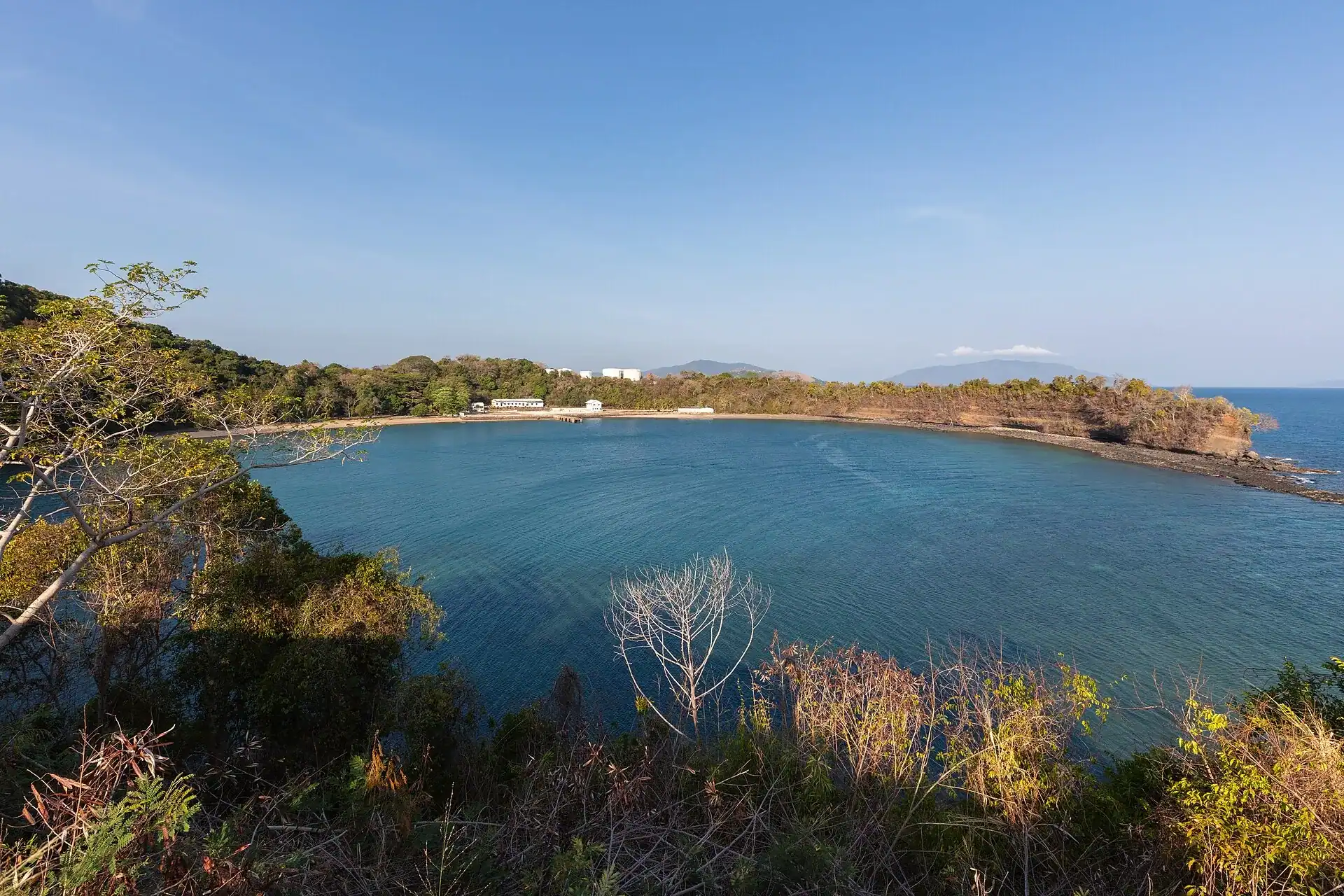 Photo: Diego Delso / Wikimedia Commons (CC BY-SA 4.0)