Cost of Living in Luang Namtha
Where this figure comes from. No cost survey covers Luang Namtha, so the $540 a month above is our own estimate rather than a measurement. On 416 of our 999 city guides the figure is built from a published Numbeo basket, a one-bedroom rent in the centre plus one person's monthly costs without rent, converted to USD; this city is not one of them. How we source everything.
Budget around $540 a month, which is very low. A one-bedroom or a long-stay guesthouse room runs roughly $120 to $280, and the market here is informal enough that a monthly rate is a conversation rather than a listing. Market produce is cheap and the valley grows its own rice, vegetables and river fish. Eating out costs a few dollars and the night market is where most people do it. Imported goods carry a markup because everything comes up the road. Utilities are inexpensive. The kip has weakened substantially in recent years, which makes a foreign income go a long way here and makes local life harder. Fibre where the guesthouses have it runs $20 to $35 a month and a Unitel data bundle a few dollars, which is the arrangement almost everyone actually uses. A motorbike is $6 to $10 a day or around $90 a month, and a bicycle a dollar or two, which covers most of the valley. A guided two-day trek into Nam Ha costs $60 to $110 depending on group size, and that fee is the main discretionary line in a month here. Nothing else in the town is expensive enough to plan around.
Where to Work in Luang Namtha
Connectivity is weak. Fibre exists in the town at modest speeds and mobile data from Unitel covers the valley and thins quickly in the hills, which is where you would actually want to be. Power cuts happen, particularly in the wet season. There is no coworking and the guesthouses are the working environment by default. The time zone is seven hours ahead of GMT, giving a comfortable European afternoon. Anyone whose income depends on video calls should treat Luang Namtha as a place to visit between contracts rather than a base, because the connection will not carry a normal working week reliably. Starlink has begun appearing at a few of the better guesthouses since 2024 and is the one thing that would change the calculation, so it is worth asking about specifically rather than accepting a general assurance. The Laos-China railway has also improved the backhaul into northern Laos, and speeds in the town are better than they were three years ago, though the hills beyond it remain a different matter entirely.
Getting Around Luang Namtha
The town is a single main street and is walkable end to end in twenty minutes. Bicycles and rented motorbikes cover the valley, and the villages, waterfalls and the Nam Ha protected area beyond it. Songthaews handle longer local routes. Buses run south to Luang Prabang in about eight hours on a road that has improved considerably, north to Boten and the Chinese border, and west to Huay Xai for the slow boat down the Mekong. The airport has occasional flights to Vientiane. The Laos-China railway does not serve Luang Namtha directly, but Boten and Oudomxay are within reach of stations on it. The Boten crossing into China is the busiest land border in Laos and the traffic through it has grown sharply since the railway opened, which is visible on the road north. Muang Sing, an old opium-trade town near the Chinese border with a Sunday market drawing Akha and Hmong villagers down from the hills, is two hours northwest and is the trip most people make from here.
Sorting transport? Book an airport transfer, or compare car rental on Auto Europe and QEEQ.
Visas for Luang Namtha
Laos issues visas on arrival at the main international entry points and via an e-visa applied for in advance, valid for thirty days for a fee payable in United States dollars in cash, with a thirty day extension available in-country. Luang Namtha's own airport and the Boten land crossing both handle visa on arrival, though the land border's hours are worth confirming. There is no remote work visa. Trekking in the Nam Ha protected area is done through licensed operators, which is a conservation arrangement rather than a permit requirement, and the fees go partly to the villages. The e-visa clears in a few working days and what it costs varies by nationality. At the Boten crossing from China there is no card payment at all, so the money has to be in hand before arriving. Extensions are handled in Vientiane or through an agent, so a sixty-day stay means planning that trip rather than assuming it can be done locally.
Best Time to Visit Luang Namtha
November to February is the cool dry season and the best window, with days around twenty five degrees and cold nights that surprise people who expect Laos to be uniformly hot. March and April are hot and, more importantly, are the burning season, when agricultural fires across the northern uplands fill the valleys with smoke for weeks and the air quality becomes genuinely poor. The rains from May to October make the trekking routes muddy and the leeches active, but the hills are at their greenest. October, just after the rains, is the clearest month of the year. Readings through those two months regularly reach levels that would trigger a public health warning anywhere with proper monitoring, and there is not enough wind at this altitude to move any of it along. Anyone with asthma should simply not come in those two months. The rice comes in through November and the whole valley turns gold and then stubble inside a fortnight, which is the best few weeks of the year to be looking at any of it.
Pros and Cons of Luang Namtha
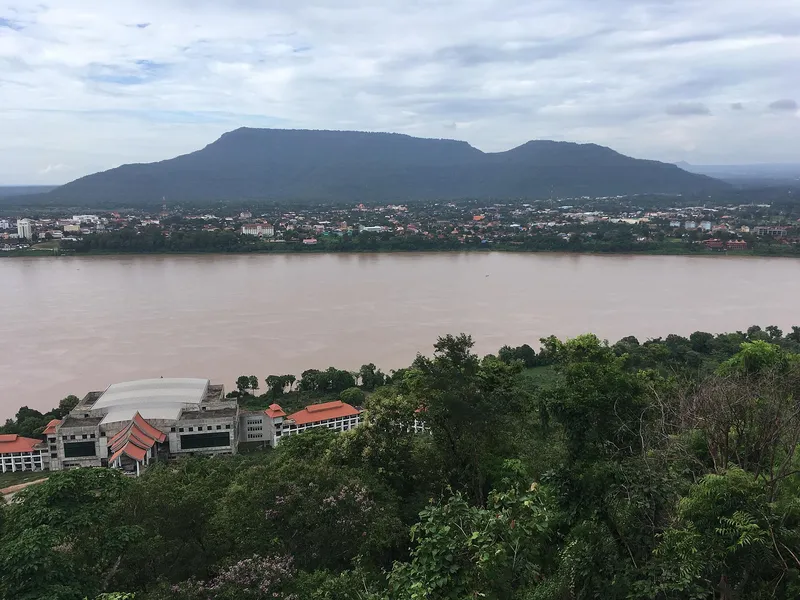
The Nam Ha National Protected Area is why anyone comes: one of the better-run community-based ecotourism projects in Southeast Asia, where trekking fees are shared with the villages and guide numbers are capped by agreement. The valley is beautiful, the town is quiet and friendly, and the cost is negligible. Connectivity is poor, the town is a long way from anywhere, the burning season is grim, and there is very little going on beyond the trekking. Medical care is basic and the serious option is a long way south. There is no remote worker community at all. The Nam Ha project was set up with UNESCO support in the late 1990s and is one of the earliest community ecotourism schemes in the region, which is why the guiding standard and the village arrangements are noticeably better organised than the equivalent elsewhere in Laos.
Who Luang Namtha Is For
Trekkers and cyclists, and anyone pulled towards the hill communities of northern Laos, which are Akha, Khmu, Hmong and Tai Dam rather than lowland Lao and are a genuinely different world. It suits people crossing overland between China, Laos and Thailand. It suits anyone whose work can go offline for a fortnight. A normal working schedule does not fit here. March and April demand a tolerance for smoke that most people do not have, and choice, whether in food or in company, is not something this town can offer much of at all. Anybody working the northern Laos loop slowly should build a week into it here. The town sits between Huay Xai on the Thai border and Oudomxay and Nong Khiaw to the east, which makes it the natural place to stop properly when everybody else stops for a single night.
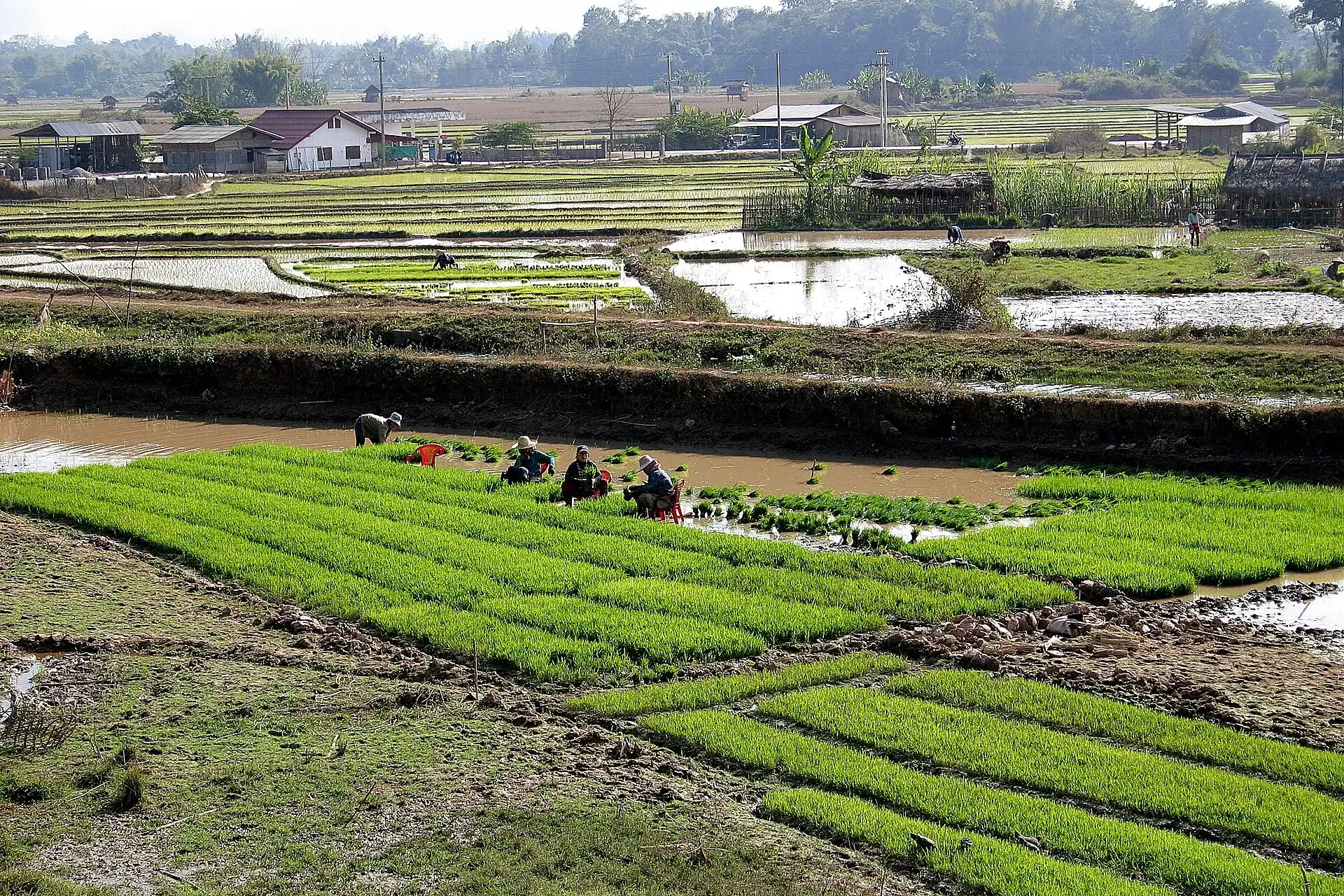 Photo: Gerd Eichmann / Wikimedia Commons (CC BY-SA 4.0)