Cost of Living in Pakse
Where this figure comes from. No cost survey covers Pakse, so the $620 a month above is our own estimate rather than a measurement. On 416 of our 999 city guides the figure is built from a published Numbeo basket, a one-bedroom rent in the centre plus one person's monthly costs without rent, converted to USD; this city is not one of them. How we source everything.
Budget around $620 a month, which puts Pakse among the cheapest places on this site. A one-bedroom runs roughly $150 to $350, with the riverfront and the newer blocks near the centre at the top. Market food costs very little and the Bolaven plateau above the town grows the country's best coffee, so a good cup is cheap here in a way it is not elsewhere in Laos. Imported goods carry a markup, and Thailand across the river is where people go for anything the town does not stock. Utilities are inexpensive. The kip has lost a great deal of value in recent years, which helps a visitor and hurts residents considerably. Cash is the system here: card acceptance barely exists outside a couple of hotels, machines dispense kip in small amounts with a fee each time, and dollars or Thai baht are useful to carry. The slide in the local currency has also made prices quoted in it unreliable between one visit and the next, so guesthouses and tour operators increasingly quote in dollars or baht instead, which changes how a negotiation starts.
Where to Work in Pakse
Connectivity is workable rather than good. Fibre reaches the centre of Pakse at speeds adequate for video calls on a good day, and mobile data from Unitel and Lao Telecom covers the town and the main roads. Power is reasonably reliable, though cuts happen in the wet season. There is no coworking, so most people work from guesthouses or the riverfront cafes, several of which have understood what a laptop customer wants. The time zone is seven hours ahead of GMT, which gives a comfortable European afternoon overlap and works well with the rest of Southeast Asia. Anyone with call-heavy work should test the connection before committing to a month. Redundancy here means a second SIM rather than a second router, since the fixed line and the mobile network fail for different reasons and rarely at the same moment. A hardware failure is the harder problem: nothing in town stocks a replacement laptop charger, so it means ordering from Bangkok and waiting, or crossing to Thailand to buy one, which is a day either way.
Getting Around Pakse
Pakse is small enough to walk across in half an hour and flat, so bicycles work well. Tuk-tuks and jumbos cover the rest cheaply, and rented motorbikes are the usual way people reach the Bolaven plateau, which is the point of being here: the loop takes two or three days past waterfalls and coffee farms. Pakse International Airport is a few kilometres northwest with flights to Vientiane, Bangkok, Siem Reap and Ho Chi Minh City. Buses run south to Si Phan Don, the four thousand islands where the Mekong splits, and east into Vietnam. The Thai border at Chong Mek is about forty kilometres west and is a straightforward crossing. Khone Phapheng at the bottom of Si Phan Don is the largest waterfall in Southeast Asia by volume and the reason the Mekong never became a trade route into China: the French could not get past it, so they built a seven kilometre railway across two islands to portage boats around it. The locomotive and part of the track are still there, and that line was the only railway the country had for the next century.
Sorting transport? Book an airport transfer, or compare car rental on Auto Europe and QEEQ.
Visas for Pakse
Laos issues visas on arrival at Pakse airport and at the main land borders for most nationalities, valid for thirty days for a fee in United States dollars in cash, and an e-visa is also available in advance. Extensions of a further thirty days are applied for at the immigration office in town. There is no remote work visa and working on a tourist visa is not permitted. Overstaying carries a daily fine that is enforced on departure. Anyone crossing to Thailand and back should note that the Lao visa is not multiple entry by default, so a return means paying for a new one at the border. The e-visa is accepted only at a defined list of entry points, which does not include every land border, so anyone arriving overland from Cambodia or Vietnam should confirm that the specific crossing takes it rather than assuming. Visa on arrival wants cash dollars and a passport photograph, and what it costs depends on which passport you hold rather than being one flat figure, with a surcharge outside office hours at some posts.
Best Time to Visit Pakse
November to February is the cool dry season and the best window, with temperatures around thirty degrees, low humidity and clear skies. March to May is very hot, regularly above thirty five and uncomfortable on the plateau road. The rains from June to October are heavy and the waterfalls on the Bolaven are at their most spectacular then, which is the argument for coming in the wet season despite the mud. The Mekong is high and fast from August to October and low enough to expose sandbars by March. Boun Bang Fai, the rocket festival, falls in May and is worth arranging a trip around. The Vat Phou festival falls at the full moon of the third lunar month, usually February, and turns the temple an hour south into a three day pilgrimage with boat races, music and processions, drawing people from across southern Laos and northeast Thailand. Lao New Year lands in mid-April at the hottest point of the year, and three days of water throwing in forty degree heat is either the best or the worst time to be here depending on temperament.
Pros and Cons of Pakse
Pakse is a genuinely relaxed river town at very low cost, with the Bolaven plateau's waterfalls and coffee farms immediately above it, the Khmer temple of Wat Phou an hour south, and the Mekong islands of Si Phan Don a few hours further downstream. It is far less visited than Luang Prabang and considerably cheaper. Pakse itself is a modest town rather than a destination, the connection is fine for calls and not much more, medical care is limited enough that Ubon Ratchathani in Thailand is the serious option, and there is nothing here that could be called a remote working community. Air quality in the March burning season is poor. Laos is the most heavily bombed country per head in history, and the provinces immediately east of here took much of it because the Ho Chi Minh Trail ran through them. Unexploded ordnance is still being cleared in Salavan, Sekong and Attapeu, which is why walking off marked paths in those provinces is not a decision to make casually. The town itself and the main plateau routes are not the problem; the ground beyond them can be.
Who Pakse Is For
Motorcyclists and anyone drawn to the Bolaven loop, coffee people, and travellers moving slowly through southern Laos who want a base rather than a stop. It suits anyone whose budget is the binding constraint, since very few places offer this quality of life at this price. Client calls need a connection this town cannot guarantee, there is nothing to do after dark and nobody to be professional with, and somebody unwilling to get on a motorbike has cut themselves off from the plateau, the waterfalls and the coffee farms, which is everything worth coming for. Families will find the medical situation the main concern rather than anything else. It suits a coffee person more precisely than most places do, since the plateau farms sell direct and several will take somebody for a week who wants to understand processing rather than only drink the result. It suits anyone writing or reading seriously, because the town gives you nothing to do in the evening, and that is either the flaw or the point. It fits badly for work with a hard deadline in a fixed week, since a wet-season outage or a cancelled flight is not unusual and there is no fallback.
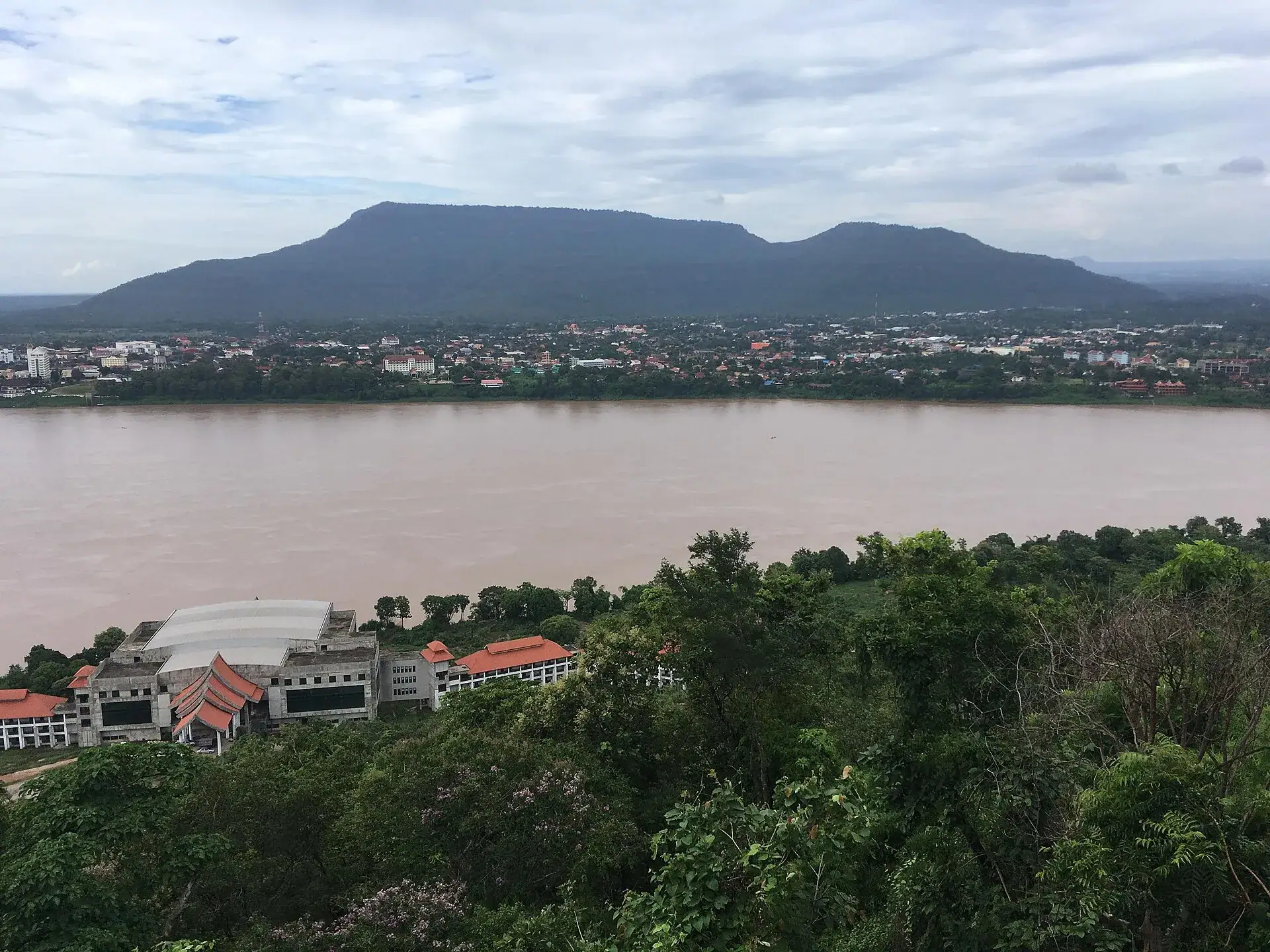 Photo: Christophe95 / Wikimedia Commons (CC BY-SA 4.0)