Cost of Living in Zhangjiajie
Where this figure comes from. No cost survey covers Zhangjiajie, so the $700 a month above is our own estimate rather than a measurement. On 416 of our 999 city guides the figure is built from a published Numbeo basket, a one-bedroom rent in the centre plus one person's monthly costs without rent, converted to USD; this city is not one of them. How we source everything.
Zhangjiajie is genuinely affordable, even by Chinese standards, because it sits in Hunan province away from the pricey coastal megacities. A single nomad can live comfortably on roughly $600 to $1,200 a month, with the higher end covering a nicer apartment near Wulingyuan, frequent restaurant meals, and park passes. Rent is the biggest variable: a simple studio in the city center runs cheaper than a tourist-facing serviced room near the forest park gates. Food is a highlight and a bargain, since spicy Hunan and Tujia dishes at local canteens cost only a few dollars. Your main splurges will be national park admission, cable cars, and the occasional intercity trip. Bring a payment plan, because most transactions expect mobile pay.
- Budget room or shared flat: $180 to $400 per month
- Comfortable studio near Wulingyuan: $400 to $650 per month
- Local canteen meal: $2 to $5; sit-down restaurant: $8 to $15
- Zhangjiajie National Forest Park multi-day pass: around $35 to $50
- Cable cars and the Bailong elevator: extra ticketed fees each
Where to Work in Zhangjiajie
Zhangjiajie earns its living from visitors who come for the pillars, stay a few days and leave, which is why nobody has built a coworking scene for the few who stay longer. You will work from hotel rooms, apartments, and a handful of laptop-friendly cafes. Local fixed-line internet is generally decent and fast in the city and in Wulingyuan town, and most hotels and guesthouses offer reliable wifi. The catch is China's Great Firewall: Google, Gmail, WhatsApp, Instagram, Western news, and many work tools are blocked, so you will almost certainly need a reputable VPN installed and tested before you arrive. Download and configure it in advance, because VPN provider sites are themselves often blocked once you are inside China. Mobile data on a local SIM is fast and cheap and works well as a backup for calls and hotspotting.
- Set up and test a paid VPN before landing; keep a backup provider
- Cafes near Wulingyuan town and the city center are your best public work spots
- Hotel and guesthouse wifi is usually solid
- A local eSIM or SIM gives fast, cheap mobile data for hotspotting
Getting Around Zhangjiajie
The name Zhangjiajie covers two things worth separating: the prefecture city center (Yongding district) and the famous scenery about 32 kilometers away around Wulingyuan. Most visitors base themselves in Wulingyuan town, the main gateway to Zhangjiajie National Forest Park, since it puts you minutes from the entrances. Inside the park, free eco-shuttle buses ferry you between valleys, and cable cars, the Bailong glass elevator, and mountaintop monorails handle the vertical distances. Between the city and the park, regular intercity buses and taxis are cheap and frequent. Tianmen Mountain, with its glass skywalk and 99-bend road, sits right beside the city center and is reached by a long cable car from downtown. The city has its own airport (DYG) and a high-speed rail station connecting to Changsha and beyond.
- Base in Wulingyuan town for the closest access to the forest park
- Free eco-shuttles run inside the park; cable cars and the Bailong elevator are extra
- Intercity buses and taxis link the city center and Wulingyuan cheaply
- Zhangjiajie Hehua Airport (DYG) and high-speed rail connect to Changsha and major cities
Sorting transport? Book an airport transfer, or compare car rental on Auto Europe and QEEQ.
Visas for Zhangjiajie
China is one of the more demanding destinations for entry, and Zhangjiajie has no special status that changes that. Holders of about 50 passports, covering most of Europe as well as the UK, Canada, Australia, New Zealand, Japan and South Korea, can visit Zhangjiajie for up to 30 days without a visa until the scheme's current end date of 31 December 2026. US citizens are not on that list and arrive on a tourist (L) visa, typically arranged in advance through an embassy, consulate, or authorized visa center, often with proof of itinerary, accommodation, and funds, or on the 240-hour transit exemption when continuing to a third country. China does not offer a dedicated digital-nomad visa, and working locally on a tourist visa is not permitted, so treat this as a place to visit and do remote work quietly rather than a long-term base.
- Most European, UK, Canadian and Australian passports enter visa-free for 30 days
- US citizens need a tourist (L) visa or the 240-hour transit exemption
- No digital-nomad visa exists; working locally is not permitted on a tourist visa
Best Time to Visit Zhangjiajie
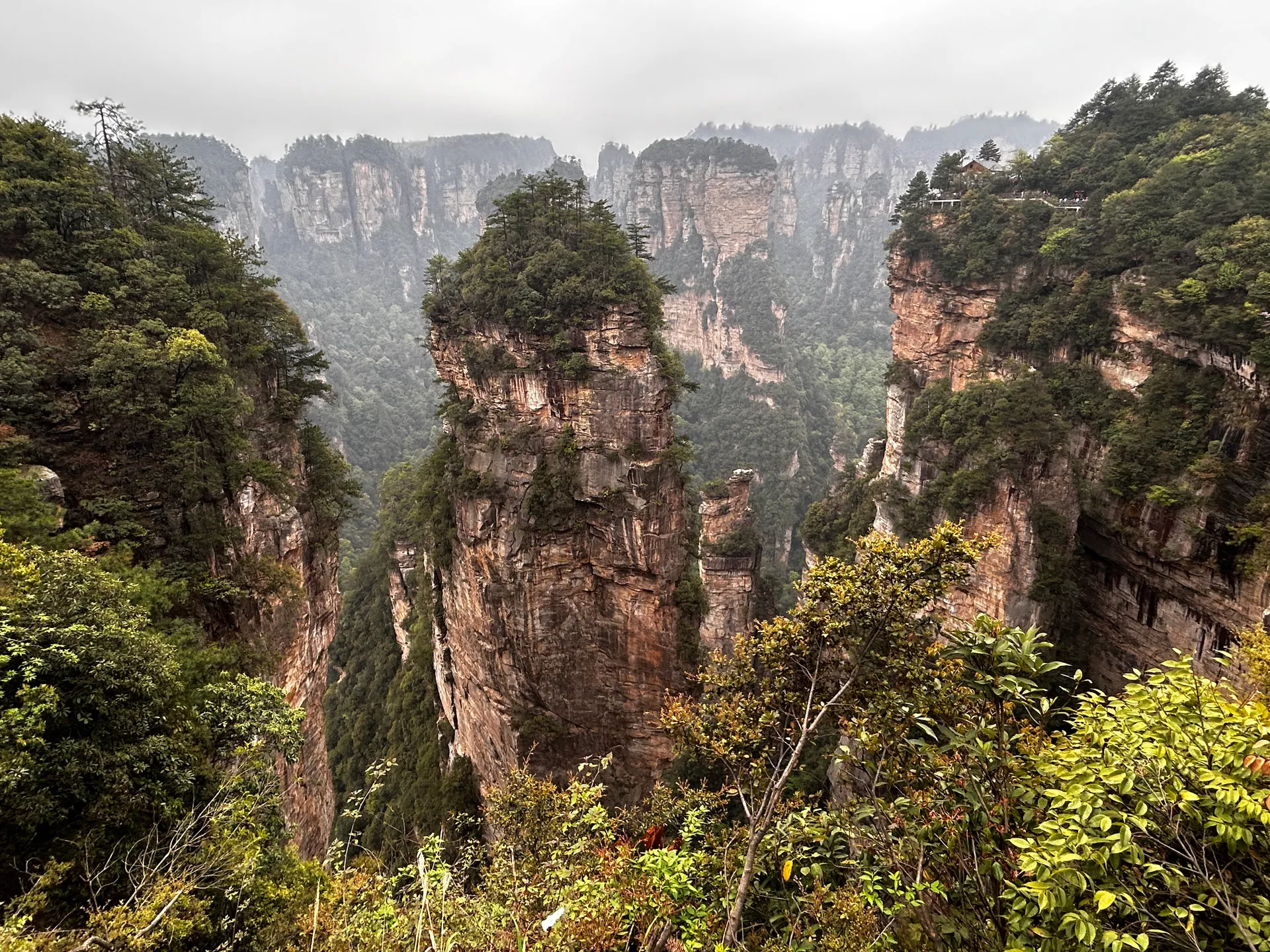
Spring (April to June) and autumn (September to November) are the clear winners, with mild temperatures, greener forests, and the best odds of the atmospheric mist that drapes the sandstone pillars and makes the scenery so unforgettable. That signature fog is common year-round and is part of the appeal, though it can occasionally hide the peaks entirely. Summers are hot, humid, and coincide with peak domestic tourism, so expect long queues at cable cars and the Bailong elevator and busy shuttle buses. Winters are cold and quieter, and the higher peaks like Tianzi Mountain sometimes get a dusting of snow that looks spectacular but can close attractions. If you want the classic misty pillars with manageable crowds, aim for weekdays in shoulder season and start early each day.
- Best overall: April to June and September to November
- Mist is common all year and part of the scenery's magic
- Summer brings heat, humidity, and the heaviest domestic crowds
- Winter is quiet and occasionally snowy on the high peaks; some attractions may close
Pros and Cons of Zhangjiajie
Zhangjiajie's appeal is simple and enormous: it is one of the most jaw-dropping natural landscapes on earth, the quartz-sandstone pillars that inspired the floating mountains of Avatar, all for a very low cost of living and with excellent everyday safety. The trade-offs are equally clear. This is a tourism-focused city, not a community of remote workers, so you will not find the cafes-full-of-laptops scene of Chiang Mai or Lisbon. The Great Firewall means constant reliance on a VPN, English is limited outside tourist channels, and China's visa regime is comparatively strict. Crowds at peak times are intense. Come for the scenery, the food, and the affordability; do not come expecting a plug-and-play nomad ecosystem or frictionless access to your usual Western apps.
- Pros: world-class scenery, very low cost, strong safety, superb spicy food
- Pros: good local internet and cheap, fast mobile data
- Cons: Great Firewall requires a VPN; limited English; demanding visas
- Cons: heavily tourist-oriented with big peak-season crowds and no nomad community
Who Zhangjiajie Is For
Zhangjiajie suits the nomad who ranks nature and novelty above networking, and who can work independently without needing a coworking crowd. If you are an experienced China traveler, or at least comfortable with a VPN, mobile payments, and translation apps, you will get enormous value from a base this cheap next to scenery this dramatic. It is ideal for hikers, photographers, and anyone who wants their off-hours filled with cable cars, glass skywalks, and misty ridgelines rather than co-working happy hours. It is a poor fit for first-time nomads who want easy English, an instant community, or hassle-free connectivity to Western tools. Treat it as a spectacular medium-length stop within a wider China or Asia itinerary rather than a year-round home base.
- Great for: nature lovers, photographers, hikers, and self-directed remote workers
- Great for: experienced China travelers comfortable with VPNs and mobile pay
- Less ideal for: first-timers wanting easy English and an instant community
- Best as: a memorable medium-length stop, not a permanent base