Cost of Living in Luang Prabang
Where this figure comes from. No cost survey covers Luang Prabang, so the $740 a month above is our own estimate rather than a measurement. On 416 of our 999 city guides the figure is built from a published Numbeo basket, a one-bedroom rent in the centre plus one person's monthly costs without rent, converted to USD; this city is not one of them. How we source everything.
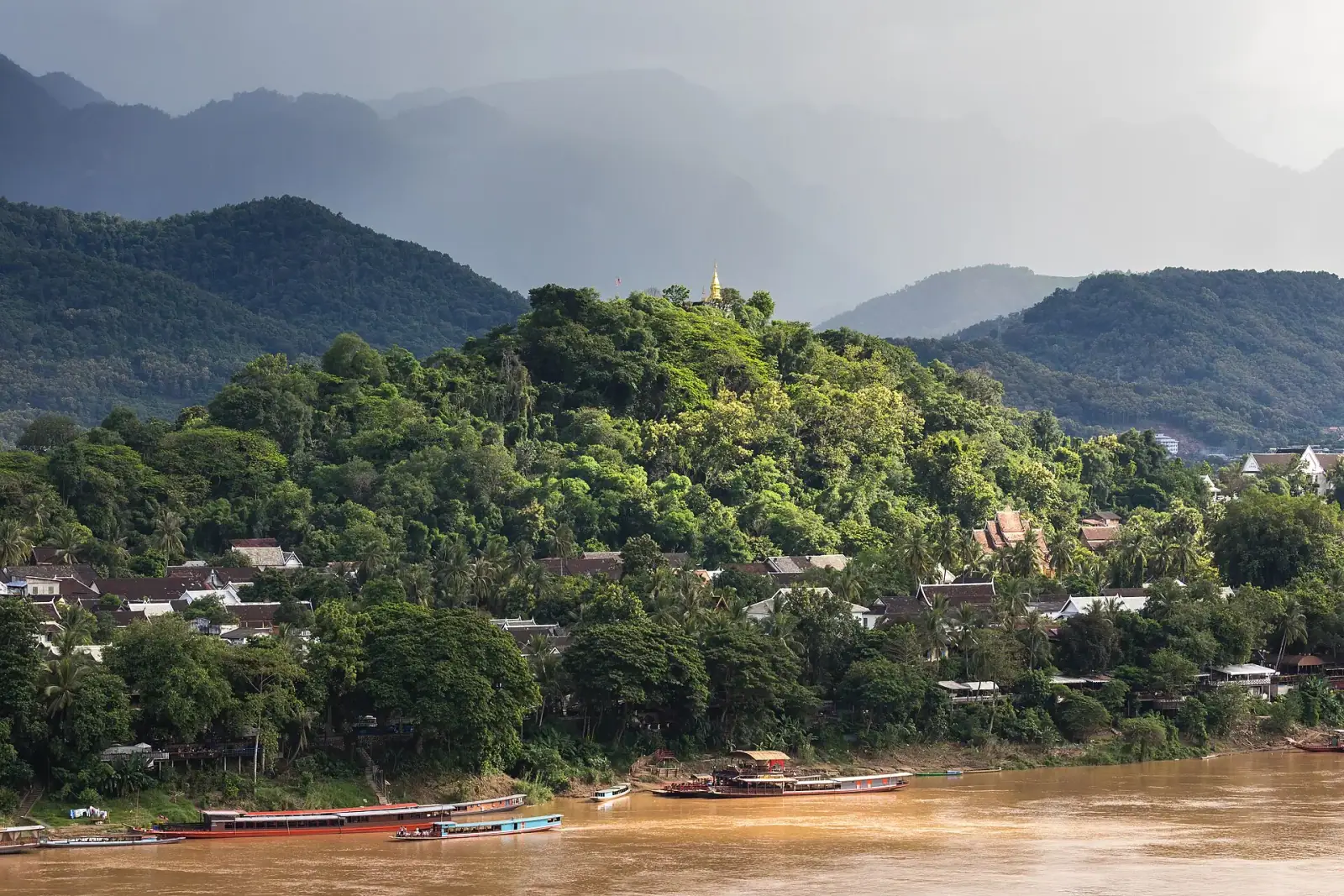
Luang Prabang is one of Southeast Asia's more affordable destinations, though it is not as cheap as you might expect for a small Lao town. Accommodation is the biggest variable. A private room in the old town peninsula runs roughly $89-155 per month if you rent a basic guesthouse room long-stay, while a furnished apartment or bungalow in a quieter neighborhood like Ban Phonheuang or Ban Xiengmouan comes in at $67-110 per month. A modern studio closer to the UNESCO core with air conditioning will push closer to $200-350 per month.
- Rent (central old town): $180-335/month for a decent private room or studio
- Rent (quieter neighborhoods): $67-110/month
- Groceries: $27-45/month if you cook some meals
- Eating out: Local noodle soup or rice dish costs $0.50-1.50; a sit-down restaurant meal runs $2.50-6.50; budget $31-63/month eating out most meals
- Coworking hot-desk: The Desk Co-Working charges roughly $71-110/month
- Local transport: $9-18/month covers tuk-tuks and occasional bicycle rental
- Total realistic range: $550-900/month on a budget; $900-1,400/month living more comfortably
ATMs are available in the old town but often charge fees. Carry some cash in USD as a backup.
Where to Work
Luang Prabang is not a traditional nomad hub, but you can get work done here if you choose your spots carefully. The one dedicated coworking space is The Desk Co-Working, which opened as the city's first purpose-built workspace. It offers hot desks, dedicated desks, meeting rooms, air conditioning, and the fastest and most reliable Wi-Fi in town. It is open Monday through Saturday, 8:30-18:30, and is located in the old town area.
Beyond The Desk, several cafes work well for laptop sessions. Saffron Coffee on the Mekong riverfront (Khem Kong Road) consistently tests well on both download and upload, making it one of the best-connected spots in the city. The upstairs seating at Saffron is quieter and better for focused work. Aromdee Nature Cafe and Hichilico Cafe are other reliable options with similarly strong connections.
The honest Wi-Fi picture: in the specific cafes listed above, speeds are genuinely strong. Outside of those curated spots, Wi-Fi can be slow, inconsistent, or blocked by VPN-unfriendly ISP behavior. If you rely on video calls or large file transfers, buy a local SIM with 4G data (Unitel or LaoTelecom, around $4.50-7 for a 30-day data package) as a backup. Mobile 4G coverage in the old town is reasonable. Do not rely on hotel Wi-Fi for professional work.
Getting Around
The old town peninsula of Luang Prabang is compact enough to walk end to end in about 25 minutes. Most of what you need daily is within walking distance, and walkability is genuinely one of the city's strongest points. You will not need motorized transport for most of your daily routine.
For slightly longer trips, bicycle rentals are available throughout the old town for around $1-2 per day. A bicycle gives you full access to the UNESCO heritage core and nearby neighborhoods without any hassle. Motorbike rentals run $4.50-7.50 per day for a semi-automatic and open up day trips to Kuang Si Falls and surrounding villages.
Tuk-tuks are the standard for trips you would not cycle, including reaching the night market from outlying guesthouses or going to the waterfalls. There is no Grab or ride-hailing app in Luang Prabang, so you negotiate fares directly. Agree on the price before you get in. A short ride within the peninsula runs $1-2. A tuk-tuk to Kuang Si Falls (40 km) runs around $7.50-9.50 each way.
Luang Prabang International Airport is about 4 km from the old town. The journey takes 15-20 minutes by tuk-tuk for around $4.50-7.50. An official airport counter offers fixed-rate rides. A new e-bus red line also connects the airport to the centre.
Sorting transport? Book an airport transfer, or compare car rental on Auto Europe and QEEQ.
Visas and Staying Long-Term
Most nationalities, including those from the US, UK, EU countries, Australia, and Canada, can get a visa on arrival at Luang Prabang International Airport valid for 30 days. The fee runs roughly $30-45 depending on your nationality, payable in USD cash. You will need a passport photo, so bring a spare or pay on the spot. The Lao e-Visa is also available in advance at laoevisa.gov.la and costs a similar fee, with the same 30-day duration.
You can extend a 30-day tourist visa for an additional 30 days at the Immigration Office in Luang Prabang at a cost of $2 per day ($60 total for 30 days). Extensions are reportedly available a second time for a total theoretical stay of up to 90 days, though practices can vary. There is no dedicated digital nomad or remote worker visa for Laos. Long-term nomads typically do border runs to Thailand (Huay Xai crossing is popular) and re-enter.
From September 2025, Laos rolled out a Lao Digital Immigration Form (LDIF) at major airports.
Best Time to Visit
The dry season, November through March, is the sweet spot for remote workers. Temperatures stay between 20-30C (68-86F), skies are clear, and the city is at its most photogenic. December through February is the coolest and driest window. November is a good shoulder option with fewer tourists than January, which fills up around festivals.
One serious caveat: late February through April brings burning season, when farmers burn fields across northern Laos. By March, air quality in Luang Prabang can reach hazardous levels with AQI readings above 200. Visibility drops and the smoke is genuinely bad for your health. If you are sensitive to air quality or want to work outdoors, avoid mid-February through mid-April. The smoke typically clears around Lao New Year (Pi Mai, mid-April).
The wet season, May through October, brings lush green scenery and far fewer tourists, but daily rain showers, high humidity, and the risk of localized flooding on the Nam Khan. Internet reliability does not change significantly with the season. If you visit in the wet season, July and August offer the most dramatic landscapes around Kuang Si but also the most rain.
Pros and Cons
Pros
- Genuinely beautiful UNESCO heritage town with a slow, unhurried pace
- Very low cost of living once you settle in, especially for food and transport
- Walkable compact old town with safe streets day and night
- Strong cafe-work culture with a few spots offering 60+ Mbps Wi-Fi
- Rich culture, temple life, morning alms-giving ceremony, excellent local food
- Easy access to nature: Kuang Si Falls, the Mekong, and jungle day trips
- Calm and quiet compared to busier nomad hubs; good for deep-focus work stints
Cons
- No digital nomad community to speak of; you will mostly meet backpackers and tourists
- Very limited dedicated coworking infrastructure (essentially one space)
- Wi-Fi quality is highly variable outside the handful of proven cafes
- Burning season from late February to mid-April brings seriously poor air quality
- No Grab or reliable ride-hailing; tuk-tuk prices require negotiation
- The city sleeps early; nightlife shuts down around midnight and a bowling alley is the only late option
- Limited international flight connections; getting here from outside Asia takes multiple hops
Who Luang Prabang Is Best For
Luang Prabang works best for solo nomads who want a quiet, culturally rich base for a few weeks, not months. If you are between longer stints in Chiang Mai or Hanoi and want somewhere beautiful and unhurried to get heads-down on a project, this delivers. Freelance writers, photographers, and designers who value inspiration and atmosphere over infrastructure will find plenty to work with here.
It also suits location-independent travelers who are not yet deeply rooted in a nomad community, since the social fabric here is more traveler-and-backpacker than coworking-community. Couples traveling together on a budget will do well here.
You should probably skip Luang Prabang if you need a large community of fellow remote workers, depend on rock-solid daily internet for heavy video production or large uploads, or want to build a long-term base with a nomad support network. It is also a poor fit if you have respiratory issues and are visiting between February and April, when burning season smoke can make outdoor time uncomfortable and even dangerous.