Cost of Living in Vang Vieng
Where this figure comes from. No cost survey covers Vang Vieng, so the $800 a month above is our own estimate rather than a measurement. On 416 of our 999 city guides the figure is built from a published Numbeo basket, a one-bedroom rent in the centre plus one person's monthly costs without rent, converted to USD; this city is not one of them. How we source everything.
Vang Vieng is one of the cheapest places in Southeast Asia to base yourself, but costs vary significantly depending on how central you want to be and how comfortable you want your setup.
- Rent, central (near main street/riverfront): $110-200/month for a basic studio or guesthouse room; a proper one-bedroom apartment runs $225-355
- Rent, quieter residential area: $67-110 for a simple furnished room
- Groceries: Local markets are very cheap; expect $18-31 per month if you cook regularly. Imported goods at supermarkets cost significantly more.
- Eating out: Street food and local restaurants charge $0.50-1.50 per meal; Western-style cafes and restaurants charge $2-4
- Coworking hot-desk: No dedicated coworking spaces operate in town as of 2025; cafe spend for a full day of work runs roughly $2-4.50 in food and drink
- Local transport: Bicycle rental $1-1.50/day; motorbike rental $4.50-6.50/day; tuk-tuks charge $1-2 per short trip
- SIM/mobile data: A local SIM with a monthly data plan runs around $2-4.50
Total monthly range: A frugal nomad eating mostly local food and renting a basic room can get by on $600-800. A comfortable setup with a decent apartment, cafe work sessions, occasional Western meals, and activities lands at $1,000-1,400.
Where to Work
Vang Vieng has no dedicated coworking space, so you will be working from cafes or your accommodation. This is workable but requires realistic expectations about connectivity.
The best laptop-friendly cafes are clustered along the main street (Rue Principale) and the Nam Song River road. Naked Espresso, by the Silver Naga Hotel, is the most consistently praised for WiFi quality and atmosphere. Vela Cafe and Restaurant on the main road offers reliable connectivity and a broad menu. Pull Mind Cafe has mountain views and serves coffee, smoothies, and beer, making it more of an afternoon spot than a full-day work base. Vang Vieng Center Cafe is a local option worth trying.
WiFi across town handles email, Slack, and video calls with the camera off, but will frustrate you during large uploads or high-quality video calls. Your best backup is a local 4G SIM from Unitel or ETL; coverage in the town center is reliable and faster than most cafe WiFi. If consistent fast internet is non-negotiable for your work, Vang Vieng will test your patience.
Getting Around
The town center is compact enough to walk everywhere that matters. Most guesthouses, cafes, restaurants, and the night market sit within a 10-15 minute walk of each other.
For exploring beyond the center, bicycle rental (around $1-1.50 per day) is the most popular option and works well for the flat terrain around town. Motorbikes ($5-7 per day) give you more range for reaching caves, lagoons, and villages. Tuk-tuks are available for short hops and can be flagged down on the main street; negotiate the fare before getting in. The Xanh SM app launched in Laos in 2023 and offers electric vehicle rides in town, which is a cleaner and easier-to-price alternative to haggling with tuk-tuk drivers.
Vang Vieng does not have its own commercial airport. The nearest options are Vientiane's Wattay International Airport (roughly 3-4 hours by road or 30 minutes on the Laos-China high-speed rail) and Luang Prabang International Airport (approximately 5-6 hours by road or about 40 minutes by train). The high-speed train is by far the most comfortable and reliable option for getting between Vang Vieng, Vientiane, and Luang Prabang. Shared minivans also run these routes if you book through a guesthouse or travel agent.
Sorting transport? Book an airport transfer, or compare car rental on Auto Europe and QEEQ.
Visas and Staying Long-Term
Most Western passport holders (US, UK, EU, Australian, Canadian, and many others) can enter Laos on a 30-day tourist visa, either arranged through an eVisa before arrival or as a visa on arrival at major international entry points. The eVisa costs $35-50 and is processed online. A passport valid for at least 6 months and two blank pages are required.
You can extend your 30-day stay once at an immigration office for an additional 30 days, at a cost of around $2-3 per day (up to 60 extra days). Vientiane's Immigration Department is the main extension office; there is no immigration office in Vang Vieng itself, so you would need to travel to Vientiane or Luang Prabang. Laos does not offer a dedicated digital nomad or remote worker visa as of 2025. Long-term stayers typically do visa runs across the border to Thailand. Some ASEAN passport holders qualify for visa-free entry, though specific exemption rules have shifted recently.
Best Time to Visit
The dry season from November through February is the clear best window for remote work. Temperatures sit between 18-25°C (64-77°F), humidity is low, and you get consistent sunshine. The landscapes are at their most photogenic and outdoor activities are fully accessible. January can feel cool in the evenings, which is a pleasant change from the heat of the rest of the region.
March and April bring heat and a noticeable rise in air pollution from agricultural burning across Laos and neighboring countries. AQI readings regularly hit unhealthy levels during this period, which is worth considering if you are sensitive to air quality.
The wet season runs May through October. Heavy afternoon rains and occasional flooding can affect travel and outdoor plans. The town stays functional and prices drop, but river activities and cave access are sometimes closed. If you are budget-conscious and do not mind the rain, shoulder months like May or October offer reasonable conditions at lower cost.
Pros and Cons
- Very low cost of living, easily one of the cheapest setups in Asia
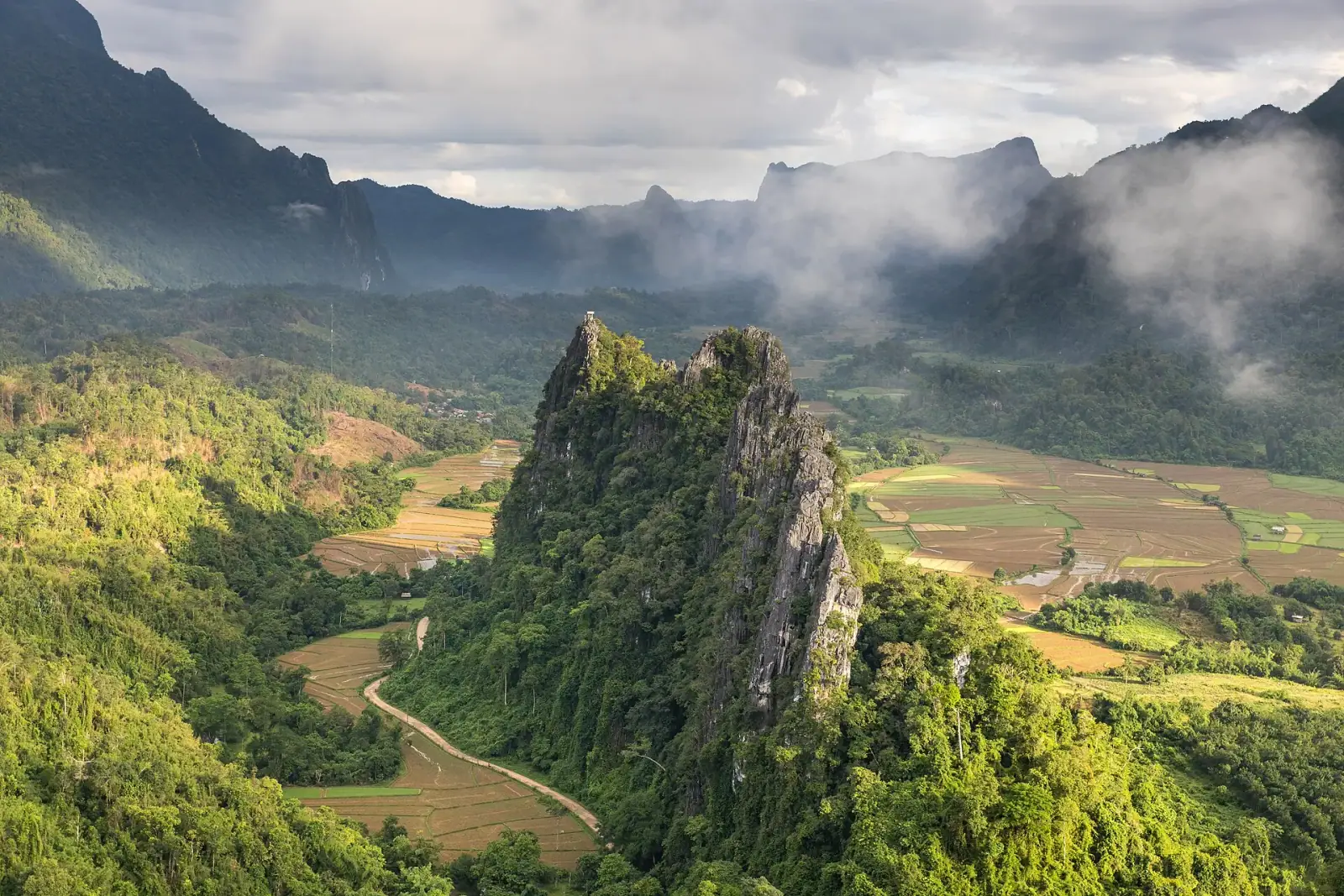
- Stunning natural setting with karst mountains, rivers, caves, and rice paddies on your doorstep
- Relaxed, unhurried pace that suits slow travel and creative work
- Good food scene for a small town, with solid local and international options
- Excellent rail connections to Vientiane and Luang Prabang via the high-speed line
- Low crowds compared to Thailand's main nomad hubs
- Slow and inconsistent internet is the biggest practical problem for remote workers
- No dedicated coworking space means you are relying on cafes with shared WiFi
- Small town limitations: limited networking, few nomad meetups, sparse professional community
- Air quality issues during the March-April burning season
- Party tourism culture centered on the river tubing scene can make the town feel chaotic in peak season
- No local airport adds friction to travel logistics
Who Vang Vieng Is Best For
Vang Vieng works well for nomads who prioritize low cost and natural beauty over fast internet and professional infrastructure. If you do asynchronous work (writing, design, editing, coding without large file transfers), can work on a 4G hotspot when needed, and want to spend your non-work hours kayaking, caving, or watching a sunset over limestone peaks, this town delivers a strong experience for the money.
It also suits people who want a short stay of one to four weeks between longer stints in more connected cities like Chiang Mai or Hanoi. The train connections to Vientiane and Luang Prabang make it easy to slot into a longer Laos itinerary.
Skip it if fast, reliable broadband is a daily requirement, you need regular networking or coworking events, or you are easily frustrated by small-town limitations. Vang Vieng is not a productivity powerhouse. It is a beautiful, cheap, occasionally chaotic small town that rewards the right kind of traveler.